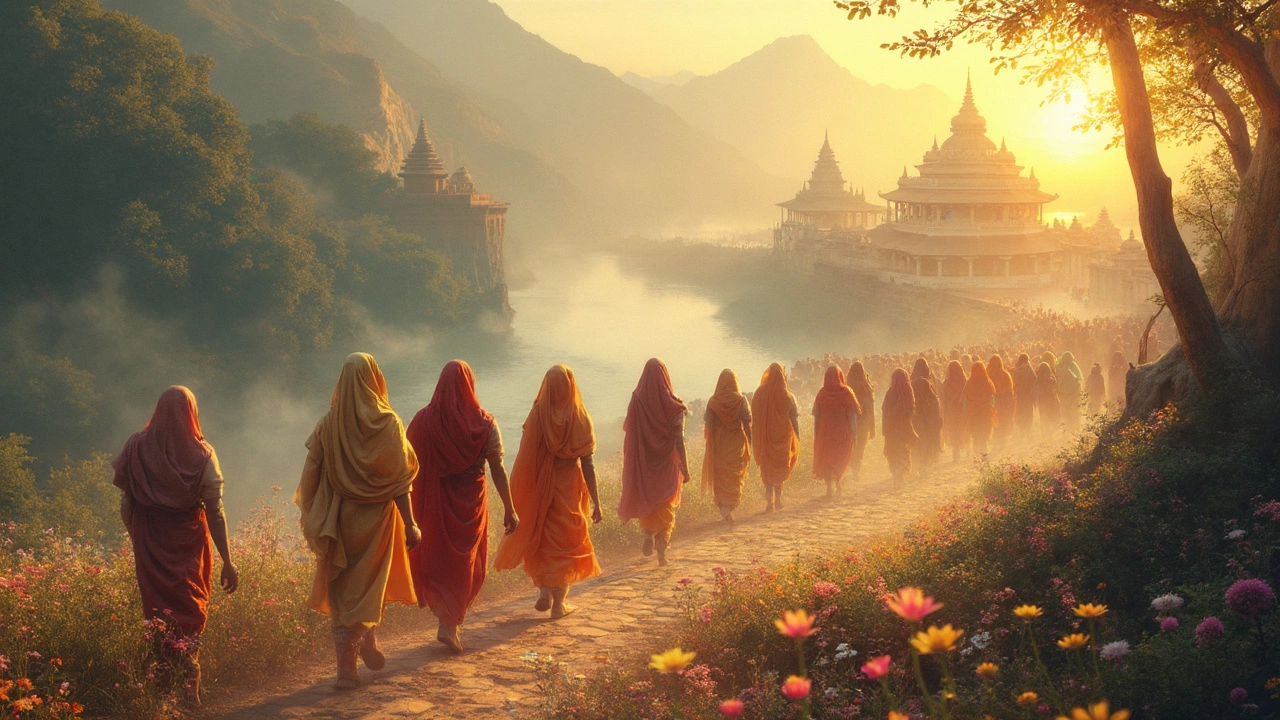
4 Dham: The Sacred Pilgrimage Circuit of India
When Hindus speak of the 4 Dham, a sacred pilgrimage circuit in the Indian Himalayas that includes four major temples dedicated to Vishnu and Shiva. Also known as Char Dham, it’s not just a religious journey—it’s a physical and spiritual crossing of India’s most powerful natural and divine landscapes. Each of the four sites—Yamunotri, Gangotri, Kedarnath, and Badrinath—holds deep meaning, tied to ancient texts, natural phenomena, and centuries of devotion.
The journey begins at Yamunotri, where the icy waters of the Yamuna River are believed to be born from the goddess herself. Then comes Gangotri, the source of the Ganges, a river so central to Hindu life that its waters are used in rituals across the world. Kedarnath, perched at 3,583 meters, is one of the twelve Jyotirlingas, where Shiva appeared as a column of light. And finally, Badrinath, nestled between the Nar and Narayana mountains, is dedicated to Vishnu in his meditative form. Together, they form a loop that pilgrims complete in a single season, usually between April and November, when the mountain passes are open.
This isn’t a vacation. It’s a test—of endurance, faith, and simplicity. You’ll walk steep trails, sleep in basic dharamshalas, and eat simple meals cooked with devotion. The weather changes fast. The altitude hits hard. But what you gain isn’t just spiritual merit—it’s clarity. People come here after loss, before big life changes, or simply because they’ve been told it’s the right thing to do. Many leave with more questions than answers, and that’s the point.
What you’ll find in the posts below are real stories from travelers who made the trip—some on foot, some by helicopter, some with family, some alone. You’ll read about the quiet moments at Kedarnath at sunrise, the chaos of the Gangotri market, why so many pilgrims cry at Badrinath, and how a 500-rupee budget can stretch further than you think when you’re on the trail. There’s no fluff here. Just what you need to know before you go.