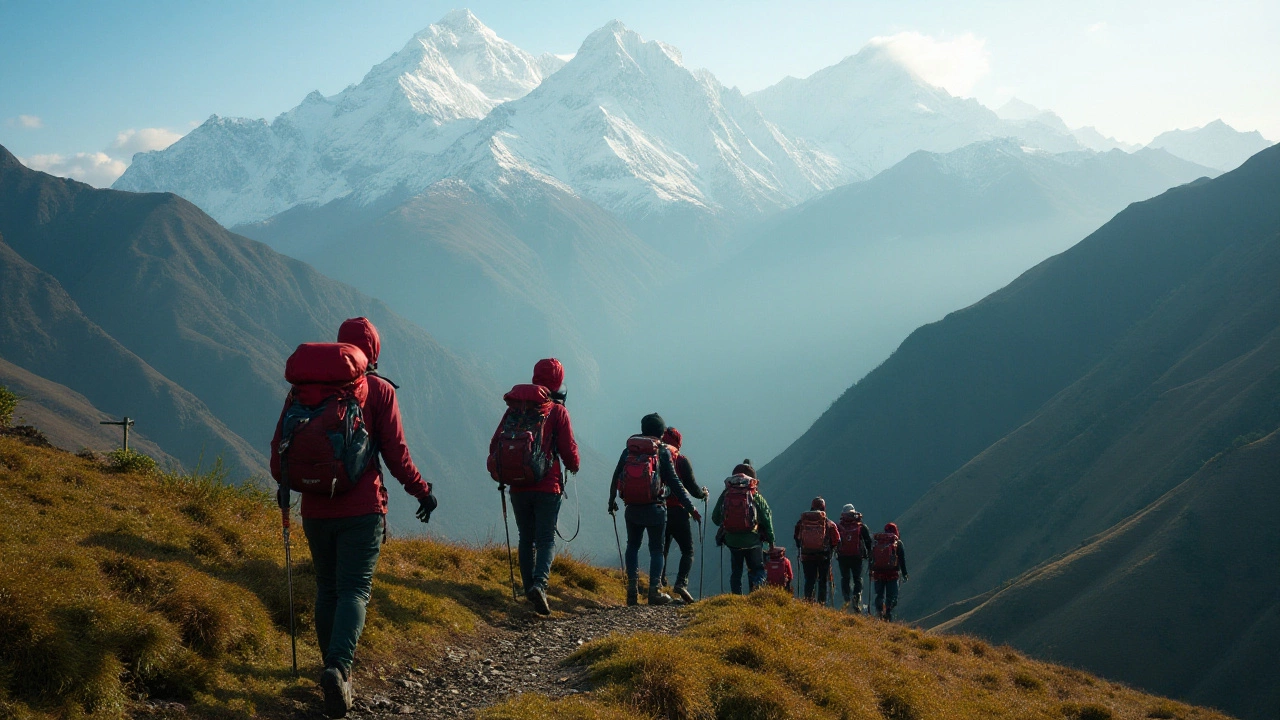
Himalayan trails
When you think of Himalayan trails, long-distance mountain paths through some of the world’s highest peaks, often used for trekking, pilgrimage, and cultural exploration. Also known as Himalayan trekking routes, they’re not just paths—they’re lifelines connecting remote villages, ancient monasteries, and sacred lakes across India’s northern frontier. These trails aren’t for weekend hikers looking for a quick workout. They demand respect, preparation, and a willingness to adapt to thin air, sudden weather, and terrain that changes by the hour.
Many of the most famous Himalayan trails start in Uttarakhand and Himachal Pradesh. The Roopkund Trek, for example, leads to a mysterious lake filled with ancient skeletons—a story whispered in local villages and now drawn by adventurers from around the world. Then there’s the Valley of Flowers, a UNESCO site where wild blooms carpet the mountainside in summer, drawing botanists and photographers alike. These aren’t just hikes. They’re journeys through ecosystems that haven’t changed in centuries.
What makes these trails special isn’t just the views. It’s the people. Sherpas, porters, temple keepers, and homestay hosts along the way don’t just guide you—they teach you how to move through the mountains with patience, not speed. You’ll learn to drink tea made with glacier water, sleep in stone huts with wool blankets, and walk for days without seeing a single phone signal. That’s the real draw. The adventure sports in India scene has grown, but the Himalayan trails still hold onto their soul.
If you’ve ever wondered why so many travelers come back to the same trail year after year, it’s because these paths don’t just show you mountains—they change how you see yourself. You’ll find out what you’re made of when the wind howls at 14,000 feet and your legs burn from the climb. And when you finally reach that ridge at sunrise, with the sun hitting the peaks of Nanda Devi or Kedarnath, you’ll understand why these trails are more than a destination—they’re a return to something older, quieter, and deeper.
Below, you’ll find real stories from people who’ve walked these paths: what worked, what didn’t, and the hidden spots most guides won’t tell you about. Whether you’re planning a short day hike near Manali or a multi-week expedition into the Kumaon Himalayas, there’s something here for every level of walker. No fluff. Just what you need to know before you lace up your boots.