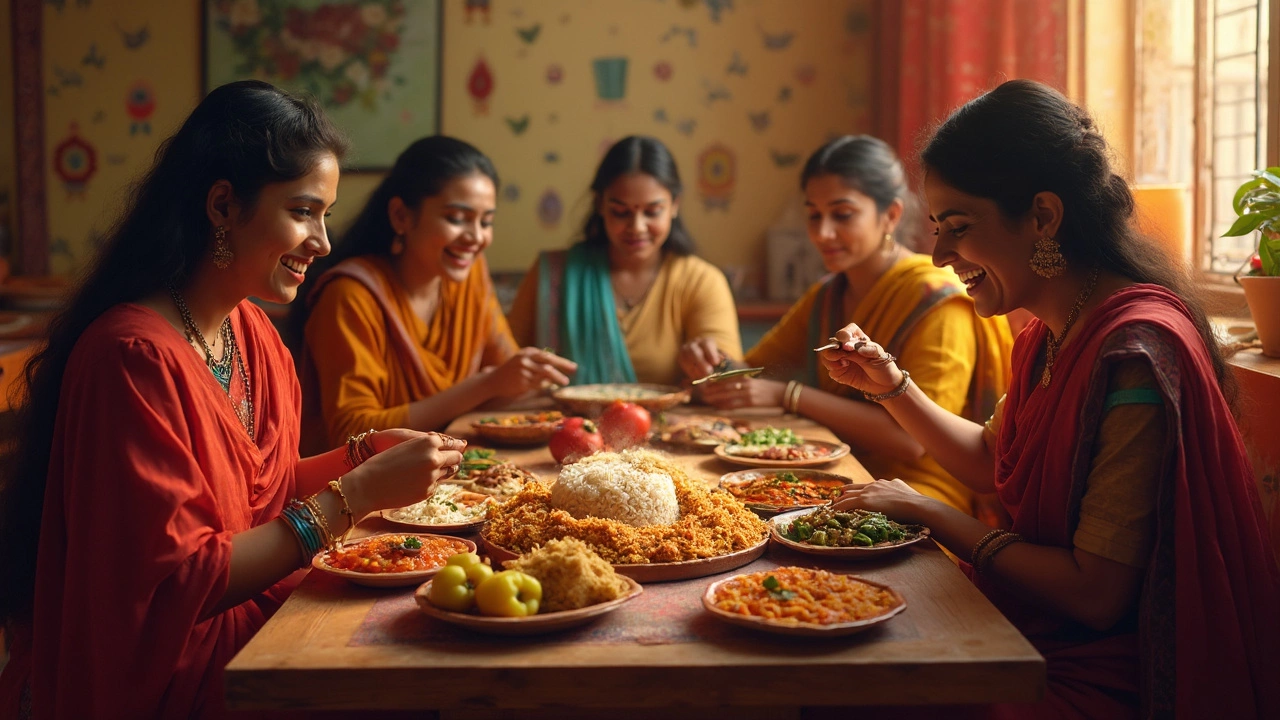
Indian food habits: What people really eat, when, and why
When you think of Indian food habits, the daily eating patterns and cultural rituals around meals in India. Also known as Indian meal traditions, it's not just about curry and rice—it’s a rhythm tied to seasons, religion, family, and place. Most Indians eat three solid meals a day, but the timing? That changes. Breakfast isn’t toast and coffee in Delhi—it’s poha in Mumbai, idli in Chennai, or paratha in Punjab. Lunch isn’t a quick sandwich—it’s often the biggest meal, eaten around 1 pm with rice, dal, vegetables, and yogurt. Dinner? Lighter. Later. And often shared with the whole family.
What you eat depends on where you live. In Kerala, coconut and fish dominate. In Rajasthan, lentils and millet survive the desert heat. In the Northeast, fermented foods and bamboo shoots are everyday staples. Religion shapes it too: Hindus avoid beef, Muslims avoid pork, Jains skip root vegetables, and many eat vegetarian every day—not because they can’t afford meat, but because it’s part of their belief. Even the way food is served matters. Eating with your hands? Common. Using utensils? Often reserved for guests or restaurants. The act of sharing food from one plate, or offering the first bite to elders, isn’t tradition—it’s respect built into every meal.
Why Indian food habits don’t fit Western stereotypes
Most foreigners think Indian food means heavy spice, creamy curries, and endless butter chicken. But that’s just one slice. In rural homes, meals are simple: rice with lentils, pickles, and greens. Street food isn’t fancy—it’s bhel puri, jalebi, or a warm roti with chutney bought for 20 rupees. Breakfast isn’t a buffet—it’s leftover dal from last night, reheated with a splash of ghee. Even the idea of "snacks" is different: chaat isn’t junk food—it’s a daily ritual, eaten between chores, before temple, or after work. And drinks? Tea isn’t a luxury—it’s a lifeline. Chai wallahs serve more cups in a day than Starbucks does in a week.
These habits aren’t random. They’re passed down. Mothers teach daughters how to balance spices by smell, not recipes. Grandparents know which herbs to use when someone has a cold. Food isn’t just fuel—it’s medicine, memory, and identity. You don’t need a cookbook to understand Indian food habits. You just need to sit down, eat with your hands, and notice how silence at the table means contentment, not awkwardness.
What follows are real stories from real meals across India—not staged photos, not restaurant menus, but what people actually eat when no one’s watching. From village kitchens in Odisha to rooftop balconies in Kolkata, you’ll see how food ties together everything from festivals to finances. No fluff. No myths. Just what’s on the plate, every single day.