Using Money in India: What You Need to Know Before You Go
When you’re using money in India, the way currency works here is unlike most Western countries—cash still rules, but digital payments are growing fast. Also known as handling rupees, it’s not just about exchanging dollars—it’s about understanding where, when, and how to spend wisely. Most travelers assume India is cheap everywhere, but that’s only half true. In a Mumbai street stall, 50 rupees buys you a full meal. In a luxury train like the Palace on Wheels, that same 50 rupees won’t even cover a bottle of water. The key isn’t just having money—it’s knowing how to use it right.
Many visitors get stuck because they don’t plan for the split between cash and cards. Small shops, rickshaw drivers, temple donations, and roadside chai vendors? Cash only. Big hotels, online bookings, and chain restaurants? Cards work fine. But even then, you’ll often be asked for cash as a tip or for extras. ATMs are everywhere in cities, but in rural areas or hill towns, they disappear. That’s why carrying a mix of 500 and 2000 rupee notes (the ones you can actually get at airports) is smarter than loading up on small bills. And forget credit cards with foreign transaction fees—use a no-fee debit card or a travel-specific card like Revolut or Wise. India’s UPI system (like Paytm or Google Pay) is everywhere now, but most tourists can’t use it unless they have an Indian phone number. So stick to cash and a solid debit card.
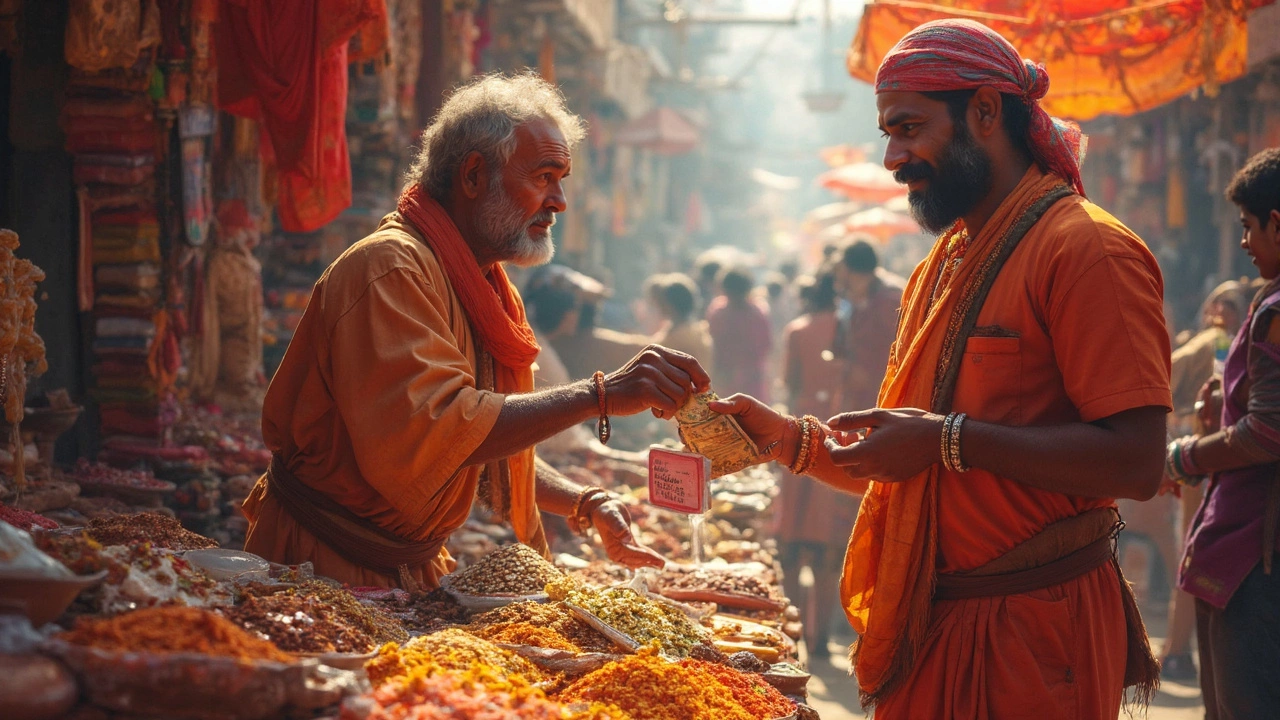
Don’t assume prices are fixed. In markets, bargaining isn’t rude—it’s expected. A scarf that starts at 1000 rupees might end up at 300 after a friendly chat. But in fixed-price places like museums or train stations, haggling won’t work and might annoy people. Also, watch out for fake notes—especially 500 and 2000 rupee bills. Check the watermark, feel the texture, and always ask for a new note if something looks off. And if you’re flying into India, don’t exchange all your money at the airport. The rates are terrible. Wait until you reach the city and use a bank or authorized money changer.
What you spend depends on where you are. In Goa, a beachside dinner might cost 800 rupees. In Varanasi, you can eat for 150. The Golden Triangle tour? You’ll burn through cash on entry fees, guides, and transport. But if you skip the fancy hotels and ride local trains, you’ll stretch your budget way further. The same goes for the Palace on Wheels—it’s a dream, but it costs more than a round-trip flight from the US. Know what you’re paying for. Some travelers think luxury means splurging everywhere. In India, luxury is often about the experience, not the price tag.
Bottom line: using money in India isn’t about how much you bring—it’s about how smart you are with it. You don’t need to be a budget guru, but you do need to understand the rhythm. Cash for small stuff, card for big bookings, and always keep a little extra for surprises. The best trips aren’t the ones where you spent the most—they’re the ones where you felt like you got the most. Below, you’ll find real stories from travelers who made their rupees last, avoided scams, and still had unforgettable experiences. No fluff. Just what works.