Heritage Site Finder
Find Your Perfect Heritage Site
Answer these questions to discover which Indian heritage site best matches your interests and travel style. There's no single "best" site—it's about what resonates with you most.
Your Perfect Heritage Site
India doesn’t just have heritage sites-it has living history. Every stone, carving, and arch tells a story older than most nations. But when someone asks, which is the best heritage in India? They’re not just looking for a list. They want to know where the soul of India still beats strongest. The answer isn’t simple. It depends on what you’re searching for: awe, mystery, art, or silence.
The Taj Mahal: More Than a Postcard
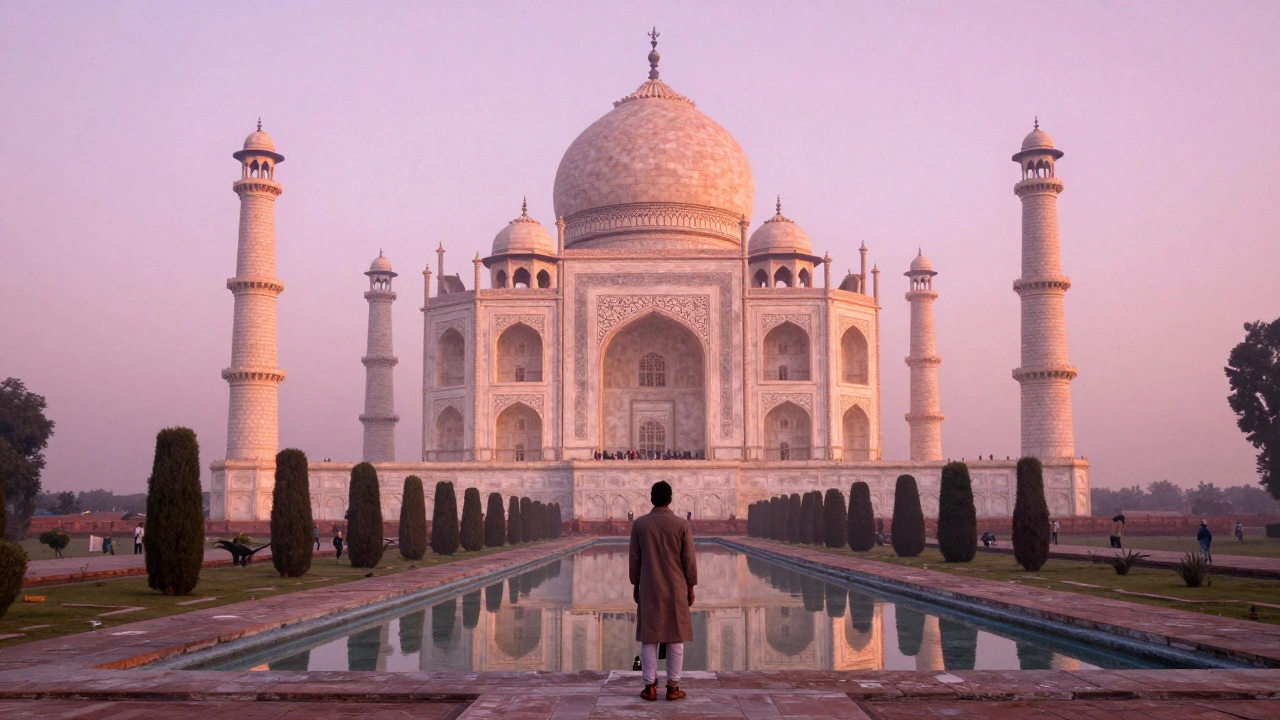
The Taj Mahal is the first name that comes up. And for good reason. Over 7 million people visit it every year. It’s the most photographed building on Earth. But most visitors don’t realize they’re seeing the result of a 22-year labor of love. Emperor Shah Jahan built it after his wife Mumtaz Mahal died in childbirth. Over 20,000 workers, 1,000 elephants, and marble from Rajasthan, jade from China, lapis lazuli from Afghanistan-every detail was chosen for meaning, not just beauty.
The marble changes color with the light. Pink at dawn, white at noon, gold at sunset. That’s not marketing. That’s geology and craftsmanship working together. Inside, the inlay work uses over 40 types of semi-precious stones. The calligraphy? It’s not random. The script grows larger as it goes higher, so it looks perfectly proportioned from the ground. This isn’t architecture-it’s optical illusion as tribute.
Is it the best? If you want iconic, flawless, and emotionally powerful, yes. But it’s also crowded, commercialized, and often seen through a phone screen. It’s a monument to love, but not necessarily the deepest expression of India’s heritage.
Khajuraho: When Art Became Worship
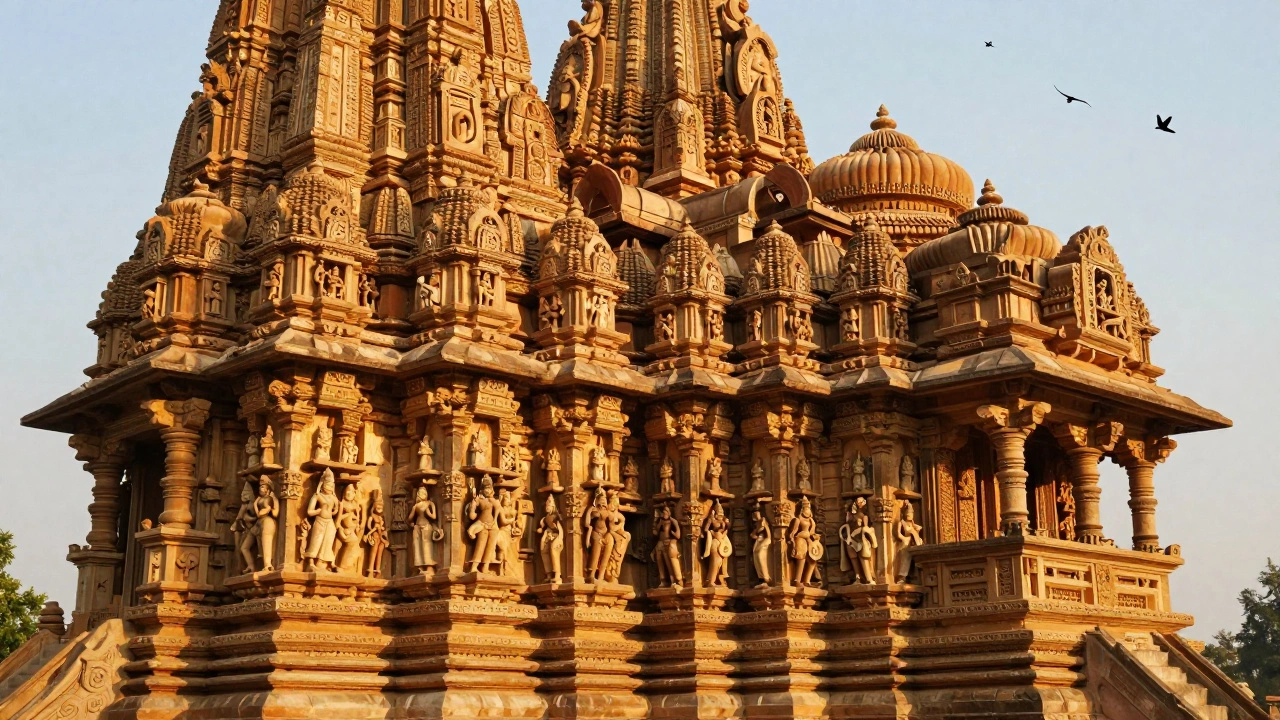
If you think Indian heritage is only about grand palaces and tombs, Khajuraho will surprise you. In the middle of Madhya Pradesh, hidden among forests, are 25 temples built between 950 and 1050 AD. What makes them unforgettable? The sculptures. Thousands of them. Not just gods and dancers. Men and women in intimate poses. Not for shock value. For spiritual meaning.
These carvings aren’t erotic. They’re tantric. They represent the union of the physical and divine. The temples were designed to show that enlightenment isn’t about denying the body-it’s about understanding it. The builders didn’t hide these images. They placed them on the outer walls, where pilgrims would see them before entering the sacred inner sanctum. The message? You must accept all of life to reach the divine.
Today, the site is quiet. No crowds push through. No vendors sell fake souvenirs. You can sit on the steps for an hour and hear only birds. The carvings still glow in the afternoon sun. If you want to understand how ancient India saw the human form-not as taboo, but as truth-Khajuraho is unmatched.
Hampi: Ruins That Feel Alive
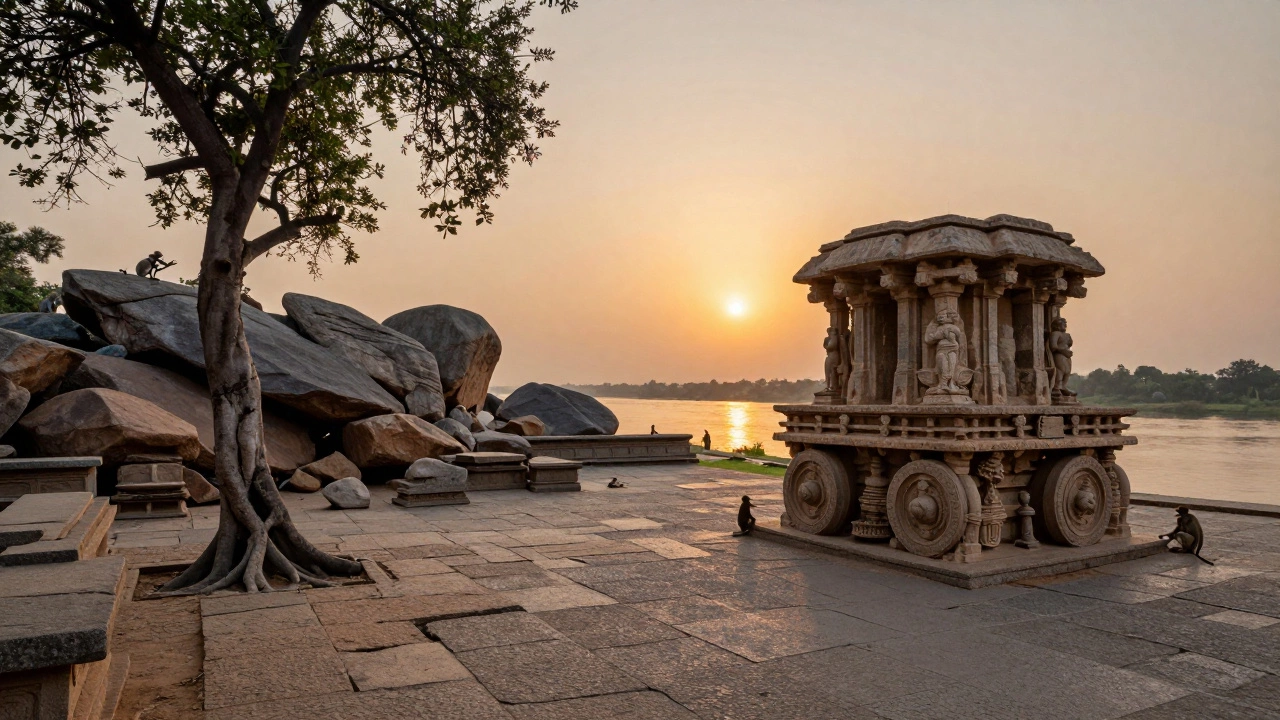
Walk through Hampi in Karnataka, and you’ll feel like you’ve stepped into a forgotten kingdom. This was the capital of the Vijayanagara Empire, one of the largest and richest in Indian history. At its peak in the 1500s, it housed over half a million people. Today, it’s a landscape of broken pillars, giant stone chariots, and temples swallowed by boulders.
The Virupaksha Temple still functions. Priests chant in Sanskrit. Devotees bring offerings. The marketplace where merchants once sold spices and gems is now a quiet path lined with fallen arches. The Stone Chariot in the Vittala Temple? Its wheels were carved to rotate. They don’t anymore-but the detail is so precise, you can still imagine the sound of the wheels turning centuries ago.
What makes Hampi special isn’t just its scale. It’s how nature reclaimed it. Fig trees grow through temple floors. Monkeys sit on broken statues. The Tungabhadra River flows past ruins like it always has. This isn’t a museum. It’s a living graveyard of glory. If you want heritage that feels real-not restored, not sanitized-Hampi gives you that.
Fatehpur Sikri: The City That Wasn’t
Just outside Agra, a ghost city waits. Akbar, the Mughal emperor, built Fatehpur Sikri in 1571 to honor a Sufi saint who predicted his son’s birth. He moved his entire court here. Then, 15 years later, he left. The water supply failed. The city was abandoned. And yet, it’s one of the most perfectly preserved Mughal sites.
The Buland Darwaza-Gate of Victory-is 54 meters tall. You can walk under it and feel the weight of empire. The Panch Mahal? A five-story palace with no walls, just columns. Akbar sat on the top floor and watched his court below, unseen. The Jodha Bai Palace has Hindu-style carvings. The Diwan-i-Khas has a central pillar with a square, circular, and triangular base-symbolizing the three faiths Akbar tried to unite: Islam, Hinduism, and Christianity.
Fatehpur Sikri isn’t just beautiful. It’s a failed dream. A ruler’s attempt to create harmony. And that’s what makes it haunting. You walk through empty courtyards and wonder: what happened here? Why did it fall? The silence answers louder than any guidebook.
Qutub Minar: The Rise of a New Era
Standing 73 meters tall in Delhi, the Qutub Minar is the tallest brick minaret in the world. It was started in 1192 by Qutb-ud-din Aibak, the first Muslim ruler of Delhi. His successor added three more stories. The iron pillar next to it? It’s over 1,600 years old-and hasn’t rusted. Scientists still study how ancient Indian metallurgy made it so resistant.
This isn’t just a tower. It’s a symbol of conquest and cultural fusion. The carvings on its base are Islamic calligraphy. Higher up, you see Hindu motifs-lotus flowers, elephants-reused from destroyed temples. The builders didn’t erase the past. They repurposed it. That’s a lesson in how empires adapt, not just dominate.
Today, you can climb 379 steps to the top. The view of Delhi is breathtaking. But the real wonder is the craftsmanship. Each stone was carved by hand, fitted without mortar, and aligned to the sun. The minaret leans slightly-not from decay, but from design. It’s meant to tilt, like a prayer bowing toward Mecca.
So, Which Is the Best?
There’s no single answer. The Taj Mahal wins for beauty. Khajuraho for spiritual depth. Hampi for raw authenticity. Fatehpur Sikri for ambition. Qutub Minar for historical turning points.
But here’s the truth: the best heritage site in India is the one that makes you pause. The one that makes you forget to take a photo. The one that leaves you wondering how people built it, why they built it, and what they believed in.
If you want to feel wonder, go to the Taj. If you want to understand India’s soul, go to Khajuraho. If you want to feel time slipping away, go to Hampi. If you want to think about power and failure, go to Fatehpur Sikri. If you want to see how history layers itself, go to Qutub Minar.
India’s heritage isn’t about ranking. It’s about resonance. The best site isn’t the most famous. It’s the one that stays with you long after you’ve left.
What to Expect When You Visit
- Timing matters: Visit early morning. Most sites open at 6 AM. You’ll avoid crowds and see the light at its best.
- Guides are worth it: A good local guide won’t just recite facts-they’ll tell you stories. Ask for someone certified by the Archaeological Survey of India.
- Dress modestly: Even at ruins, shoulders and knees should be covered. It’s respectful and keeps you comfortable in the sun.
- Carry water: Many sites have no shops. Dehydration is real in India’s heat.
- Don’t rush: Spend at least half a day at each major site. Walk slowly. Sit. Listen.
Why These Sites Are UNESCO-Recognized
All five sites are UNESCO World Heritage Sites. That means they’ve been judged to have outstanding universal value. Not just because they’re old. But because they represent human creativity, belief, or achievement that matters to everyone.
The Taj Mahal? A masterpiece of Mughal architecture. Khajuraho? A unique expression of human sexuality as spiritual symbolism. Hampi? The last great Hindu empire’s capital. Fatehpur Sikri? A bold experiment in religious tolerance. Qutub Minar? The birth of Indo-Islamic architecture.
UNESCO doesn’t pick the prettiest. It picks the most meaningful.
Is the Taj Mahal the only heritage site in India?
No. India has 43 UNESCO World Heritage Sites. That’s the sixth-highest number in the world. Others include the Ajanta and Ellora Caves, the Sundarbans, the Western Ghats, and the Red Fort. The Taj Mahal is just the most famous.
Can you visit all these sites in one trip?
You can, but you shouldn’t. Each site deserves at least a full day. Trying to cram them into a week means you’ll see them from a bus window. Pick two or three that match your interests-art, history, spirituality-and focus. Travel isn’t about checking boxes.
Are these sites safe for solo travelers?
Yes, if you take basic precautions. Stick to well-trodden paths, avoid isolated areas after dark, and use registered guides. Most heritage sites have security. The biggest risk isn’t crime-it’s heatstroke or dehydration. Drink water, wear a hat, and rest often.
What’s the best time of year to visit?
October to March. The weather is dry and cool. December and January are peak months, so book tickets early. Avoid May to July-temperatures can hit 45°C. Monsoon season (July-September) brings heavy rain and slippery paths.
Do I need to book tickets in advance?
For the Taj Mahal, yes. Tickets sell out, especially on weekends. You can buy them online through the Archaeological Survey of India’s website. For other sites like Hampi or Khajuraho, you can usually buy tickets at the gate. But online booking saves time and avoids scams.
What to Do Next
If you’re planning a trip, start with one site that speaks to you. Then let it lead you to others. Visit the Taj, and you’ll want to see Fatehpur Sikri-it’s only 40 minutes away. See Khajuraho, and you’ll be curious about the temples of Konark. Walk through Hampi, and you’ll wonder about the ruins of Vijayanagara’s other cities.
Heritage isn’t a destination. It’s a trail. And India’s trail is one of the richest on Earth.