South Indian Cuisine Preference Quiz
Find Your Perfect South Indian Cuisine Match
Answer 4 simple questions to discover which South Indian state's food best matches your preferences.
Ask ten people which South Indian state has the best food, and you’ll get ten different answers. That’s because South Indian cuisine isn’t one dish-it’s a whole map of flavors, each region cooking from its own soil, climate, and history. There’s no single winner. But if you want to know where the most unforgettable meals happen, you need to taste them yourself.
Kerala: Coconut, Curry Leaves, and Seafood That Hits Different
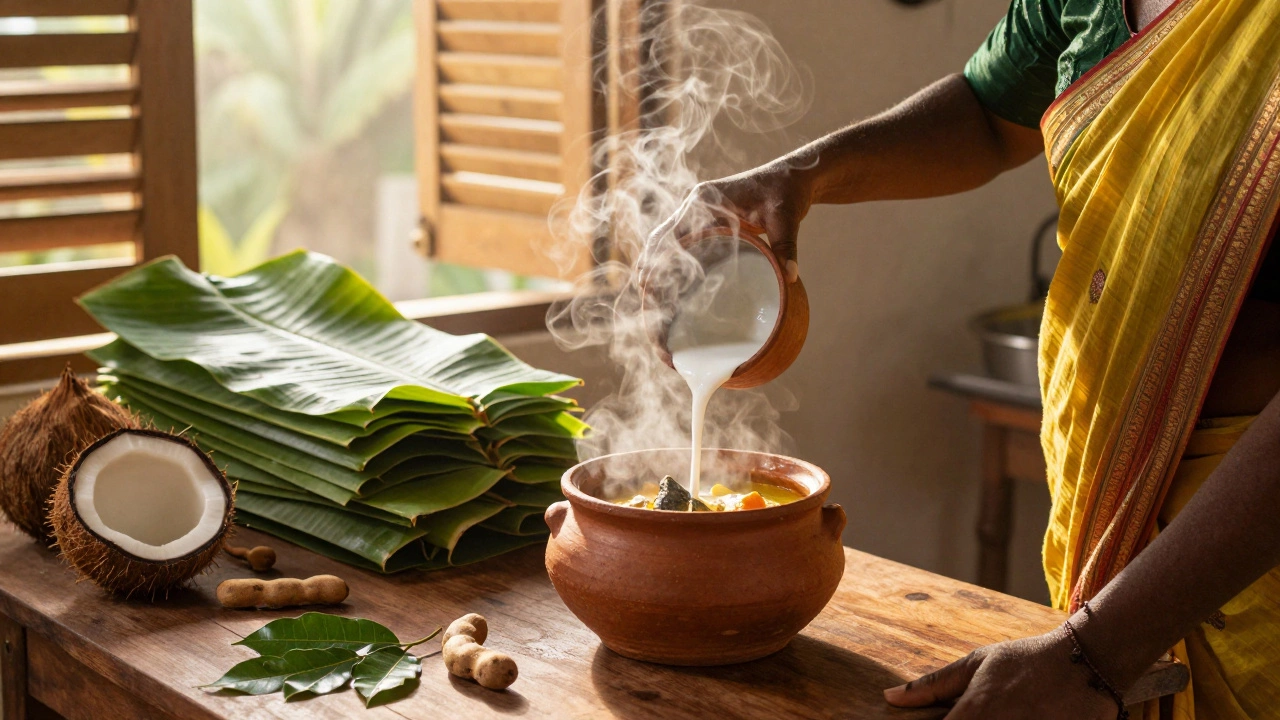
Kerala’s food smells like a monsoon breeze mixed with roasted coconut. The state doesn’t just use coconut oil-it lives in it. Every dish, from appam with stew to meen curry, carries that rich, nutty base. The seafood here isn’t just fresh; it’s treated like royalty. Sardines fried with tamarind, prawns in red chili gravy, and fish cooked in banana leaves aren’t side dishes-they’re the main event.
What makes Kerala stand out is balance. Even the spiciest dishes have a sweet undertone-jaggery in puttu, ripe plantain in avial. And then there’s the Malabar biryani, layered with dried fruits, saffron, and slow-cooked meat. It’s not as heavy as North Indian biryani. It’s lighter, fragrant, and smells like cardamom and clove after rain.
Tamil Nadu: The Soul of Rice and Lentils
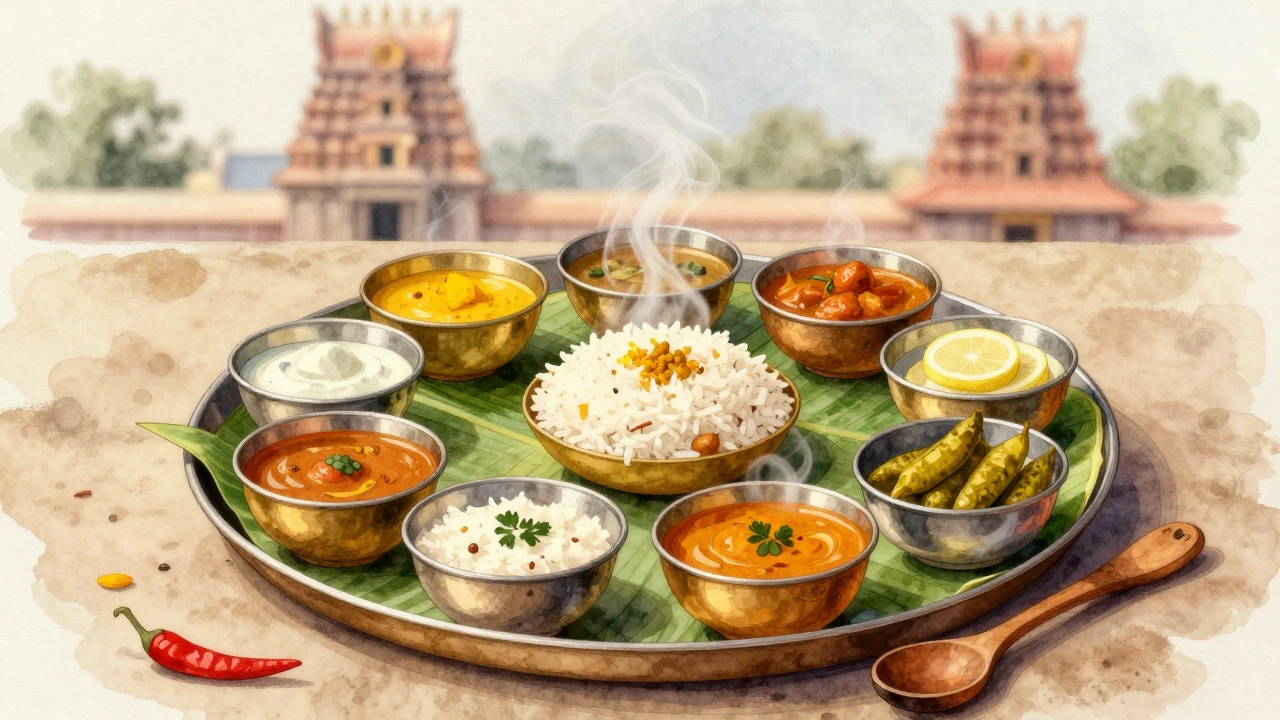
If you think South Indian food is just dosas and idlis, you haven’t been to Tamil Nadu. This is where the daily meal is a ritual. A traditional Madurai thali has at least 12 items: sambar, rasam, kootu, poriyal, pickles, curd, and two kinds of rice-one plain, one lemon-infused. Each bite has a purpose.
The rasam here isn’t soup. It’s medicine. Made with tamarind, black pepper, garlic, and curry leaves, it’s served hot after every meal. People swear it cures colds, digestion issues, even bad moods. And the idli-dosa culture? It’s religious. In Madurai, you’ll find street vendors serving idlis with coconut chutney so fresh, it still smells like the grater. In Kumbakonam, dosas are paper-thin, crisp at the edges, and filled with spiced potato-no egg, no cheese, just pure tradition.
Tamil Nadu doesn’t chase trends. It holds onto recipes passed down for generations. That’s why its food tastes like home-even if you’ve never been there.
Karnataka: The Quiet Powerhouse of Flavors
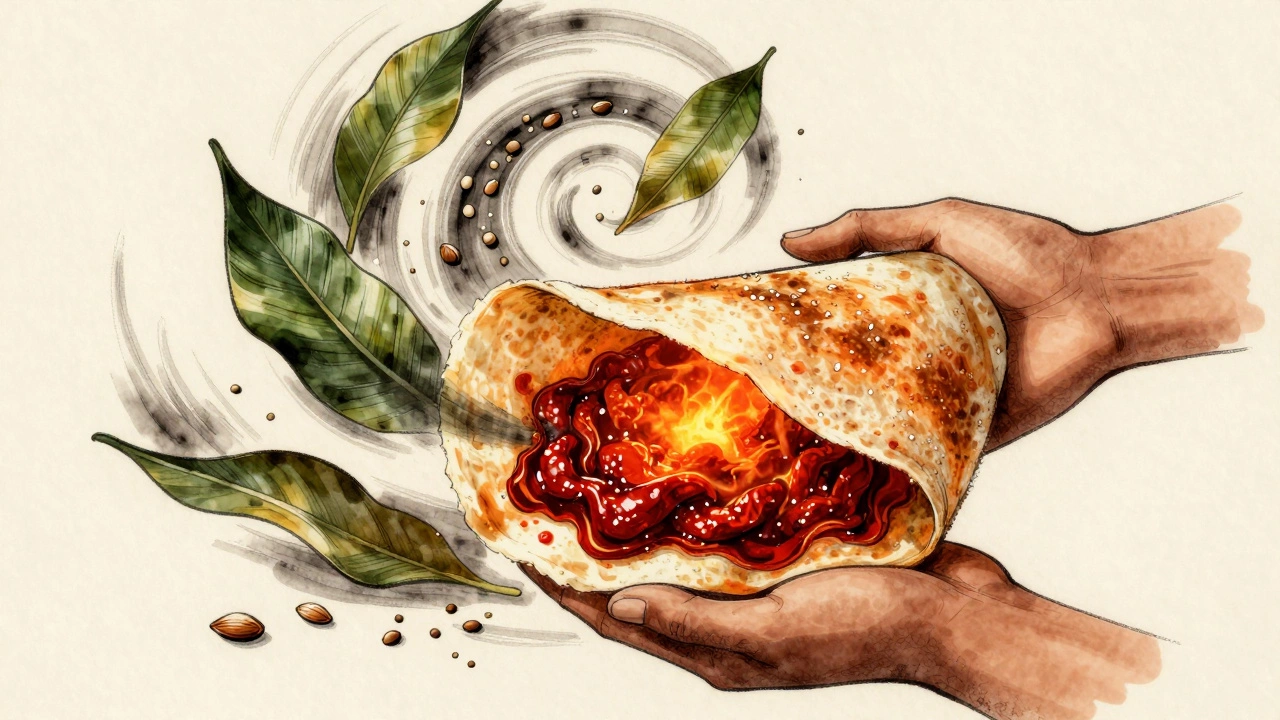
Karnataka’s food flies under the radar. But if you’ve ever had mysore masala dosa, you’ve tasted its magic. The red chili paste that coats the dosa? It’s not just spicy-it’s fermented, tangy, and layered with roasted sesame and lentils. That’s Karnataka’s signature: fermentation. They don’t just add spice. They build depth.
In Mangalore, seafood meets coconut milk in neer dosa with fish curry. In Udupi, vegetarian meals are served on banana leaves with seven sides, including a sweet jaggery-laced rice pudding called holige. And then there’s bisi bele bath, a one-pot dish of rice, lentils, vegetables, and spice powder that’s so complex, you need three tries to understand it.
Karnataka doesn’t shout. It whispers. But once you taste it, you remember. It’s the state where food is quiet, but never boring.
Andhra Pradesh and Telangana: Spice That Makes You Sweat
If you think you can handle heat, try Andhra food. This is where chili isn’t an ingredient-it’s a statement. The Andhra chicken curry uses dried red chilies ground into a paste so fiery, it turns your lips numb. The gongura pickle, made with sour sorrel leaves and mustard seeds, can wake up a dead man.
But here’s the twist: Andhra food isn’t just about burning your mouth. It’s about contrast. The same meal that has spicy prawn fry also has sweet mango chutney and cool yogurt raita. The pesarattu dosa (green gram crepe) is crunchy, earthy, and served with ginger chutney that bites back. And the hyderabadi biryani? It’s the only biryani in India where the rice is layered with saffron, fried onions, and meat that falls off the bone.
Telangana’s food is even more rustic. Bagara baingan (eggplant cooked in peanut paste) and mirchi ka salan (chili curry with peanut gravy) are staples. These aren’t restaurant dishes. They’re village meals, cooked over wood fires, eaten with hands, and remembered for life.
Why There’s No Single Winner
There’s no official crown for the best South Indian state food. That’s because each state cooks for a different reason.
- Kerala feeds the soul with comfort and coastal richness.
- Tamil Nadu feeds the spirit with ritual and tradition.
- Karnataka feeds the mind with layered, fermented complexity.
- Andhra feeds the body with bold, unapologetic heat.
Try to pick one? You’ll miss the rest. The real answer isn’t which state is best-it’s which one speaks to you. If you want gentle, creamy flavors, go to Kerala. If you crave structure and balance, Tamil Nadu wins. If you love slow-cooked depth, Karnataka is your match. If you want to feel alive, Andhra will burn you-but you’ll thank it later.
What to Eat Where (Quick Guide)
| State | Signature Dish | What Makes It Unique |
|---|---|---|
| Kerala | Malabar Biryani | Light, fragrant, with dried fruits and saffron |
| Tamil Nadu | Madurai Thali | 12+ items, including rasam and lemon rice |
| Karnataka | Mysore Masala Dosa | Fermented red chili paste filling |
| Andhra Pradesh | Andhra Chicken Curry | Fiery red chili paste, served with rice |
| Telangana | Bagara Baingan | Eggplant in peanut and tamarind gravy |
How to Taste It Right
Don’t just order the most popular dish. Go local. In Kochi, skip the tourist restaurants and find the woman selling puttu outside the temple. In Chennai, eat idli at a stall where the batter ferments in clay pots. In Mysore, ask for the dosa made with hand-ground chilies-not powder.
Drink the buttermilk. Eat the pickle. Try the odd-looking curry. The best flavors aren’t on menus. They’re in the back alleys, with old ladies stirring pots, and kids licking spoons.
What Most Tourists Get Wrong
Many think South Indian food is all about spice. It’s not. It’s about balance. A good meal has sweet, sour, bitter, salty, and umami-all in one plate.
Another mistake? Skipping breakfast. The real magic happens before noon. A simple idli with coconut chutney at 7 a.m. in Tamil Nadu tastes better than any five-star restaurant dinner.
And don’t assume vegetarian food is boring. In Karnataka, a single meal can have ten different vegetable preparations, each cooked in a different spice blend. That’s not a side dish. That’s a symphony.
Is South Indian food always spicy?
No. While Andhra and parts of Karnataka use a lot of chili, other states like Kerala and Tamil Nadu focus on balance. Many dishes are mild, relying on coconut, tamarind, and curry leaves for flavor. Spiciness is optional-you can always ask for "less chili" or "no green chili."
Which state has the healthiest South Indian food?
Tamil Nadu and Karnataka lead here. Their meals are built on fermented foods (idli, dosa), lentils, vegetables, and minimal oil. Rasam and buttermilk aid digestion. Kerala’s use of coconut oil is debated-it’s healthy in moderation, but high in saturated fat. Overall, Tamil Nadu’s traditional thali is the most nutritionally balanced.
Can I find authentic South Indian food outside India?
Yes, but with caveats. In cities like London, New York, or Dubai, you’ll find restaurants serving dosas and sambar. But the real thing-fermented batter, hand-ground masalas, fresh coconut milk-is hard to replicate. Look for places run by families from specific regions. Ask if they make their own chutney or use banana leaves. That’s your clue.
What’s the best time of year to eat South Indian food?
Monsoon season (June-September) is ideal. That’s when fresh coconut, tamarind, and local greens are at their peak. Also, rainy days make hot rasam and steaming idlis feel like comfort. Winter is good too-especially for spicy curries that warm you up.
Do I need to know how to eat with my hands?
Not required, but it helps. Eating with your right hand lets you mix flavors the way the food was meant to be tasted. You press rice into curry, scoop chutney, and feel the texture. Most restaurants will give you a spoon. But if you’re in a home or small eatery, don’t be shy. Wash your hands, use your fingers, and let the food speak.
Next Steps: Where to Start
If you’re planning a trip, don’t try to do all four states in one week. Pick one. Spend three days eating nothing but local food. Wake up with idli. Eat dosa for lunch. Have fish curry for dinner. Drink buttermilk. Skip the hotel buffet. Talk to the cook. Ask what their grandmother made. That’s how you find the real taste.
South India’s food isn’t about rankings. It’s about connection. The best meal isn’t the spiciest or the fanciest. It’s the one that makes you pause. The one that reminds you of someone you love. That’s the flavor no list can measure.