Temple Feature Comparison Tool
Compare key features of famous Indian temples from different states to understand why they're significant.
Select two temples to compare their features
When you think of ancient temples in India, you don’t just picture stone and prayer-you picture history that still hums with devotion. Millions visit these sacred sites every year, not just for worship, but to feel the weight of centuries in their footsteps. But if you’re asking which state has the most famous temples, the answer isn’t just about numbers. It’s about influence, architecture, and the sheer pull these places have on pilgrims and travelers alike.
Tamil Nadu Leads by a Wide Margin
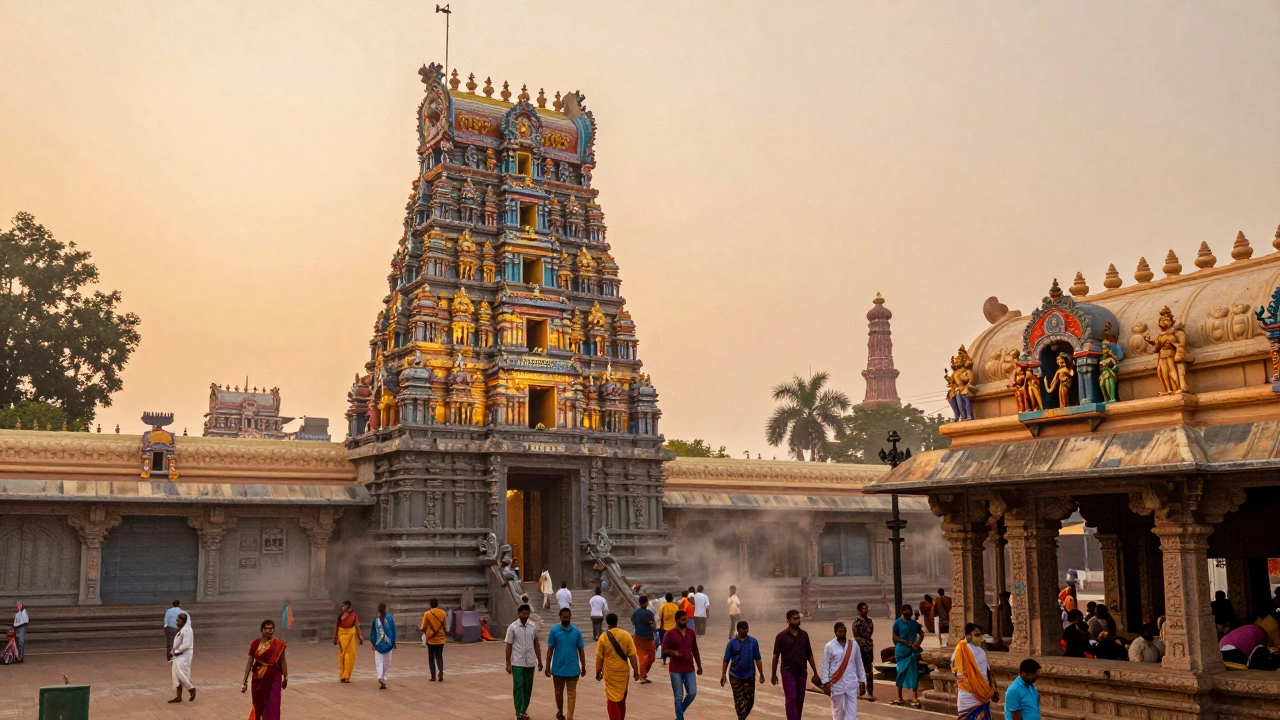
Tamil Nadu holds the crown for having the highest concentration of famous and historically significant temples in India. Over 33,000 temples call this state home, and dozens of them are recognized globally for their scale, artistry, and spiritual importance. The Meenakshi Amman Temple in Madurai alone draws over 15 million visitors annually. Its towering gopurams-colorful, sculpted gateways-are some of the most photographed religious structures in the country. Then there’s the Brihadeeswarar Temple in Thanjavur, built in 1010 CE by Rajaraja Chola I. It’s a UNESCO World Heritage Site, and its 66-meter vimana (tower) was constructed without modern machinery. Even today, its shadow doesn’t fall on the ground at noon-a feat of ancient engineering still debated by scholars.
Other major temples in Tamil Nadu include the Ramanathaswamy Temple in Rameswaram, one of the Char Dham pilgrimage sites, and the Kapaleeshwarar Temple in Chennai, known for its Dravidian style and vibrant festivals. These aren’t just local landmarks-they’re central to Hindu cosmology. Pilgrims from across India and Southeast Asia make journeys specifically to visit these sites.
Uttar Pradesh: The Sacred North
While Tamil Nadu leads in quantity and architectural grandeur, Uttar Pradesh holds its own in spiritual significance. Varanasi, the oldest continuously inhabited city in the world, is home to over 2,000 temples. The Kashi Vishwanath Temple, dedicated to Lord Shiva, is one of the twelve Jyotirlingas-the most sacred shrines in Shaivism. Millions of Hindus believe that dying in Varanasi leads to moksha, or liberation from the cycle of rebirth.
Other major temples in Uttar Pradesh include the Ayodhya Ram Janmabhoomi Temple, newly constructed and opened in 2024, which has drawn massive crowds since its inauguration. The Sarnath Temple marks where Buddha gave his first sermon, making it a key site for Buddhist pilgrims too. Uttar Pradesh’s temples are deeply tied to religious texts, legends, and ancient scriptures, giving them a different kind of fame-one rooted in belief rather than just structure.
Other Contenders with Strong Claims
Andhra Pradesh and Telangana also have a strong presence. The Tirumala Venkateswara Temple in Tirupati is the richest temple in the world, receiving over 40 million visitors a year. It’s part of the Sri Venkateswara Swamy Temple complex, which operates on donations worth billions annually. The temple’s fame comes from its scale of devotion, not just architecture.
Odisha is home to the Konark Sun Temple, a UNESCO site shaped like a giant chariot with 12 wheels and 7 horses. Its intricate carvings and astronomical alignment make it a marvel of medieval engineering. Meanwhile, Karnataka boasts the Hoysaleswara Temple in Halebidu and the Chennakesava Temple in Somanathapura-both masterpieces of Hoysala architecture with thousands of detailed sculptures.
But none of these match Tamil Nadu’s density of globally recognized temples. Even when you combine all the famous temples from Andhra, Karnataka, Odisha, and Uttar Pradesh, Tamil Nadu still has more temples listed as UNESCO sites, more temples with over 1 million annual visitors, and more temples that appear in classical Sanskrit texts as tirtha sthalas (pilgrimage destinations).
Why Tamil Nadu’s Temples Stand Out
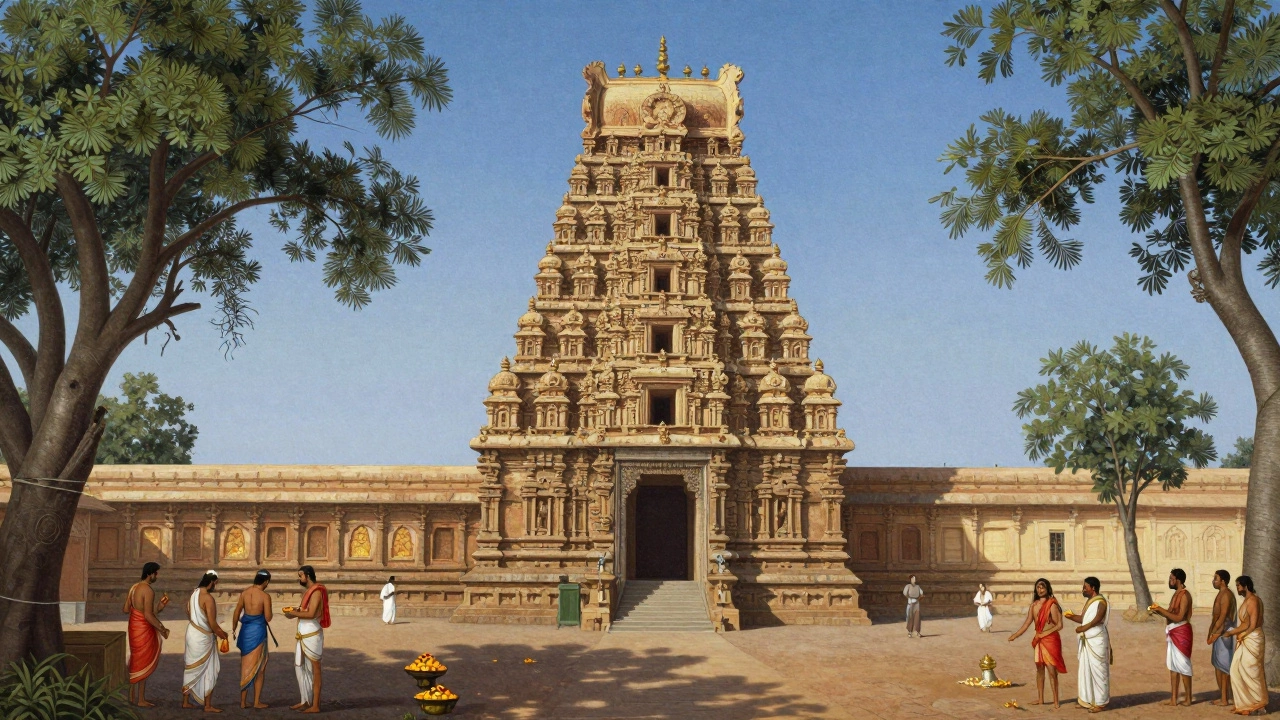
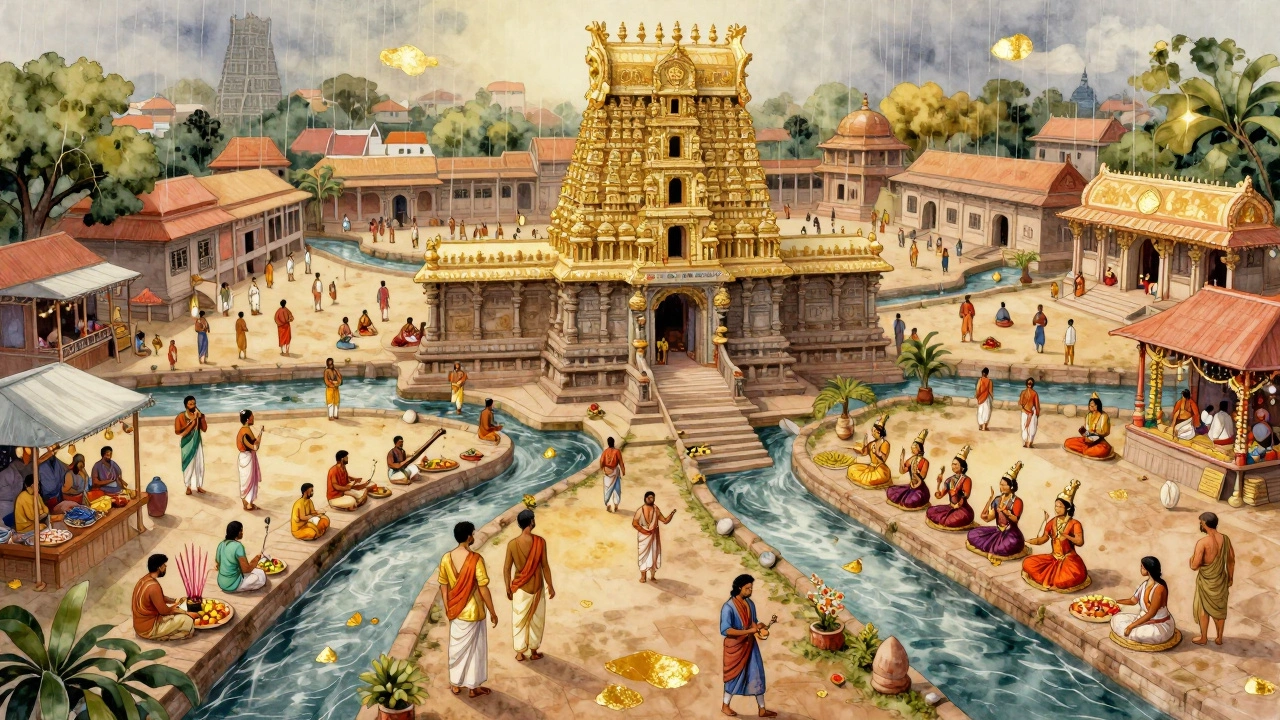
It’s not just about size or age. Tamil Nadu’s temples were built over 1,200 years by dynasties that poured wealth into art and religion. The Cholas, Pandyas, and Vijayanagara rulers didn’t just build shrines-they built entire temple towns. Streets were laid out around temple walls. Markets, schools, and hospitals were funded by temple endowments. These weren’t isolated places of worship; they were the heart of civilization.
The craftsmanship is unmatched. Stone carvings in Tamil Nadu temples show dancers, musicians, warriors, and deities in motion. Every pillar tells a story. The Nataraja sculpture at Chidambaram, depicting Shiva as the cosmic dancer, is studied in art schools worldwide. These aren’t just religious icons-they’re cultural treasures.
Temples in Tamil Nadu also host major festivals that draw international attention. The Mahamaham festival in Kumbakonam happens once every 12 years and attracts over 10 million people. The float festival at Madurai’s Meenakshi Temple is broadcast live across India. No other state has this level of continuous, large-scale temple-based cultural activity.
What This Means for Temple Tourists
If you’re planning a temple tour in India, Tamil Nadu should be your top priority. A 7-day itinerary can take you from the coastal temples of Rameswaram to the hilltop shrines of Tiruvannamalai, with stops at the grand complexes of Chidambaram, Kanchipuram, and Srirangam. Each site offers something different: architecture, rituals, music, or myth.
But don’t ignore Uttar Pradesh if you’re drawn to spiritual intensity. A visit to Varanasi at dawn, watching the Ganga Aarti on the ghats, is an experience that changes how you see devotion. Combine it with a trip to Ayodhya, and you get a full picture of North Indian sacred geography.
For travelers who want both history and spectacle, Tamil Nadu wins. For those seeking deep spiritual connection rooted in ancient texts, Uttar Pradesh delivers. But if you’re asking which state has the most famous temples-by number, by global recognition, by cultural impact-the answer is clear.
Top 5 Most Famous Temples in Tamil Nadu
- Meenakshi Amman Temple, Madurai - Over 15 million visitors/year; 14 gopurams; 33,000 sculptures
- Brihadeeswarar Temple, Thanjavur - UNESCO site; built in 1010 CE; no shadow at noon
- Ramanathaswamy Temple, Rameswaram - One of the Char Dham; 22 holy wells
- Kapaleeshwarar Temple, Chennai - Classic Dravidian style; vibrant annual festival
- Srirangam Ranganathaswamy Temple - Largest functioning temple in India; covers 156 acres
Why the Answer Matters Beyond Tourism
Understanding which state has the most famous temples isn’t just useful for planning a trip. It reveals how religion, art, and power intertwined in South India for over a millennium. While North India’s temples often reflect Mughal-era syncretism or Vedic revivalism, Tamil Nadu’s temples are pure expressions of Dravidian culture-unbroken, continuous, and deeply rooted in local language and tradition.
The temples here weren’t built to impress empires. They were built to serve communities. That’s why they still thrive today-not as museums, but as living centers of worship, music, dance, and learning. That’s the real measure of fame.
Which state in India has the most temples overall?
Tamil Nadu has the most temples in India, with over 33,000 documented temples. This includes everything from small village shrines to massive temple complexes. No other state comes close in terms of sheer volume.
Are the temples in Uttar Pradesh more important than those in Tamil Nadu?
Importance depends on context. Uttar Pradesh has temples that are spiritually central to Hinduism-like Kashi Vishwanath and Ram Janmabhoomi-because of their connection to ancient scriptures and pilgrimage traditions. Tamil Nadu’s temples are more numerous and architecturally unique. One isn’t more important than the other; they serve different roles in India’s religious landscape.
Is Tirupati more famous than Meenakshi Temple?
Tirupati’s Venkateswara Temple receives more visitors annually-over 40 million-making it the most visited temple in the world. But Meenakshi Temple is more famous for its architecture, art, and cultural symbolism. Tirupati is known for devotion and donations; Meenakshi is known for beauty and history.
Can I visit all the famous temples in one trip?
It’s not practical to visit all famous temples in one trip. A focused 10-day tour covering Tamil Nadu’s top five temples is realistic. If you want to include Uttar Pradesh, you’ll need at least 14-18 days. Most serious temple travelers plan separate trips for North and South India.
Do I need a guide to understand these temples?
You don’t need one, but it helps. Many temples have audio guides or pamphlets in English. But a local guide can explain the meaning behind carvings, rituals, and festivals you’d otherwise miss. For places like Thanjavur or Halebidu, a guide makes the difference between seeing stone-and seeing stories.