Find Your Perfect Adventure Sport
What environment excites you most?
Air & Heights
Soaring above clouds, freefalling, and conquering heights.
Water & Depth
Battling rapids or exploring underwater worlds.
Land & Speed
Climbing peaks, biking trails, and physical challenges.
Your Match:
Jumping out of a plane is an adrenaline rush that few things match. But if you have already ticked skydiving off your bucket list and are looking for something even more intense, India offers a landscape that turns fear into fuel. The country’s geography is uniquely diverse, ranging from the snow-capped Himalayas to the tropical waters of the Andaman Islands. This variety allows for extreme sports that go beyond freefall, engaging your body and mind in ways that skydiving simply cannot.
You might be wondering what could possibly top the sensation of terminal velocity. The answer lies in activities that require active skill, sustained physical effort, or interaction with unpredictable natural elements. Whether it is navigating white-water rapids or scaling vertical rock faces, these adventures demand focus and courage. Here is a look at the most thrilling alternatives to skydiving across India.
The Rush of Freefall Without the Plane
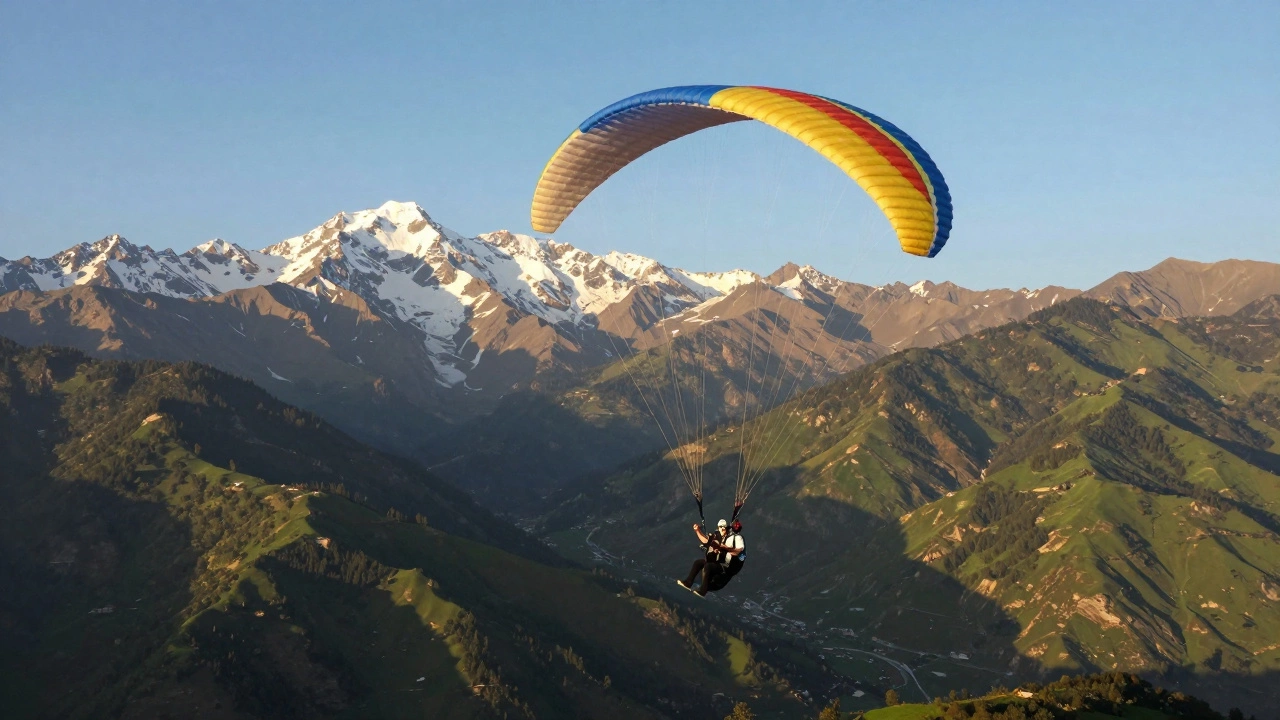
If you loved the feeling of falling but want more control or a different perspective, Paragliding is an aerial sport where participants fly unpowered foot-launched aircraft called paragliders. Unlike skydiving, which lasts only a few minutes, paragliding lets you soar for extended periods, riding thermal currents like a bird.
In India, Bir Billing, located in Himachal Pradesh, is often cited as one of the best paragliding spots in the world. Situated at an altitude of around 7,800 feet, it offers long flight durations and stunning views of the Dhauladhar range. The thrill here comes from the silence and the sheer height, combined with the skill required to navigate air currents. Tandem flights are available for beginners, allowing you to experience the lift-off and landing without needing prior training.
- Best Season: March to June and September to November.
- Duration: Flights can last anywhere from 15 minutes to over an hour.
- Skill Level: Tandem flights require no experience; solo flying requires certification.
For those who want to push the limits further, speed riding combines skiing and paragliding. You ski down steep slopes and deploy your wing at the bottom, achieving high speeds before catching air. This is available in parts of Himachal Pradesh and Uttarakhand for advanced athletes.
Facing the Abyss: Bungee Jumping
If skydiving feels too gradual, Bungee Jumping is an activity where participants jump from a tall structure while connected to a large elastic cord. The sensation is immediate and visceral. There is no glide phase, just a rapid drop followed by a violent rebound. It tests your nerve in a way that freefall does not because you are tethered to a fixed point, making the height feel more real.
India has several iconic bungee sites. The Ladakh Bungee Jump near Leh is one of the highest in the country, set against the backdrop of the Indus River and the Himalayas. Another popular spot is the Nanda Devi National Park area in Uttarakhand, though access can be challenging. In Goa, the Dudhsagar Falls bungee site offers a lush, green contrast to the arid landscapes of the north.
| Location | Height (Approx.) | Scenery | Accessibility |
|---|---|---|---|
| Ladakh (Indus River) | 90 meters | Mountainous, Arid | Moderate (Flight to Leh) |
| Goa (Dudhsagar) | 45 meters | Tropical, Waterfalls | Easy (Road access) |
| Uttarakhand (Rishikesh) | 80 meters | River Ganges, Hills | Easy (Train/Road) |
The key difference between bungee and skydiving is the duration of fear. In skydiving, you have time to adjust after the initial jump. In bungee, the commitment is instant. You step off, and there is no going back until the cord catches you.
Conquering the Elements: White-Water Rafting
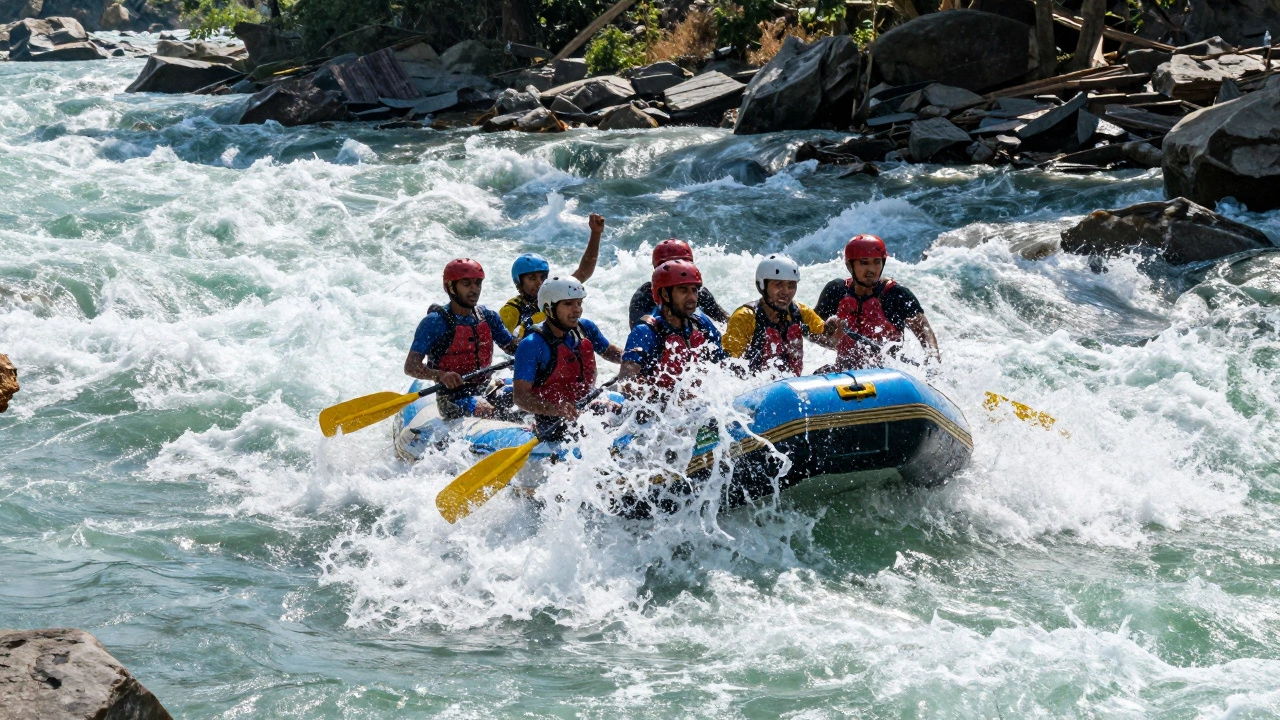
Skydiving is a solitary experience in terms of control, but White-Water Rafting is a team-based outdoor recreational activity using an inflatable raft to navigate rivers. The thrill here comes from battling the force of nature. You are not just falling; you are fighting to stay upright and on course.
Rishikesh in Uttarakhand is known as the adventure capital of India, largely due to its rafting opportunities on the River Ganges. The stretch from Shivpuri to Rishikesh offers Grade III and IV rapids, which are challenging but manageable for beginners. For those seeking more intensity, the Zanskar River in Ladakh offers some of the most demanding rafting experiences in the world, often involving camping along the riverbanks.
- Preparation: Wear a life jacket and helmet. Listen carefully to the guide’s commands.
- Paddling Technique: Use strong, synchronized strokes. Lean into turns as instructed.
- Bracing: If you fall out, keep your legs up and float downstream until rescued.
The unpredictability of water adds a layer of danger that skydiving lacks. A sudden wave can capsize the raft, and the cold water can shock your system. This engagement with the environment makes it a more immersive adventure.
Depth and Danger: Scuba Diving
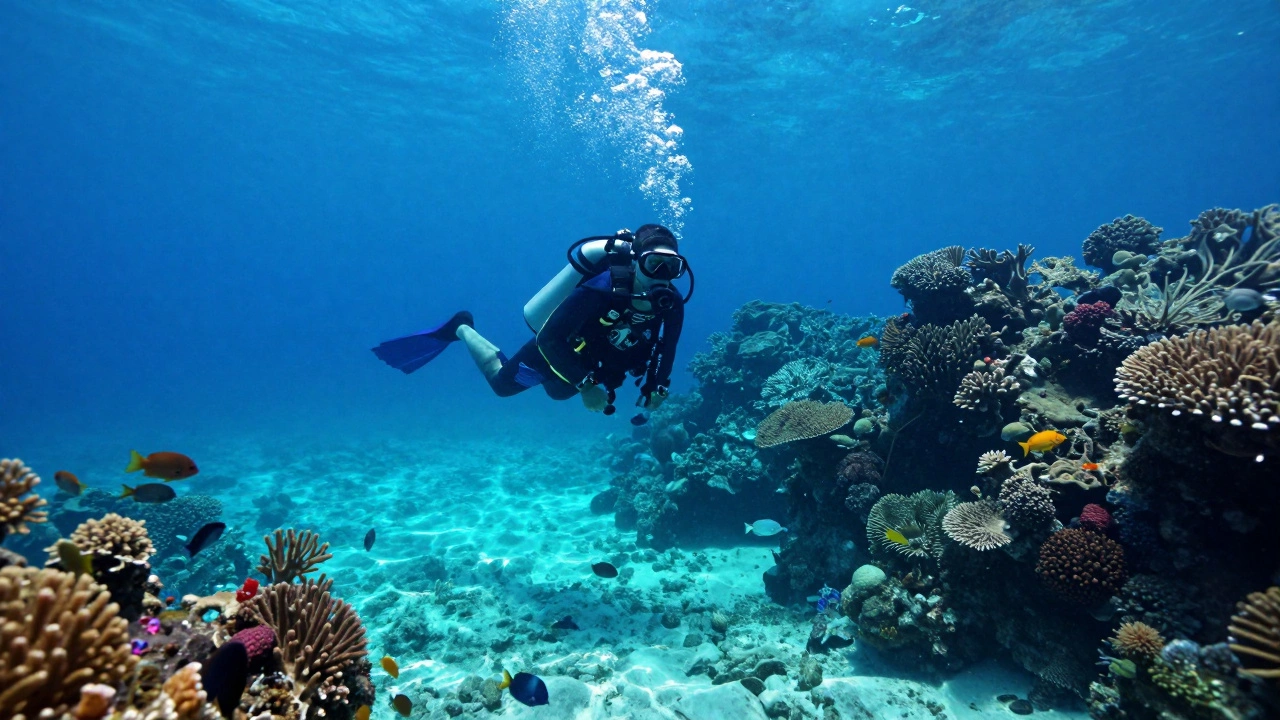
While skydiving takes you up, Scuba Diving takes you down. The thrill underwater is psychological and sensory. You are entering a world where humans do not naturally belong, relying on technology to breathe. The pressure, the darkness, and the beauty create a unique mix of awe and anxiety.
The Andaman and Nicobar Islands are India’s premier destination for scuba diving. Havelock Island (Swaraj Dweep) and Neil Island offer clear waters and vibrant coral reefs. For a more adventurous experience, wreck diving is available at the HMTS Lutma shipwreck. Exploring the interior of a sunken vessel adds an element of mystery and confinement that open-water diving does not provide.
Unlike skydiving, which is brief, scuba diving requires sustained focus. You must monitor your air supply, depth, and buoyancy constantly. One mistake can lead to serious injury, which keeps your adrenaline levels high throughout the dive.
Vertical Limits: Rock Climbing and Via Ferrata
If you want to test your physical strength and mental resolve, Rock Climbing is an activity that involves ascending natural rock formations or artificial walls. It is not just about reaching the top; it is about finding every hold and trusting your gear.
Manali in Himachal Pradesh offers excellent rock climbing routes for all levels. For something newer and equally thrilling, try Via Ferrata, also known as Iron Path. This Italian-born adventure involves climbing a route secured by iron rungs and cables bolted into the rock face. It allows you to reach heights that traditional climbing would take much longer to achieve, offering a faster-paced adrenaline fix.
Locations like Chopta in Uttarakhand and Lonavala in Maharashtra have introduced Via Ferrata courses. The combination of exposure to height and the physical exertion of climbing makes it a comprehensive workout for both body and mind.
Speed on Wheels: Mountain Biking and Motocross
Adrenaline isn’t always about height. Speed and terrain can be just as terrifying. Mountain Biking in the Himalayas offers descents that rival any roller coaster. Riding down steep, rocky trails at high speeds requires quick reflexes and total concentration.
The Leh-Manali Highway is a dream for mountain bikers, featuring passes over 4,500 meters. Similarly, motocross tracks in places like Kerala and Maharashtra offer controlled environments to test your skills on dirt bikes.
The risk of crashing is ever-present, and the physical impact of a fall is significant. This tangible danger creates a heightened state of awareness that many find more rewarding than the passive experience of skydiving.
How to Choose Your Next Adventure
Selecting the right activity depends on your comfort zone and physical fitness. Ask yourself these questions:
- Do I prefer height or speed? Height favors bungee and paragliding. Speed favors rafting and biking.
- Am I comfortable with water? If yes, consider scuba diving or rafting. If no, stick to land or air sports.
- Do I want a team experience or solo? Rafting is team-based. Paragliding and bungee can be solo (tandem).
- What is my fitness level? Rock climbing and biking require good physical condition. Bungee and paragliding are accessible to most people.
Always choose certified operators. Look for affiliations with national or international adventure sports bodies. Check reviews and ensure that safety equipment is maintained and inspected regularly. Your thrill should never come at the cost of unnecessary risk.
Safety First: Essential Tips for Extreme Sports
No matter how thrilling the activity, safety is paramount. Here are some universal rules:
- Medical Check: Inform operators of any pre-existing conditions, especially heart issues, asthma, or recent surgeries.
- Equipment Inspection: Never hesitate to ask about the maintenance schedule of gear. Look for wear and tear.
- Weather Awareness: Extreme weather can turn safe activities dangerous. Respect cancellation policies due to rain, wind, or fog.
- Insurance: Ensure your travel insurance covers adventure sports. Standard policies often exclude high-risk activities.
- Listen to Guides: Professional guides have experienced countless scenarios. Their instructions are designed to keep you alive.
India’s adventure tourism industry has grown significantly, with improved standards and infrastructure. However, vigilance is still required. Do not compromise on safety for the sake of a better photo or a quicker booking.
Conclusion: Finding Your Peak
Skydiving is a fantastic introduction to adrenaline, but it is just the beginning. India offers a spectrum of extreme sports that challenge you in different ways. Whether you are soaring above Bir Billing, plunging from a bridge in Ladakh, or battling rapids in Rishikesh, each activity provides a unique connection to nature and self-discovery.
The goal is not just to survive the experience but to thrive in it. By choosing activities that align with your interests and fitness level, you can find a new favorite thrill that surpasses the joy of freefall. Plan your trip, respect the risks, and get ready to push your boundaries.
Is bungee jumping safer than skydiving?
Both activities have their own risks. Skydiving involves parachutes and complex equipment, while bungee jumping relies on a single elastic cord. Statistically, both are safe when conducted by certified operators. However, bungee jumping has a shorter margin for error during the jump itself, whereas skydiving has multiple backup systems (reserve parachute). Safety largely depends on the operator's adherence to protocols.
What is the best time for adventure sports in India?
The best time varies by region. For Himalayan activities like paragliding, rafting, and trekking, the ideal months are March to June and September to November. Monsoon season (July-August) is generally avoided due to landslides and poor visibility. For water sports in the south and west coasts, October to May is optimal.
Do I need prior experience for paragliding in Bir Billing?
No, you do not need prior experience for tandem paragliding. You will be harnessed to an instructor who controls the glider. You just need to follow instructions for takeoff and landing. Solo paragliding requires a certified course, which typically lasts 3-7 days.
Can I do scuba diving in the Andaman Islands without certification?
Yes, you can participate in introductory dives (Discover Scuba Diving) without certification. These are supervised by instructors and limited in depth. For independent diving, you need to complete a PADI Open Water Diver course, which usually takes 3-4 days.
Which adventure sport is the most expensive in India?
Skydiving and helicopter-assisted paragliding tend to be among the most expensive due to fuel and equipment costs. Bungee jumping and scuba diving are moderately priced. White-water rafting and trekking are generally more affordable, especially if done in groups.