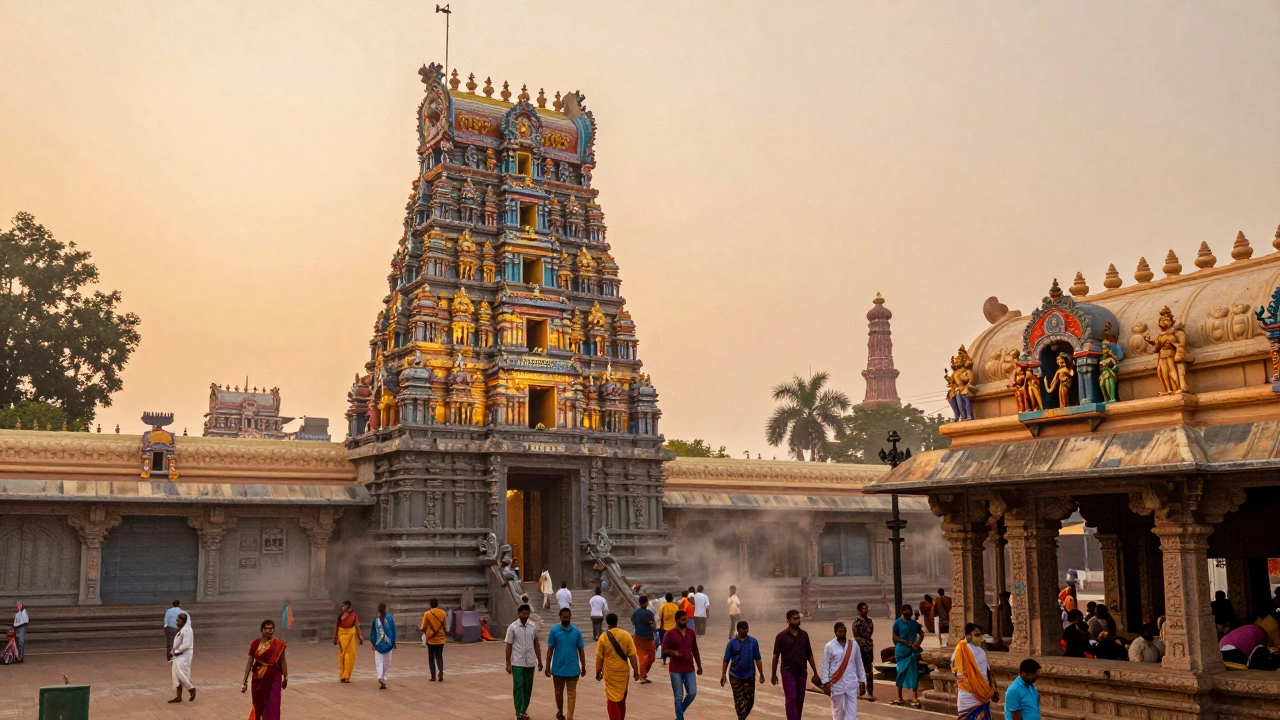
South India Temples: Sacred Sites, Rituals, and What to Expect
When you step into a South India temple, a centuries-old center of worship, art, and community life rooted in Dravidian tradition. Also known as Tamil Nadu or Kerala temples, these structures aren’t just places to pray—they’re entire worlds of sound, scent, and movement. Unlike the quiet, minimalist spaces of some religious sites, South Indian temples buzz with life: bells ringing, priests chanting, devotees offering flowers, and the smell of incense mixing with ghee from oil lamps. This isn’t performance for tourists—it’s daily devotion passed down for generations.
These temples follow a distinct architectural style called Dravidian architecture, a style defined by towering gateway towers called gopurams, pillared halls, and intricate carvings that tell stories from Hindu epics. You’ll find them in places like Madurai’s Meenakshi Amman Temple, where every wall pulses with color and detail, or in the quiet, forest-lined shrines of Kerala, where wooden ceilings and coconut oil lamps create an atmosphere of deep calm. The temple rituals India, daily ceremonies like abhishekam (sacred bathing of the deity) and arati (waving of lamps) happen on strict schedules, often timed with sunrise and sunset. Visitors aren’t just observers—they’re invited to participate, if they choose, by offering coconuts, lighting incense, or simply standing still as the chants rise.
What makes these temples unforgettable isn’t just their size or age—it’s how alive they remain. People come not just to pray, but to hear music, to meet family, to celebrate festivals like Thai Pongal or Navaratri with dancing and feasting. Even if you’re not religious, you’ll feel something when you’re surrounded by hundreds of people humming the same ancient tune, or when a priest places a drop of holy water on your forehead. There’s no other place in India where spirituality feels so tangible, so woven into the rhythm of everyday life.
And yes, you’ll need to know what to wear—no shorts in the inner courtyards, no shoes inside, and often no leather. But that’s part of the experience: stepping out of your usual habits and into a space that asks for respect, not just attention. The posts below cover everything from how to time your visit to avoid crowds, what to expect during a temple festival, why some temples don’t allow foreigners in certain areas, and how to handle the emotional moments—like crying during prayer—that many visitors don’t talk about. You’ll find real stories from people who’ve walked these stone paths, not just guidebook facts.