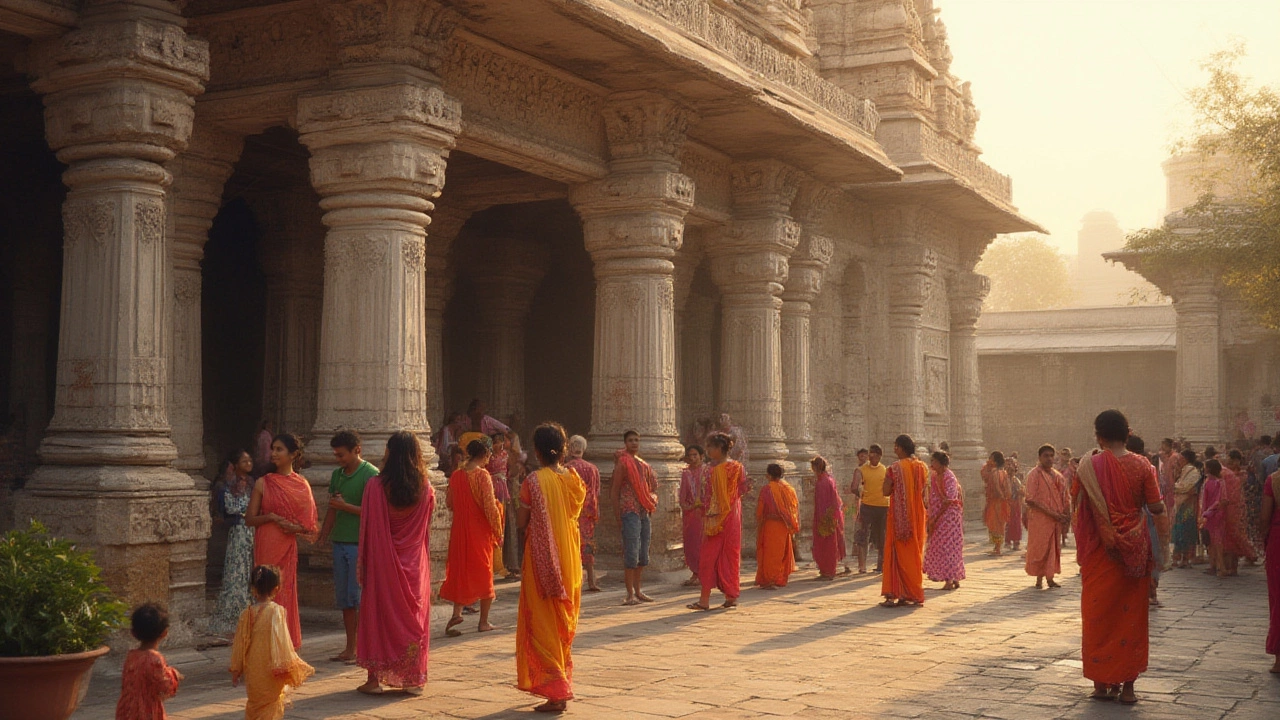
What Not to Do in Temples: Essential Rules for Respectful Visits
When you step into an Indian temple, a sacred space where devotion, tradition, and daily life intertwine. Also known as mandir, it’s not just a building—it’s a living part of India’s spiritual fabric. Many visitors mean well but unknowingly break unspoken rules that can offend locals and disrupt worship. You don’t need to understand every ritual to be respectful—you just need to know what not to do.
First, never enter with shoes on. It’s not about cleanliness—it’s about purity. Temples are considered the home of the divine, and footwear carries the dust of the outside world. You’ll see shoe racks at every entrance for a reason. Leave them there, even if you’re in a hurry. Same goes for leather items: belts, wallets, or bags made from animal skin are often banned inside, especially in Hindu temples. Why? Because cows are sacred, and using their skin inside a holy space goes against deep-rooted beliefs.
Another common mistake? Dressing like you’re at the beach. Revealing clothes—shorts, tank tops, miniskirts—are a no-go. Women should cover their shoulders and knees; men should wear long pants or traditional dhotis if possible. This isn’t about modesty for modesty’s sake—it’s about honoring the space. You wouldn’t walk into a courtroom in flip-flops. Don’t walk into a temple like you’re heading to a party. And don’t point your feet at idols or priests. In Indian culture, feet are considered the lowest part of the body—literally and spiritually. Pointing them at something sacred is rude, even if you didn’t mean it.
Photography? Check first. Many temples ban photos inside the sanctum, especially of deities. Some allow it in courtyards; others don’t allow it at all. Always look for signs or ask quietly. Flash photography is almost always forbidden—it’s seen as disrespectful to the deity’s presence. And never touch idols unless you’re a priest or have been given permission. Even if the idol looks inviting, don’t reach out. That’s not just a rule—it’s a boundary.
Noise matters too. Loud talking, laughing, or phone calls break the calm. Temples are places for quiet reflection, not Instagram backdrops. If you’re with a group, keep your voice low. Don’t bring food or drinks inside unless it’s offered as prasad. And never eat or drink in front of the main shrine. Even chewing gum? Avoid it. These aren’t arbitrary rules—they’re part of a centuries-old practice of maintaining sanctity.
Also, don’t assume everyone follows the same customs. A temple in Varanasi might have different rules than one in Tamil Nadu. Some allow non-Hindus in certain areas; others don’t. Always observe what locals are doing and follow their lead. If you see people removing their shirts before entering, do the same. If you see women covering their heads, consider it. It’s not about conversion—it’s about respect.
And yes, this applies to all faiths. Sikh gurdwaras, Buddhist viharas, Jain deras—each has its own norms. In a gurdwara, you cover your head and sit on the floor. In a Jain temple, you might need to wear a mask to avoid inhaling insects. The core idea is the same: you’re a guest in someone else’s sacred home. Treat it like one.
There’s no magic checklist that covers every temple in India. But if you remember this: no shoes, no revealing clothes, no pointing feet, no flash, no noise, and always ask before you do something— you’re already ahead of most visitors. The goal isn’t to perform perfectly. It’s to show you care. And that’s what people notice.
Below, you’ll find real stories and practical tips from travelers who’ve been there—what they got wrong, what they learned, and how to avoid the same mistakes. No theory. Just what works.