Angkor Wat Religious Identifier
Select a Feature
Click on an element you see at the temple to discover its religious origin.
Ready to explore?
Select a feature from the list to see if it belongs to the original Hindu design or the later Buddhist adaptation.
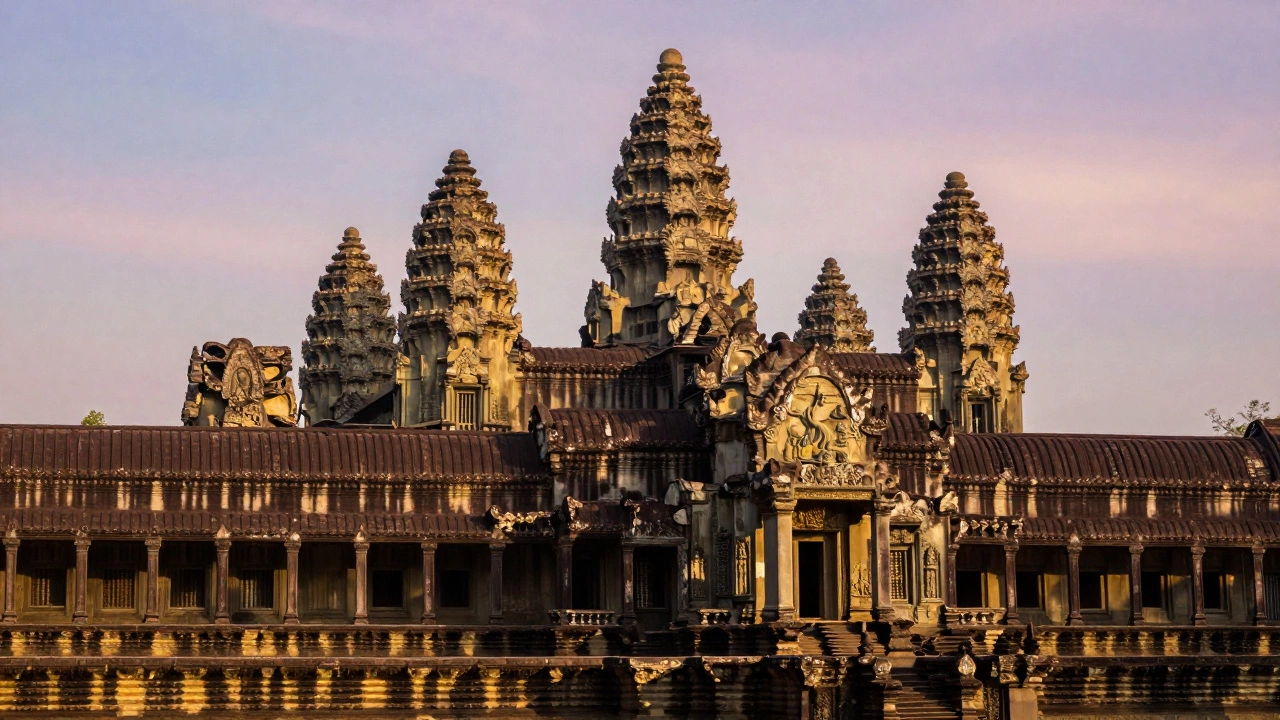
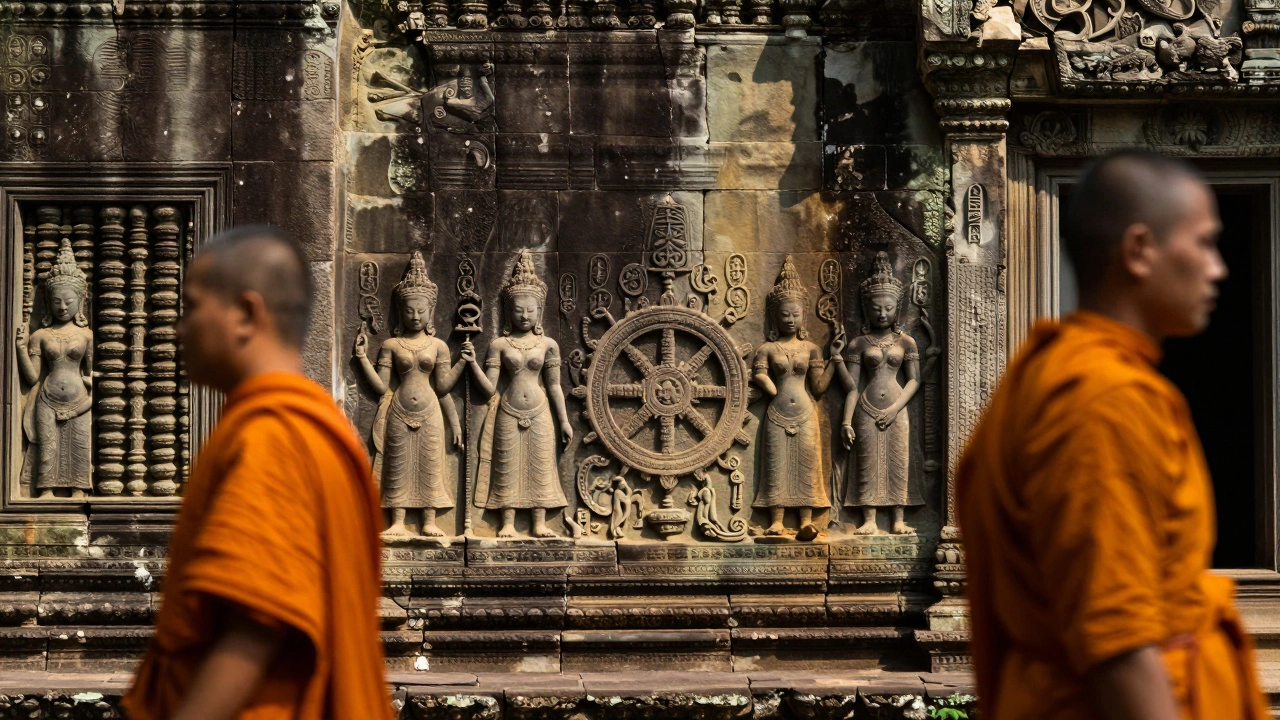
Stand in front of Angkor Wat, and you might feel a bit confused. The massive stone towers look like Hindu mountains, but the monks walking around wear orange robes typical of Buddhism. So, is it Hindu or Buddhist? The short answer is: both. It was built as a Hindu temple and later became one of the largest Buddhist sites in the world.
This religious shift isn't just a fun fact for trivia night. It explains why the carvings look so different from section to section. If you are planning a trip to Southeast Asia, understanding this duality helps you read the stones like a book. You stop seeing random decorations and start seeing a story of war, politics, and spiritual evolution.
The Hindu Origins: A Tribute to Vishnu
To understand the temple, you have to go back to its beginning. King Suryavarman II commissioned Angkor Wat in the early 12th century. At that time, the Khmer Empire was deeply rooted in Hinduism. Specifically, the temple was dedicated to Vishnu, the preserver god in the Hindu trinity.
You can see this everywhere if you know what to look for. The entire complex is oriented to the west. In Hindu tradition, west is the direction of death. This suggests Angkor Wat wasn't just a place for worship; it was also intended to be King Suryavarman II's mausoleum. The five central towers represent Mount Meru, the home of the gods in Hindu cosmology. When you walk through the galleries, you aren't just looking at art. You are walking through a map of the Hindu universe.
The bas-reliefs tell stories from Hindu epics like the Mahabharata and the Ramayana. There is a famous carving called the Churning of the Ocean of Milk. It shows devas (gods) and asuras (demons) pulling on a serpent to produce nectar. This scene is pure Hindu mythology. It has nothing to do with Buddhism. If you visit today, these carvings remain untouched because they are too valuable to remove.
The Shift to Theravada Buddhism
So, how did it become Buddhist? It wasn't an overnight decision. It happened over centuries due to political changes. By the late 13th and early 14th centuries, the power of the Khmer Empire began to wane. The neighboring Siamese kingdoms (modern-day Thailand) started invading. More importantly, the dominant form of Buddhism changed.
Before this period, many Khmer kings practiced Mahayana Buddhism or Hinduism. But Theravada Buddhism spread from Sri Lanka and Burma. It was simpler and more focused on individual enlightenment. As new kings rose to power, they adopted Theravada Buddhism to unify their people and distance themselves from their enemies.
The physical evidence of this change is visible on the walls. Look closely at the apsaras (celestial dancers). Originally, they were Hindu figures. Over time, artisans chiseled out Hindu symbols and replaced them with Buddhist ones. For example, the wheel symbol of Vishnu was often carved over to look like the Dharma Wheel of Buddha. Some statues of Hindu gods were modified to look like Bodhisattvas, beings who delay their own nirvana to help others.
By the 15th century, Angkor Wat had fully transitioned into a Buddhist monastery. Monks lived there, studied texts, and performed rituals. The Hindu meaning didn't disappear, though. It was layered underneath. Today, when you pray at Angkor Wat, you are participating in a Buddhist ritual on a site designed for Hindu devotion.
How to Spot the Difference on Your Tour
If you are visiting Angkor Wat, you don't need a theology degree to spot the differences. Here is a simple guide to help you navigate the grounds.
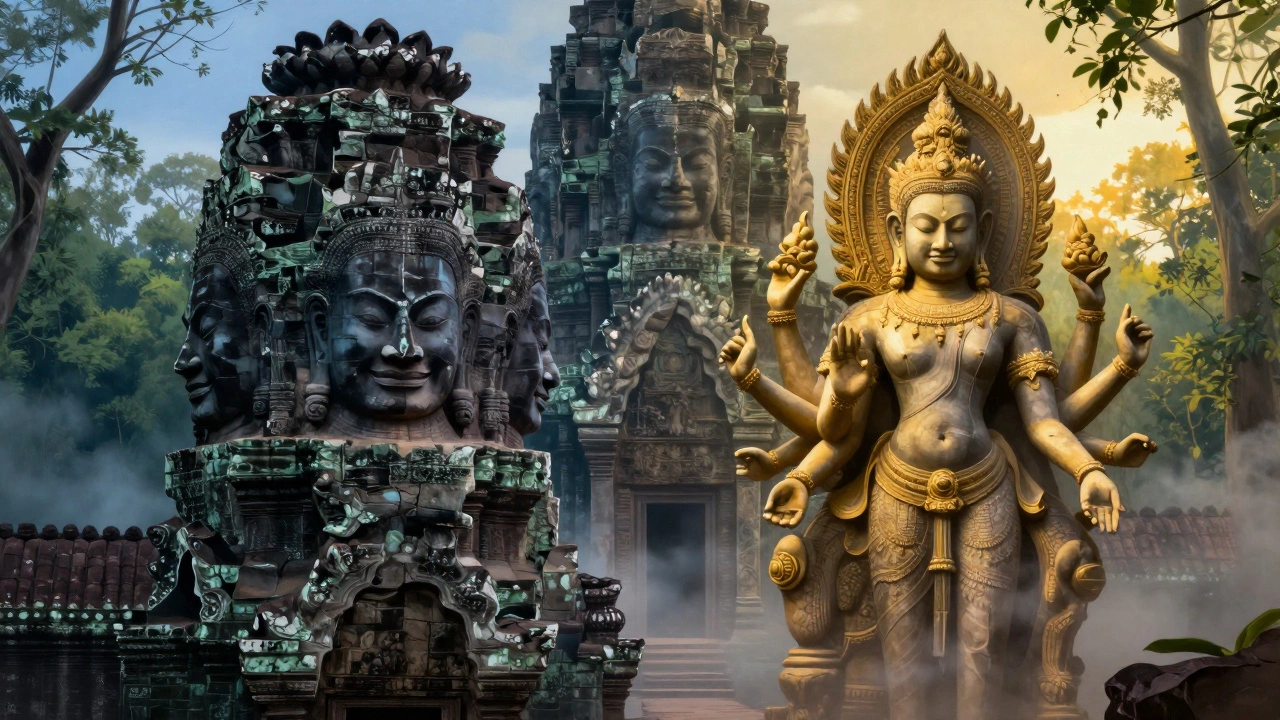
- Look at the Faces: Hindu deities usually have multiple arms. Vishnu has four. Buddha images typically have two hands in specific mudras (gestures). If you see a statue with four arms holding a discus or conch, it is Hindu.
- Check the Symbols: The lotus flower is sacred in both religions, but the context matters. In Hindu sections, it often supports a deity. In Buddhist sections, it might support a stupa or a monk.
- Observe the Orientation: The main sanctuary faces west, honoring the Hindu tradition of death. However, the surrounding monastic buildings face east, which is common in Buddhist architecture for catching the morning sun during meditation.
Don't get frustrated if things seem mixed up. That is the point. The temple is a palimpsest-a manuscript written over many times. Each layer tells you about the people who lived then.
| Feature | Hindu Origin | Buddhist Adaptation |
|---|---|---|
| Primary Deity | Vishnu (Preserver) | Buddha (Enlightened One) |
| Central Symbol | Mount Meru (Five Towers) | Dharma Wheel (Chiseled over wheels) |
| Bas-Reliefs | Mahabharata & Ramayana Epics | Jataka Tales (Life of Buddha) |
| Statues | Multi-armed Gods | Seated Meditating Figures |
| Purpose | Royal Mausoleum & State Cult | Monastery & Pilgrimage Site |
Angkor Wat vs. Other Temples in the Complex
It is easy to assume all temples in the Angkor Archaeological Park are the same. They are not. While Angkor Wat is the most famous, other nearby structures tell different religious stories.
Bayon Temple, located within the Angkor Thom complex, is purely Buddhist. Built by King Jayavarman VII, it features hundreds of serene, smiling faces of Avalokiteshvara, a Bodhisattva. Unlike Angkor Wat, Bayon was never Hindu. It represents the height of state-sponsored Mahayana Buddhism.
Preah Khan is another major site. Like Angkor Wat, it started as Hindu (dedicated to Vishnu) and later converted to Buddhist. However, Preah Khan is much wilder. Vines grow over the stones, and the layout is labyrinthine. It gives you a sense of how quickly nature reclaims these sites when political will fades.
Understanding these distinctions helps you plan your tour. If you want pure Hindu iconography, you won't find much intact anywhere except the original carvings at Angkor Wat. If you want to see the Buddhist transformation clearly, Bayon is your best bet.
Why This Matters for Modern Visitors
You might wonder why you should care about 900-year-old religious shifts. It matters because it changes how you respect the site. Cambodia is now 97% Buddhist. The monks you see chanting in the morning are following a tradition that took over Angkor Wat centuries ago.
When you dress modestly-covering shoulders and knees-you are respecting current Buddhist norms, even though the building was designed for Hindu priests who dressed differently. When you remove your shoes before entering the inner sanctuaries, you are following modern protocol, not ancient Hindu law.
Also, recognizing the blend helps you appreciate the resilience of Cambodian culture. The Khmer people didn't destroy their past. They adapted it. They kept the beautiful Hindu art because it was beautiful, even as they changed the meaning behind it. This tolerance is part of the temple's charm.
Practical Tips for Exploring the Religious Layers
To get the most out of your visit, here are some practical steps. First, hire a local guide. They can point out the subtle chisel marks where Hindu symbols were removed. Second, visit early in the morning. The light hits the eastern galleries first, highlighting the details of the carvings better than midday sun.
Third, spend time in the library ruins near the entrance. These small structures once held sacred texts. In Hindu times, they held Vedas. In Buddhist times, they held Tripitaka. Standing there, you can imagine the scholars debating philosophy under the same roof.
Finally, take photos of the ceiling in the central tower. It depicts Indra riding an elephant. This is a clear Hindu reference that survived the conversion. It serves as a reminder that the Hindu heart of Angkor Wat still beats beneath the Buddhist skin.
Is Angkor Wat still used for Hindu worship?
No, Angkor Wat is not currently used for Hindu worship. It is an active Theravada Buddhist monastery. While the architecture and carvings are Hindu, the rituals performed there today are Buddhist. You will see monks praying and offering flowers to Buddha statues, not Hindu deities.
Can I see Hindu statues at Angkor Wat?
Yes, but they are mostly integrated into the reliefs and wall carvings rather than standing alone as objects of worship. Many free-standing Hindu statues were removed or modified. However, the bas-reliefs depicting scenes from the Mahabharata and Ramayana are well-preserved and clearly Hindu.
Why does Angkor Wat face west?
Angkor Wat faces west because it was originally built as a Hindu temple dedicated to Vishnu and served as a mausoleum for King Suryavarman II. In Hindu tradition, west is associated with Yama, the god of death, and is the appropriate direction for funerary monuments. Most other Khmer temples face east.
What is the difference between Angkor Wat and Bayon Temple?
The main difference is religious origin. Angkor Wat started as Hindu and became Buddhist. Bayon Temple was always Buddhist, specifically Mahayana Buddhism, and features the iconic smiling faces of Avalokiteshvara. Bayon is located within the Angkor Thom enclosure, while Angkor Wat stands apart.
Do I need to be respectful of both religions when visiting?
Yes. Since the site is currently a functioning Buddhist monastery, you must follow Buddhist etiquette. This includes dressing modestly (covering shoulders and knees), removing shoes before entering inner sanctuaries, and speaking quietly. Respecting the current religious practice is essential for a positive experience.