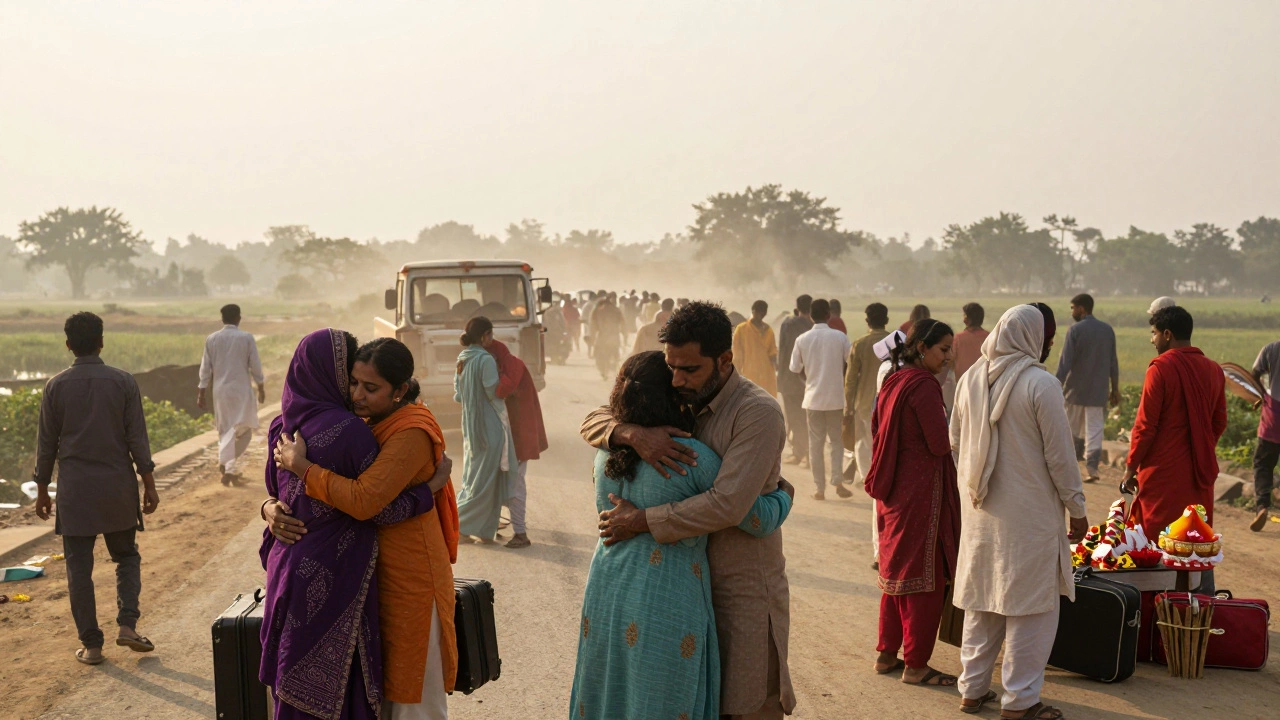
Every year, over 10 million foreign travelers set foot in India. But who are they? If you’ve ever wondered which country sends the most tourists to India, the answer isn’t what most people guess. It’s not the U.S., not the UK, and not even China. The top spot goes to Bangladesh.
Why Bangladesh Leads the Pack
Bangladesh isn’t just a neighbor-it’s a cultural twin. With shared languages, food, festivals, and family ties, millions of Bangladeshis travel to India for reasons that go far beyond sightseeing. Many visit relatives in states like West Bengal, Assam, and Tripura, where borders are porous and family networks stretch across both sides. Others come for affordable healthcare, especially in cities like Kolkata, Delhi, and Lucknow, where specialized treatments cost a fraction of what they do back home. Religious tourism also plays a big role. Millions of Bangladeshi Muslims visit Sufi shrines in Ajmer, Delhi, and Aurangabad, while Hindus make pilgrimages to Varanasi, Haridwar, and Puri.
In 2025, Bangladesh accounted for over 2.1 million arrivals into India, according to India’s Bureau of Immigration. That’s nearly 20% of all foreign tourists. The second-largest group? The United States, with around 1.4 million visitors. The UK follows closely behind with 1.2 million. So while Western tourists get the most media attention, they’re not the biggest group by far.
The Top 5 Nationalities Visiting India
Here’s who’s really coming-and why:
- Bangladesh (2.1 million): Family visits, medical tourism, religious pilgrimages.
- United States (1.4 million): Cultural exploration, yoga retreats, spiritual tourism, business travel.
- United Kingdom (1.2 million): Heritage tourism, diaspora visits, backpacking, luxury travel.
- Nepal (980,000): Religious sites (especially Pashupatinath and Kedarnath), education, medical care, seasonal work.
- Russia (720,000): Affordable wellness tourism, Ayurveda retreats, beach holidays in Goa, and off-season travel.
These five countries alone account for over 6 million arrivals annually. That’s more than half of all foreign tourists to India. And each group has its own pattern. While Bangladeshis often stay for weeks or months, Americans and Europeans tend to take shorter trips-usually under 30 days. Russians, on the other hand, flock to Goa between November and March, turning coastal towns into temporary Russian enclaves.
What Draws Each Group?
It’s not just about numbers-it’s about purpose. Tourists from different countries come for wildly different reasons, even when they visit the same places.
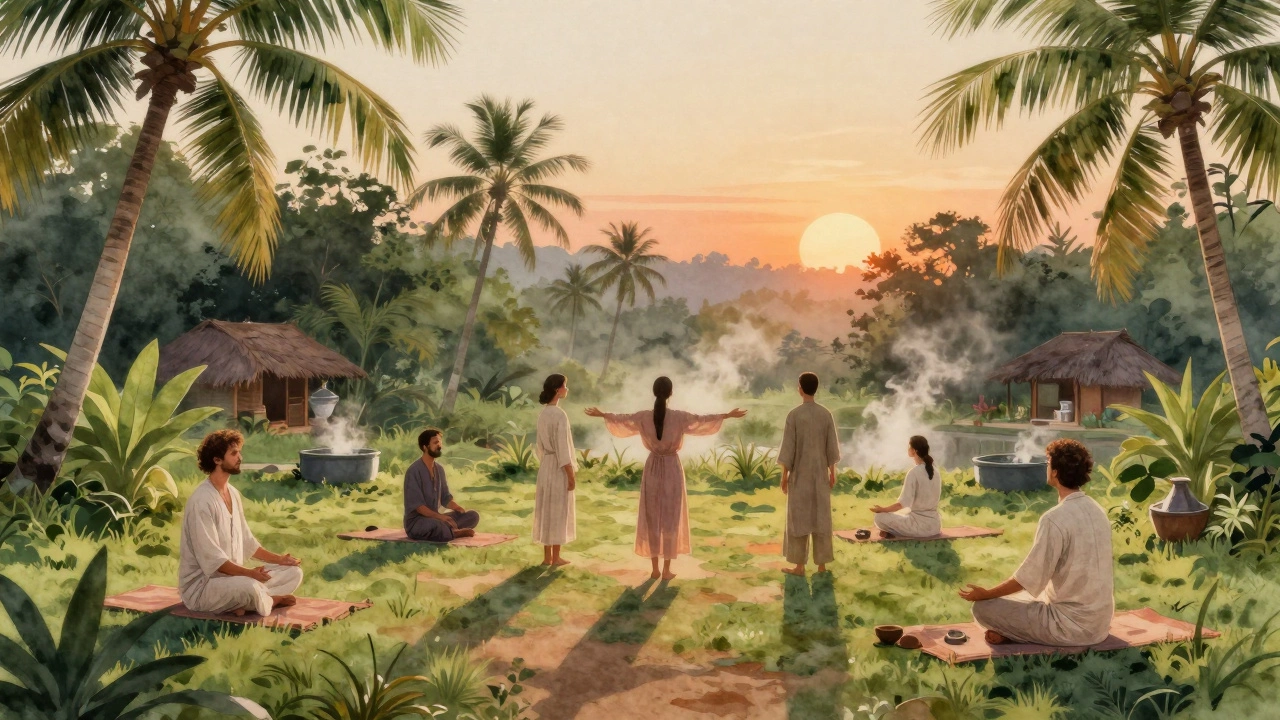
For Americans, India is a spiritual destination. Yoga, meditation, and Ayurveda draw tens of thousands to Rishikesh, Mysore, and Kerala. Many return year after year, building long-term relationships with ashrams and wellness centers. Business travelers also make up a growing segment, especially in tech hubs like Bangalore and Hyderabad.
British tourists are often descendants of the colonial era. They return to trace family roots, visit old school buildings, or walk through British-built hill stations like Shimla and Ooty. Luxury train journeys like the Palace on Wheels attract older travelers with disposable income. Meanwhile, younger Brits backpack through Rajasthan and Uttar Pradesh on a budget, drawn by the affordability and authenticity.
Nepalese visitors are mostly pilgrims. The Kedarnath and Badrinath temples in Uttarakhand see massive influxes during the Char Dham Yatra season. Many also come for higher education-India has over 15,000 Nepali students enrolled in medical and engineering colleges.
Russians are drawn by cost and climate. A 30-day Ayurvedic detox in Kerala costs less than $1,000, while a beachside villa in Goa runs under $50 a night. With harsh winters at home, many Russians treat India as a seasonal escape, sometimes renting apartments for months.
The Hidden Trends
Beyond the top five, other countries are rising fast. Sri Lanka, Malaysia, and Thailand are sending more visitors than ever, especially after India simplified visa rules for ASEAN nations in 2024. Dubai-based travelers-many of whom are Indian expats-are also a growing segment. They often combine business trips with extended family visits.
There’s also a quiet but steady increase in African tourists, especially from Nigeria and Kenya. Many come for medical treatments in Chennai and Hyderabad, where cancer care and orthopedic surgery cost 60-70% less than in their home countries. Others come for educational opportunities-India’s engineering and management colleges are increasingly popular.
And while China’s tourism numbers dropped sharply after 2020 due to travel restrictions and geopolitical tensions, they’re slowly rebounding. In 2025, Chinese visitors rose by 18% compared to 2024, mostly to Delhi, Agra, and Varanasi. They’re drawn by India’s ancient history and the growing number of Mandarin-speaking guides.
What This Means for Travelers
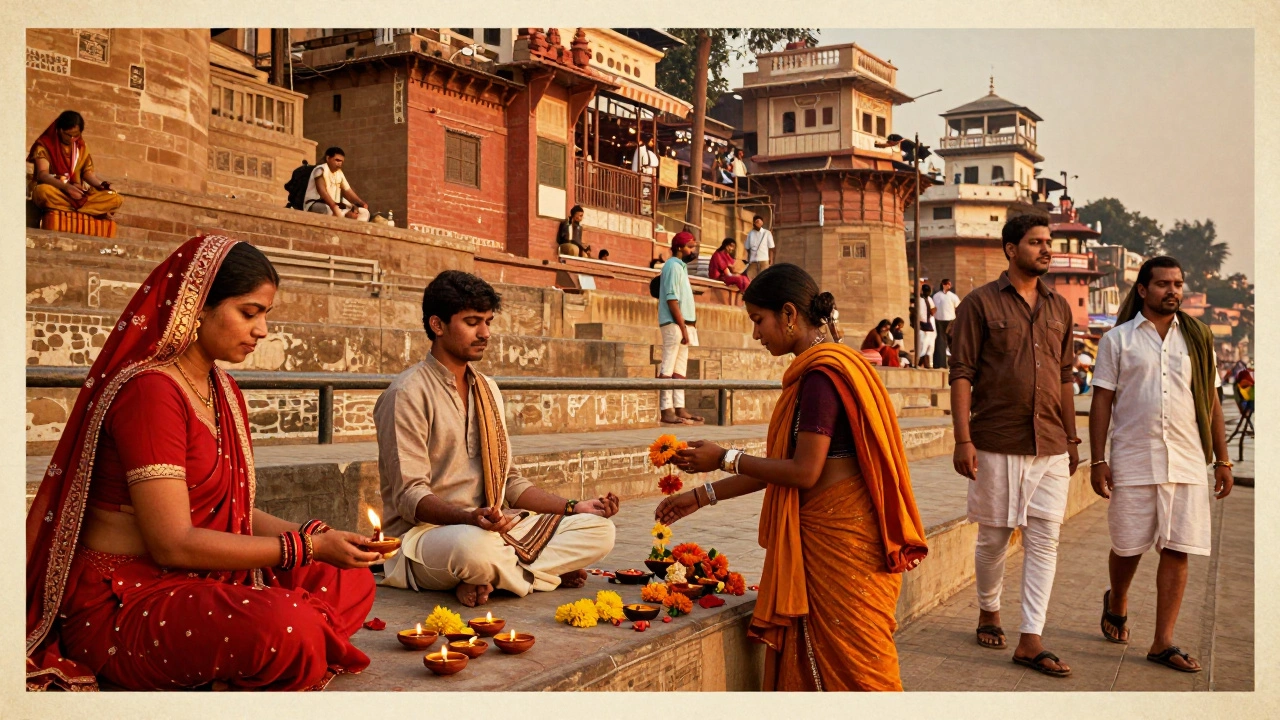
If you’re planning a trip to India, understanding who else is there can change your experience. During peak season (October to March), you’ll share streets with thousands of Bangladeshis, Russians, and Nepalis. In Varanasi, you might hear Bengali, Hindi, Russian, and Nepali all in one temple courtyard. In Goa, Russian signs and menus are common. In Kerala, you’ll find Ayurvedic centers offering Russian-language consultations.
For solo travelers, this means more services tailored to international needs-better translation, more diverse food options, and easier access to medical help. For cultural tourists, it means deeper immersion. You’re not just seeing India-you’re walking through a living mosaic of global connections.
Why It Matters
India’s tourism isn’t just about temples and tuk-tuks. It’s about people. The fact that Bangladesh sends more visitors than any other country shows how deeply intertwined the subcontinent’s cultures are. It’s not a story of foreign tourists discovering India-it’s a story of neighbors, families, and communities reconnecting.
That’s why the numbers matter. They reveal a truth that guidebooks often miss: India isn’t just a destination. It’s a homeland for millions who live just across the border. And for those who come from afar, it’s a place of healing, discovery, and belonging.