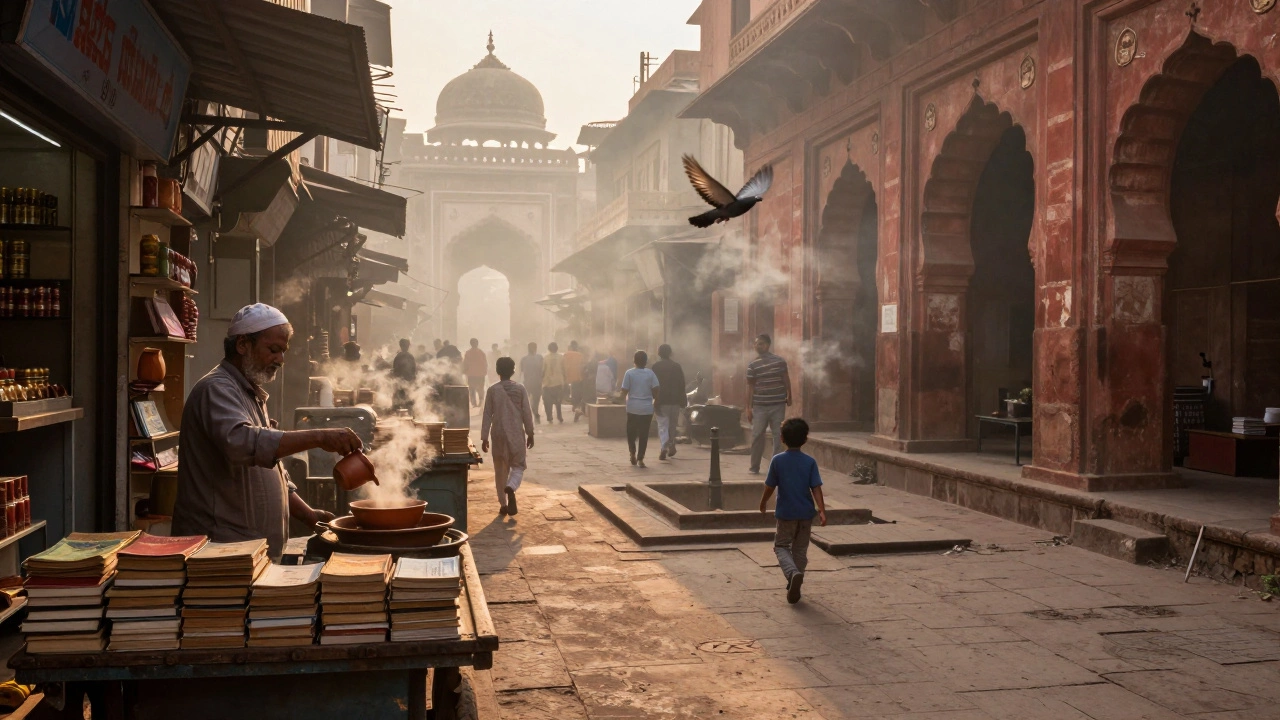
People often ask which Indian city is more beautiful-Delhi or Mumbai. It’s not just about skyline views or clean streets. Beauty here is layered. It’s in the way history breathes through red sandstone forts in Delhi, and how the ocean crashes against Mumbai’s colonial architecture. One city feels like a living museum; the other, like a heartbeat you can’t ignore.
Delhi: Where History Walks Beside You
Walk through Chandni Chowk at dawn, and you’ll smell cardamom, old books, and the faint metallic tang of a 400-year-old bazaar still alive. Delhi isn’t trying to be pretty-it just is. The Red Fort stands tall, its walls stained by centuries of emperors and invaders. Humayun’s Tomb, a precursor to the Taj Mahal, glows gold in the morning light. These aren’t postcard spots. They’re places where locals sit on the steps, children chase pigeons, and street vendors sell chai in clay cups.
Delhi’s beauty lies in its contradictions. You can stand in the middle of Connaught Place’s colonial circles, then turn a corner and find a 16th-century stepwell hidden behind a grocery shop. The city doesn’t hide its past. It wears it like a well-loved coat. Even the modern parts-the glass towers of Gurgaon, the neon-lit markets of Saket-feel connected to something older. There’s rhythm here. A slow, steady pulse that comes from knowing your city has survived empires.
Mumbai: The City That Never Sleeps, But Still Stuns
Mumbai doesn’t wait for you to notice it. It grabs your attention the second you step out of Chhatrapati Shivaji Terminus. The Gateway of India, framed by the Arabian Sea, isn’t just a monument-it’s a stage. Ferry boats buzz past, fishermen mend nets, and tourists snap photos while auto-rickshaws honk behind them. This is a city that runs on motion.
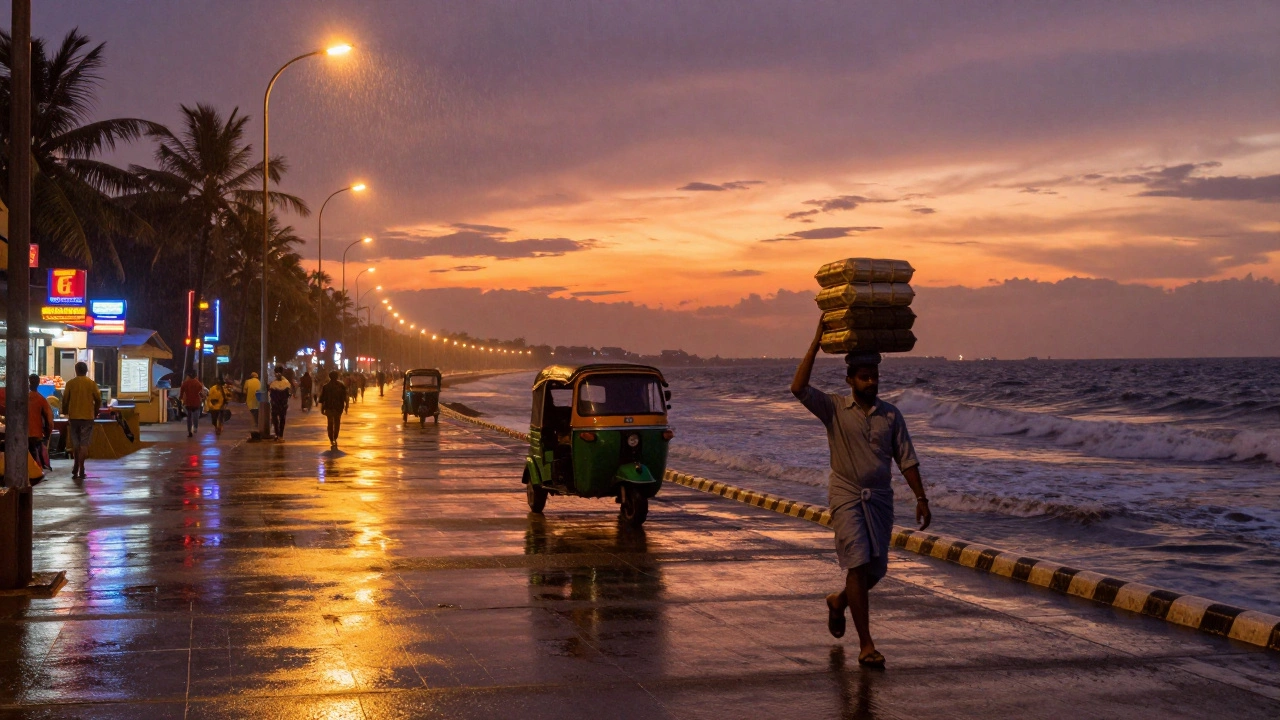
Look up at Marine Drive at sunset. The curve of the promenade lights up like a necklace. The sea doesn’t calm down-it just changes tone. The air smells like salt, fried vada pav, and diesel. And yet, there’s poetry here. In the way the dabbawalas deliver lunchboxes with military precision. In the quiet temples tucked between skyscrapers. In the street artists painting murals on crumbling walls near Bandra.
Mumbai’s beauty is chaotic, loud, and unapologetic. It’s in the way a single building on Juhu Beach holds five generations of one family. It’s in the neon signs of Crawford Market, where parrots squawk over piles of spices. You won’t find silence here. But you’ll find life-raw, real, and relentless.
What Kind of Beauty Are You Looking For?
If you want to touch history, Delhi wins. You can run your fingers along the carved marble of Jama Masjid, sit under the same trees where Mughal poets once recited verses, or watch a sunset over Qutub Minar as the call to prayer echoes through the air. Delhi’s beauty is quiet, deliberate, and deep.
If you want to feel energy, Mumbai wins. You’ll ride the local train packed shoulder to shoulder, eat fresh coconut water from a vendor who’s been serving the same corner since 1978, or get caught in a monsoon downpour and still laugh because everyone else is doing the same. Mumbai’s beauty is in motion. It doesn’t sit still for photos.
One isn’t better. They’re different kinds of magic.
Architecture That Tells Stories
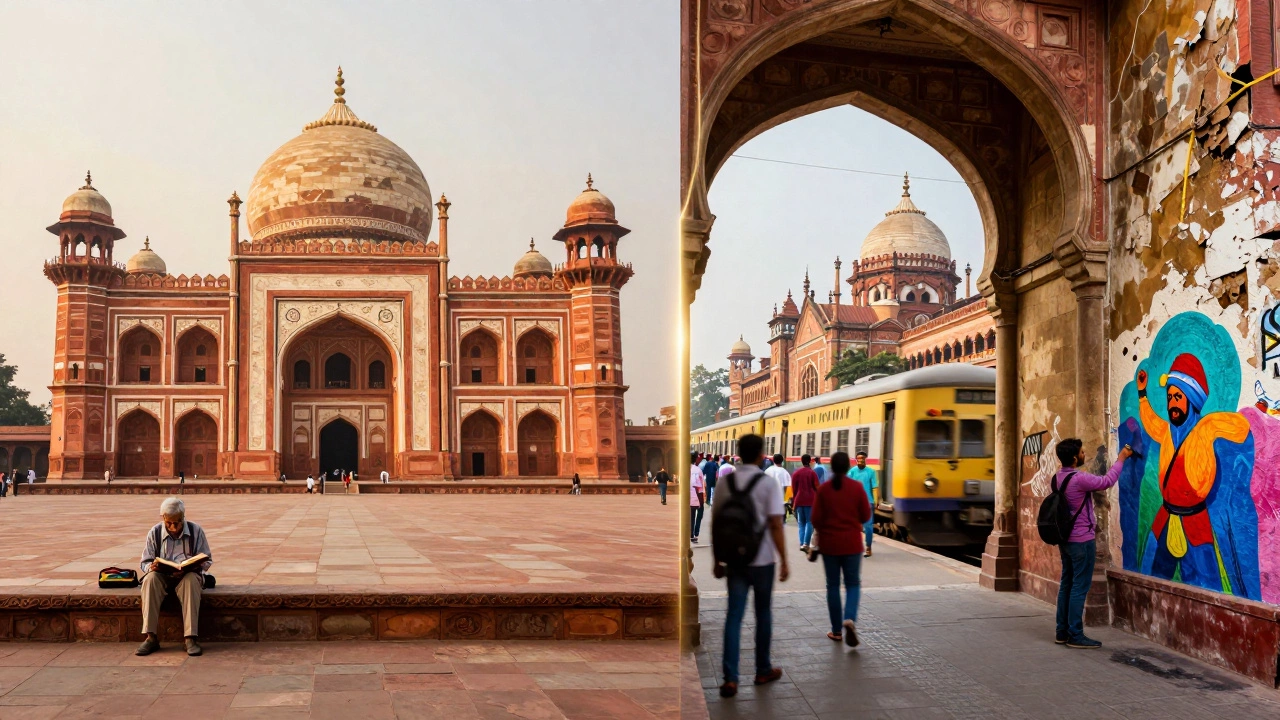
Delhi’s architecture is a timeline. From the Qutub Complex’s Indo-Islamic arches to the British-era Parliament building, every stone has a story. The Humayun’s Tomb complex, built in 1570, inspired the Taj Mahal. Its symmetry and red sandstone still draw architects from around the world.
Mumbai’s buildings tell a different tale. The Chhatrapati Shivaji Terminus, a UNESCO site, blends Victorian Gothic with Indian motifs. The Art Deco buildings along Marine Drive, built in the 1930s, are the largest collection of their kind in the world. You’ll find colonial bungalows in Malabar Hill, Gujarati havelis in Bhuleshwar, and glass towers in Lower Parel-all crammed together like a living scrapbook.
Delhi’s structures are monuments. Mumbai’s are lived-in. One is preserved. The other is evolving.
People and Pace
In Delhi, people move with purpose, but slowly. You’ll see families having picnics in Lodhi Garden. Elders playing cards under banyan trees. Students sketching in the National Museum. There’s space here-for thought, for pause.
In Mumbai, time is measured in train intervals. People move in waves. A single train carries 3,000 people at 6:30 a.m. Every second counts. But there’s warmth in the chaos. A stranger will help you find your way. A chaiwala will remember your name after three visits. Mumbai doesn’t give you time to overthink. It pulls you in.
Green Spaces and Skylines
Delhi has over 70 parks. Lodhi Garden is a green lung in the heart of the city. The Yamuna riverbank, though polluted, still hosts early morning joggers and yoga circles. The Ridge forest, a remnant of the Aravallis, is home to peacocks and jackals. Delhi’s greenery is scattered, but deeply rooted.
Mumbai’s green spaces are harder to find. But when you do, they’re unforgettable. Sanjay Gandhi National Park is bigger than Central Park and home to leopards. The Hanging Gardens of Mumbai, perched on a hill, offer panoramic views of the city and sea. And then there’s the Arabian Sea itself-vast, wild, and always changing.
Delhi’s beauty is in its quiet corners. Mumbai’s is in its wild edges.
Food as a Cultural Mirror
Delhi’s food is layered like its history. Butter chicken, parathas stuffed with paneer, kebabs from Karim’s, and street-side jalebis dipped in warm syrup. Each bite carries a story-from royal kitchens to migrant laborers’ stoves.
Mumbai’s food is faster, fiercer. Vada pav-India’s answer to the burger-eaten with one hand while standing on a crowded platform. Seaweed chutney on a beachside snack. Fresh fish curry from the docks of Worli. And the famous Irani chai, sweet, strong, and served in small glasses.
Delhi’s meals are events. Mumbai’s are necessities. Both are unforgettable.
Final Thought: Beauty Isn’t a Competition
Delhi and Mumbai aren’t rivals. They’re two sides of India’s soul. One is the memory of empires. The other is the pulse of tomorrow. You can’t say one is more beautiful-you can only say which one speaks to you.
If you crave stillness, history, and quiet grandeur-Delhi will hold you.
If you crave motion, chaos, and relentless energy-Mumbai will wake you up.
Visit both. Let them change you.
Is Delhi safer than Mumbai for solo travelers?
Both cities are generally safe for solo travelers, but they feel different. Delhi has more police presence in tourist zones and better-lit streets at night in areas like Connaught Place and Hauz Khas. Mumbai is more crowded, which can feel reassuring, but isolated areas like Marine Drive late at night or remote railway stations need caution. Always use registered cabs or ride-sharing apps in both cities. Trust your gut-both cities reward awareness.
Which city has better public transportation?
Mumbai’s local train network is the most used in India, carrying over 7 million people daily. It’s fast, frequent, and cheap. Delhi’s metro is newer, cleaner, and more extensive, with air-conditioned coaches and clear signage. For tourists, Delhi’s metro is easier to navigate. For locals, Mumbai’s trains are lifelines. If you want efficiency, choose Delhi’s metro. If you want authenticity, ride Mumbai’s local train-even if it’s packed.
Can you visit both cities in one trip?
Absolutely. The train between Delhi and Mumbai takes about 15-16 hours. The flight is just over two hours. Many travelers split their time: spend three days in Delhi for history and culture, then fly to Mumbai for five days of energy, food, and sea views. You’ll get the full spectrum of North and West India in under two weeks.
Which city is better for photography?
Delhi offers symmetry-monuments with perfect lighting, golden hour over the Red Fort, and quiet lanes with old-world charm. Mumbai gives you motion-crowded trains, street vendors in action, sunsets over the Arabian Sea, and colorful markets bursting with texture. If you like stillness and structure, Delhi wins. If you want drama and movement, Mumbai is your canvas.
What’s the best season to visit each city?
For Delhi, the best time is October to March. Summers are brutal, with temperatures hitting 45°C. Mumbai is pleasant from November to February. The monsoon (June-September) brings lush greenery and dramatic skies-but also flooding and delays. Avoid Delhi in July-August and Mumbai in April-May if you can’t handle heat and humidity.