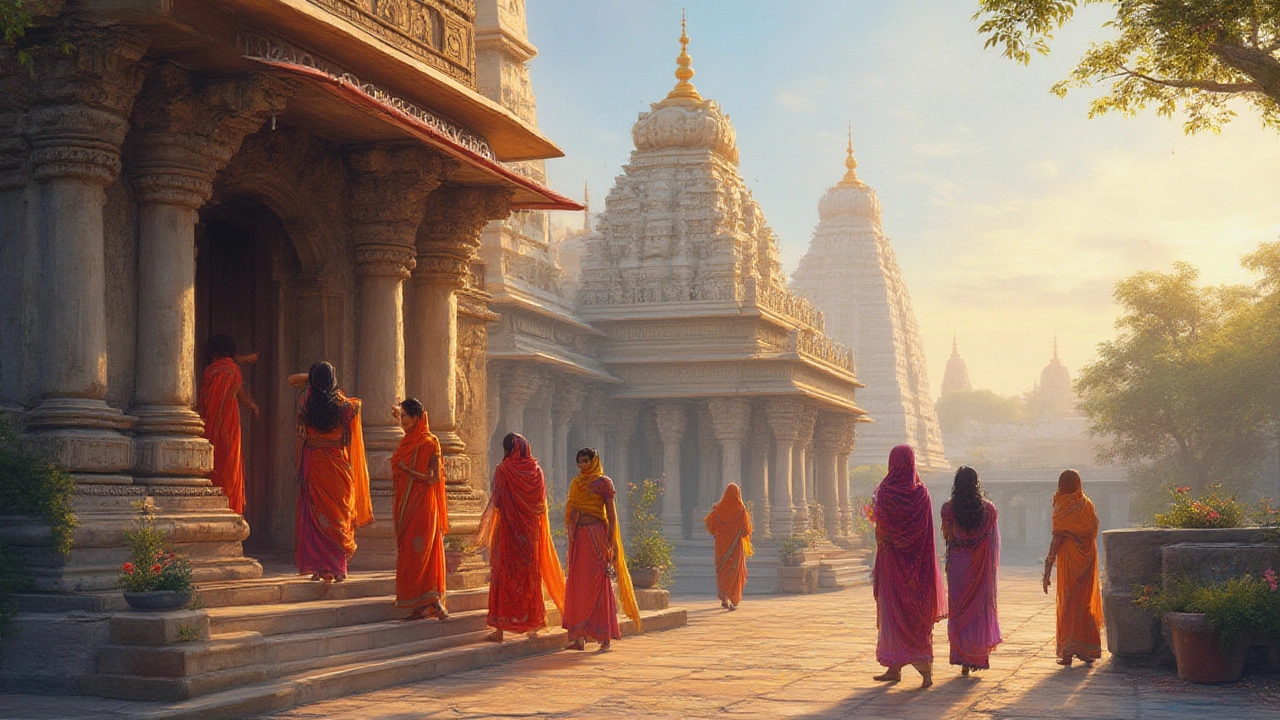
Girls Temple Attire: What to Wear in Indian Temples
When visiting an Indian temple, a sacred space where devotion, tradition, and daily life blend. Also known as mandir, it’s not just a building—it’s a living part of community identity. What you wear matters—not because of strict rules, but because of respect. Many tourists assume temples are like museums where any outfit works. They’re wrong. In India, temple attire isn’t about fashion—it’s about showing honor to the divine and the people who live this culture every day.
Girls temple attire, the clothing choices women and girls make when entering Hindu, Jain, or Buddhist temples across India. Also known as modest temple dress, it typically means covering shoulders, arms, and legs. You won’t find signs saying "No shorts" at most temples, but you’ll feel the silence when you walk in wearing them. Locals notice. Priests notice. Other visitors notice. In places like Varanasi, Tirupati, or Khajuraho, women wear saris, salwar kameez, or long skirts with blouses. Men wear dhotis or long pants. It’s not about being conservative—it’s about blending in. Wearing a sleeveless top or shorts doesn’t make you a bad person. But it does make you stand out in a way that can feel disrespectful, even if no one says a word.
Some temples, like the famous Sabarimala in Kerala, have strict dress codes that even require men to wear only black dhotis. Others, like the Golden Temple in Amritsar, ask everyone to cover their heads. For girls, this often means a scarf or dupatta—not as a religious requirement, but as a practical way to show humility. You don’t need to buy a new sari. A long cotton dress, a maxi skirt with a tunic, or even jeans with a long top work fine—as long as your shoulders and knees are covered. The real rule? If you’re unsure, cover more than you think you need. It’s easier to take off a scarf than to explain why you didn’t wear one.
This isn’t just about temples. It’s about how India sees clothing as part of spiritual space. In many villages, even local markets have unwritten dress codes. You’ll see women in rural areas walking to temples in simple cotton clothes, barefoot or in sandals. That’s the norm. Tourists in flip-flops and tank tops don’t just look out of place—they look like they’re treating sacred ground like a photo op. And that’s the difference between curiosity and disrespect.
What you wear also affects your experience. When you dress modestly, locals are more likely to smile, offer help, or even invite you to join a small ritual. When you dress like you’re at a beach party, you’ll get polite stares and avoid eye contact. It’s not about punishment—it’s about energy. Temples are quiet places. Your clothes set the tone.
There’s no single rulebook for girls temple attire across India. A temple in Rajasthan might expect a full-length skirt. One in Tamil Nadu might want a dupatta over the head. In Goa, where Portuguese influence lingers, you’ll see more relaxed dress—but even there, you won’t see anyone in a bikini walking into a church, let alone a temple. The pattern is simple: cover up, keep it simple, and leave the flashy stuff behind.
Below, you’ll find real stories, local tips, and clear examples of what works—and what doesn’t—when dressing for Indian temples. No guesswork. No myths. Just what people actually do.