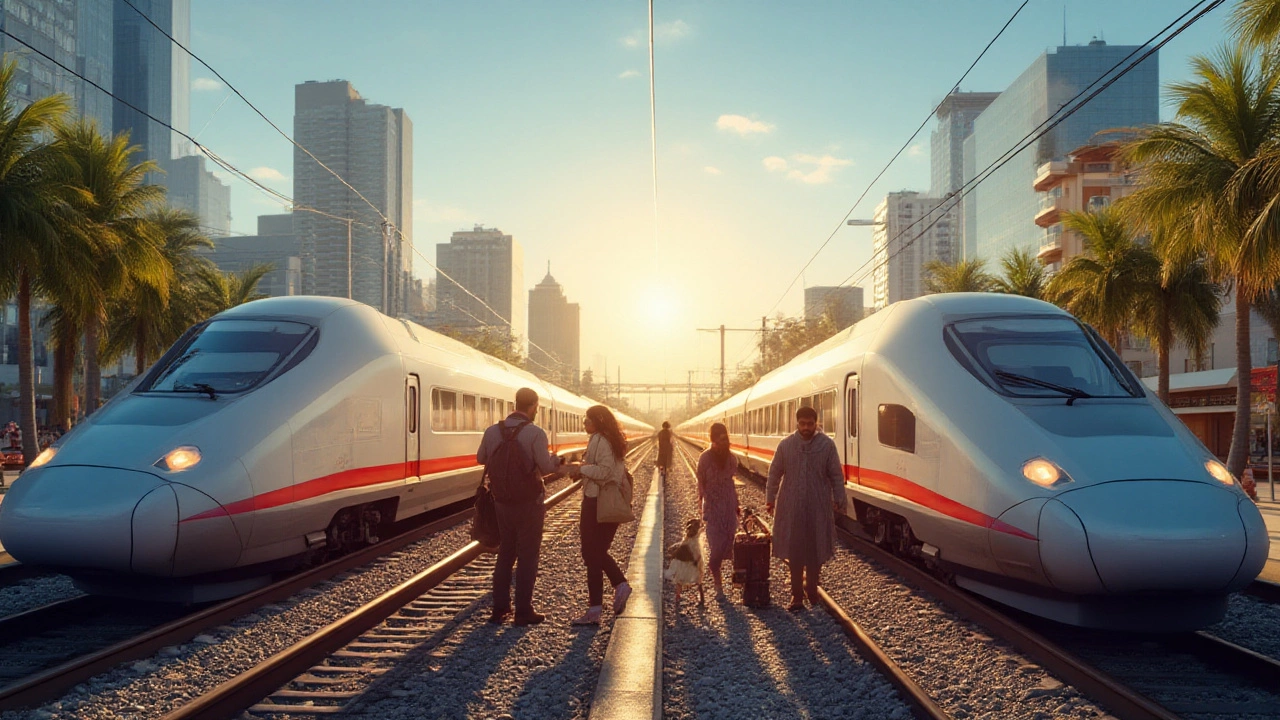
High-Speed Trains USA: What You Need to Know About Fast Rail in America
When people talk about high-speed trains USA, rail systems that regularly travel over 150 mph, mostly found in Asia and Europe. Also known as bullet trains, they're a staple in countries like Japan and France—but in the United States, they're the exception, not the rule. The truth? There’s no true high-speed rail network in the U.S. like you’d find in Shanghai or Paris. The closest thing is Amtrak’s Acela service along the Northeast Corridor, which hits 150 mph in short stretches between Boston and Washington D.C. But even that’s slow compared to global standards, and it runs on aging tracks that limit speed for safety reasons.
Why doesn’t America have more? It’s not about money—it’s about land use, politics, and history. Unlike Europe, where cities are close and rail was built first, the U.S. grew around cars and highways. Air travel took over for long distances, and trains became an afterthought. Even the proposed California High-Speed Rail project, meant to connect LA and San Francisco, has been stuck in delays and budget overruns for over a decade. Meanwhile, countries like China have built over 25,000 miles of high-speed track since 2008. The U.S. has less than 500 miles that even come close.
But here’s what most people miss: Amtrak, the national passenger rail service in the United States. Also known as US passenger trains, it’s not glamorous, but it’s the only way to travel by train across most of the country. For travelers who want to avoid flying or driving, Amtrak offers scenic routes—like the Coast Starlight from Seattle to LA or the Empire Builder through the northern plains. These aren’t fast, but they’re reliable, affordable, and give you a view you won’t get from a plane window. And if you’re looking for speed, the Acela is still your best bet in the Northeast. Outside of that, trains in the U.S. are mostly slow, delayed, and rarely connect major cities efficiently.
So if you’re planning a trip and hoping for a bullet train ride across the Midwest or the Southwest, you’ll be disappointed. But if you’re open to slower, more thoughtful travel—where the journey matters as much as the destination—you’ll find plenty of value in America’s rail system. The real question isn’t whether the U.S. has high-speed trains. It’s whether we’re ready to build them.
Below, you’ll find real travel stories from people who’ve taken trains across America—some fast, most slow, all revealing. From budget hacks to hidden routes, these posts cut through the noise and show you what rail travel in the U.S. actually looks like today.