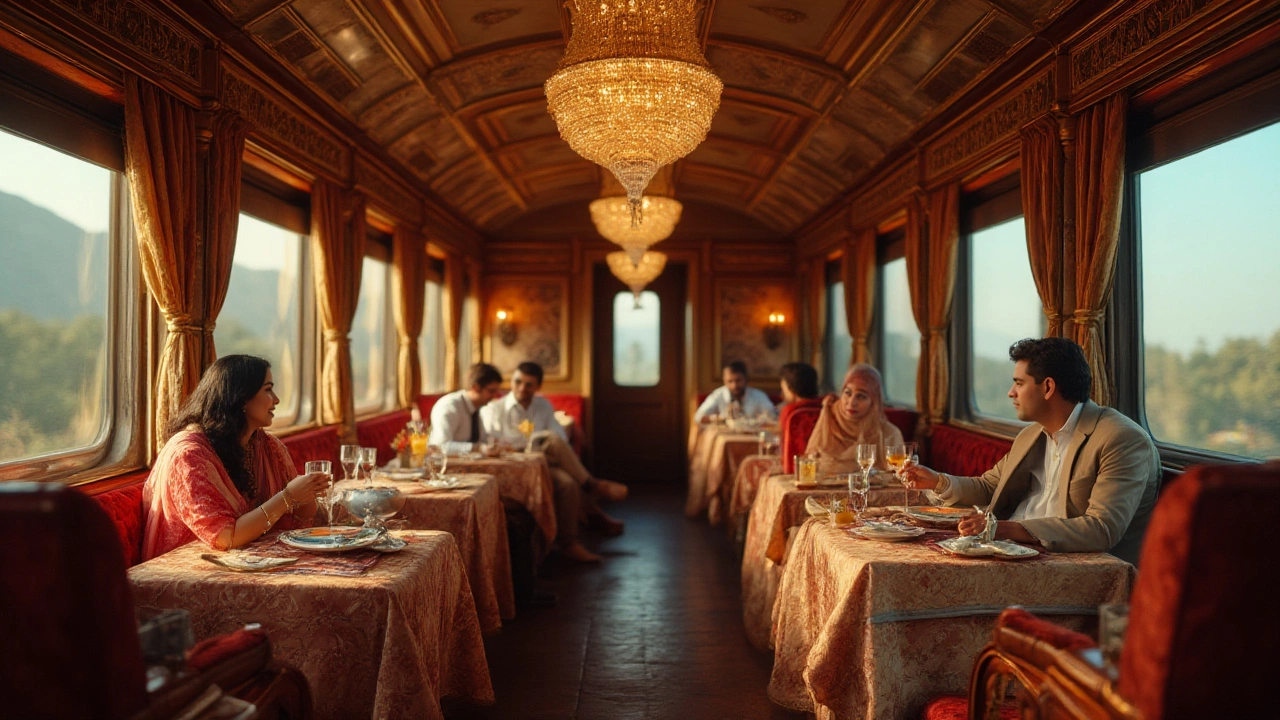
Luxurious Train Travel in India: Palace on Wheels and Beyond
When you think of luxurious train travel, a high-end rail journey that blends opulence, history, and scenic routes. Also known as royal train travel, it’s not just about moving from one city to another—it’s about traveling in style, with butlers, fine china, and views that feel like living paintings. In India, this isn’t a fantasy. It’s real. And it’s been happening for over 30 years.
The Palace on Wheels, a heritage luxury train that re-creates the grandeur of India’s princely era is the crown jewel. It runs through Rajasthan, stopping at forts, palaces, and desert camps that most tourists never see. You don’t just ride the train—you step into a royal procession. Private cabins with marble bathrooms, silver service dinners, and guided excursions to Jaipur’s Amber Fort or Jaisalmer’s sandstone castle aren’t extras—they’re standard. And yes, it’s expensive. But it’s also the only way to experience India’s royal past without renting a palace yourself.
It’s not the only option. The Golden Chariot, a luxury train that explores South India’s temples, beaches, and colonial history takes you from Mysore to Hampi, with stops at UNESCO sites and private heritage homes. Then there’s the Deccan Odyssey, a train that connects Mumbai with the Western Ghats and coastal forts, offering wine tastings and wildlife safaris right from your cabin. These aren’t just trains—they’re floating hotels with itineraries designed by historians and chefs.
What makes these journeys different from a flight or a bus? Time. These trips slow you down. You wake up to a new landscape every morning, but you never have to pack or check out. Your room moves with you. Your meals are prepared by chefs who know the region’s recipes by heart. And you meet people—other travelers, local guides, even descendants of royal families—who share stories you won’t find in guidebooks.
And while the Orient Express gets all the hype, the truth is, India’s luxury trains are more immersive. You don’t just watch the countryside—you feel it. The dust on your shoes after a desert stop. The scent of jasmine in a palace garden. The sound of a tabla player at dinner. These aren’t staged performances. They’re living culture, served with champagne.
If you’ve ever wondered what it’s like to travel like a maharaja, these trains answer that question. You don’t need to be rich to book one—though it helps. But you do need to want more than just sightseeing. You need to want to be part of the story. And that’s why people come back. Not for the gold-plated taps. Not for the five-star menus. But for the feeling that, for a few days, you’re not a tourist. You’re a guest in India’s most guarded, most beautiful corners.
Below, you’ll find real stories from people who’ve taken these journeys, tips on what to pack, how to save money without sacrificing luxury, and why some of the world’s most expensive trains are actually worth every rupee.