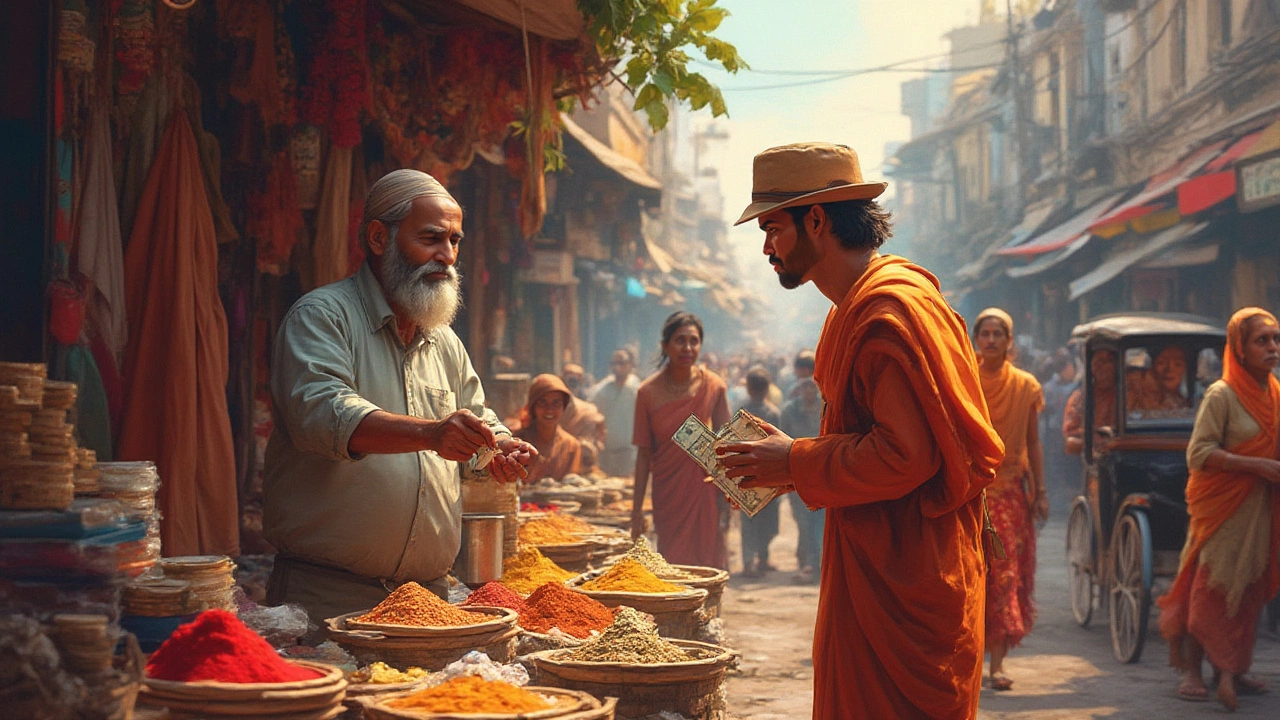
Rupee vs Dollar: What It Really Means for Traveling in India
When you think about rupee vs dollar, the exchange rate between India’s currency and the US dollar that directly affects how far your money stretches on the ground. Also known as INR to USD, this isn’t just a number on a screen—it’s the difference between eating street food every day or booking a luxury train ride like the Palace on Wheels.
Most travelers don’t realize how much power this exchange holds. A single dollar can buy you three masala dosas in Bangalore, a one-way bus ticket from Jaipur to Agra, or a night’s stay in a clean guesthouse outside Goa. But if you’re used to spending $50 a day back home, you might be shocked to find out you can live comfortably in India on under $20—especially if you know where to look. The Indian rupee isn’t weak—it’s just priced differently. And that’s exactly why budget travelers love it.
But here’s the catch: the US dollar in India doesn’t just affect your meals. It shapes your choices. Want to stay in a heritage palace hotel in Udaipur? That’ll cost you a few hundred dollars. But swap that for a night in a local homestay, and you’re spending less than $10. The same logic applies to flights. A ticket from New York to Delhi might cost $800, but once you land, your dollar goes further than you expect. That’s why so many posts here focus on rupee vs dollar—not to scare you, but to show you how to stretch your cash without sacrificing experience.
You’ll see this play out in real stories across the collection: how 500 rupees can cover a full day of transport and food, why foreigners pick quiet beaches in Goa over flashy clubs, and how luxury train journeys like the Palace on Wheels are priced in dollars but experienced in rupees. It’s not about how much you spend—it’s about how smartly you spend it. And that starts with understanding the real value of each rupee.
There’s no magic formula. But once you stop thinking in dollars and start thinking in rupees—how many chai’s you can buy, how far a rickshaw takes you, how many temple entry tickets fit in your wallet—you’ll start seeing India the way locals do. You’ll realize the country isn’t cheap because it’s poor. It’s rich in ways that don’t show up on exchange rates.
Below, you’ll find real stories from travelers who’ve made this shift. They didn’t just survive on a budget—they thrived. Whether they spent two days in Agra or two weeks in Kerala, they all learned the same thing: the rupee vs dollar gap isn’t a barrier. It’s your advantage.