Shantiniketan: The Soul of Art, Peace, and Indian Heritage
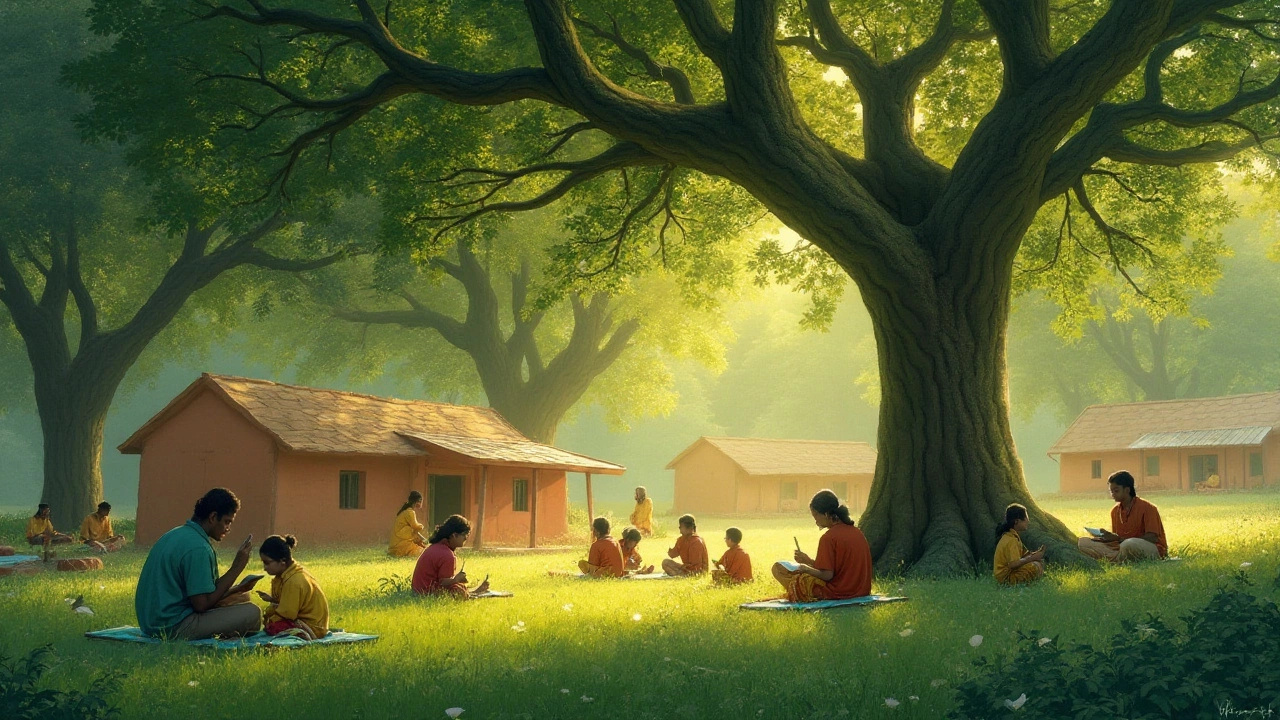
When you think of Shantiniketan, a quiet town in West Bengal founded by Rabindranath Tagore as a center for learning and artistic freedom. Also known as the abode of peace, it’s not just a place on the map—it’s a living philosophy that still shapes how India thinks about education, nature, and creativity. Unlike crowded tourist spots, Shantiniketan doesn’t shout. It whispers—in the rustle of mango trees, in the hum of students singing Tagore’s songs, in the brushstrokes of artists painting under open skies. This is where modern Indian culture was quietly reborn, far from the noise of cities, rooted in rhythm, ritual, and reverence for the earth.
Shantiniketan is tied to Rabindranath Tagore, India’s first Nobel laureate in Literature, poet, painter, and educator who built this community as an alternative to colonial classrooms. He didn’t just write poems—he built a school that refused bells, rigid desks, and rote learning. Instead, classes happened under trees, music was part of daily life, and students learned by doing, not memorizing. That spirit lives on today in Visva-Bharati University, a central university founded by Tagore that still follows his vision of global learning rooted in Indian traditions. It’s not just a college—it’s a movement that drew thinkers from Japan, Europe, and beyond, long before international education became a trend.
And then there’s the culture. Shantiniketan isn’t just about books and lectures. It’s about Poush Mela, the annual fair where handloom weavers, folk musicians, and clay artists gather under the winter sun. It’s about the smell of incense in the morning, the sound of the sitar drifting from open windows, the way locals still greet each other with a bow instead of a handshake. This is Bengali culture, a rich blend of poetry, music, and quiet resistance that thrives here more than anywhere else in India. You won’t find neon signs or fast food chains. You’ll find hand-spun khadi, homemade pitha, and people who still believe silence can be sacred.
People come to Shantiniketan for different reasons—some to study, some to escape, some just to feel something real. It doesn’t promise excitement. It offers depth. If you’ve ever wondered where India’s soul hides when the temples and palaces get too loud, this is where you’ll find it. Below, you’ll find real stories from travelers, artists, and locals who’ve lived this truth—not just visited it. These aren’t generic travel tips. They’re glimpses into a way of life that still breathes, still teaches, still heals.