Find Your Perfect Train Station
Select the options that match your travel style to find which of the world's most beautiful stations is right for you.
Victorian Gothic, Beaux-Arts, Art Deco
Modernist, sleek engineering, glass
UK, Belgium
USA
China, Australia
Not quite what you wanted? Try selecting different options above.
There is a specific kind of magic that happens when you step out of your car and into a cathedral made of steel and glass. We spend so much time looking at our phones or rushing through security gates that we forget train stations were originally designed as temples to travel. They were meant to inspire awe before you even bought a ticket.
If you are planning a luxury train journey, the station is not just a transit point; it is the prologue to your adventure. But which one holds the crown for the most beautiful? The answer depends on what moves you. Do you prefer the opulent gold leaf of the Gilded Age, the futuristic curves of modern engineering, or the historic grandeur of European empires? Here is a look at the stations that redefine beauty.
The Opulence of Grand Central Terminal
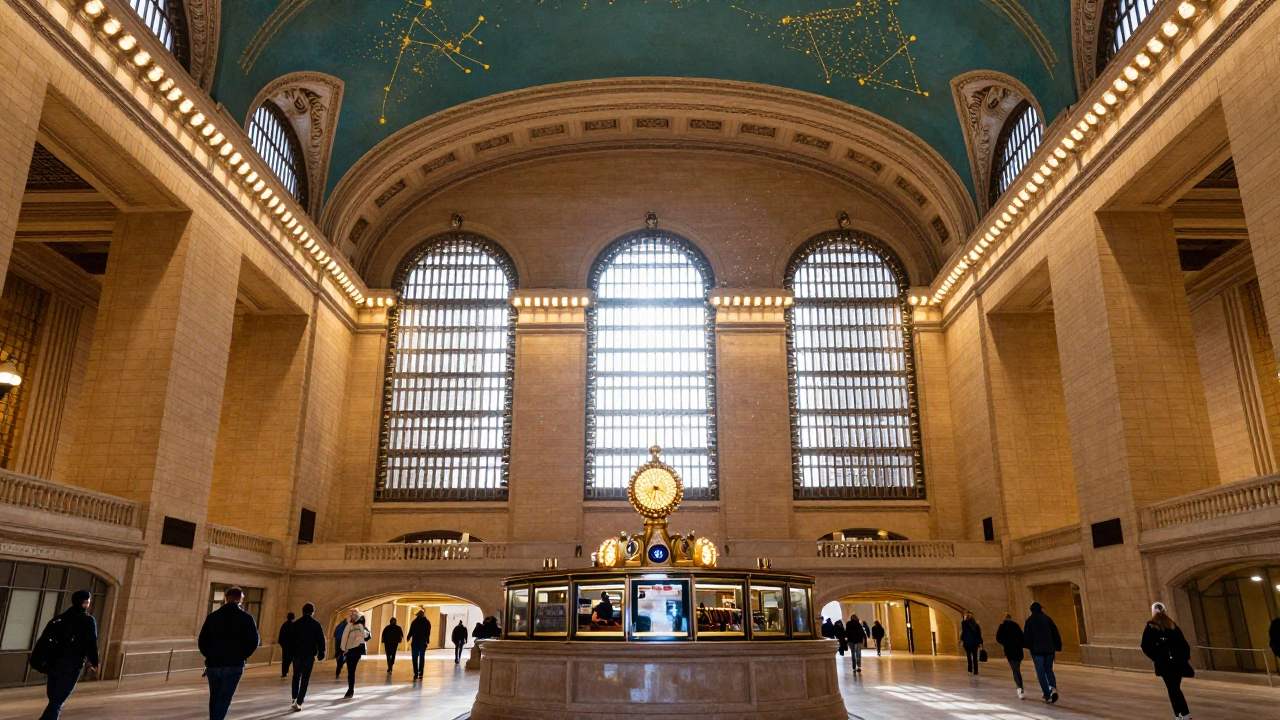
New York’s Grand Central Terminal is arguably the most famous station in the Western Hemisphere. When you walk into the Main Concourse, the first thing that hits you is the silence, despite the crowds. That is because the acoustics are designed to dampen noise, creating a hushed reverence under the vaulted ceiling.
Look up. The ceiling is painted with a mural of constellations, complete with golden stars. Legend says the city banned actual stars from public buildings, so they used upside-down constellations instead. Whether true or not, the effect is stunning. The bronze clock above the information booth is a meeting point for lovers and tourists alike, but the real star is the light flooding in from the massive skylights. It feels less like a place to catch a commuter train and more like entering a palace. For a traveler seeking American grandeur, this is the benchmark.
Royal Splendor at St. Pancras International
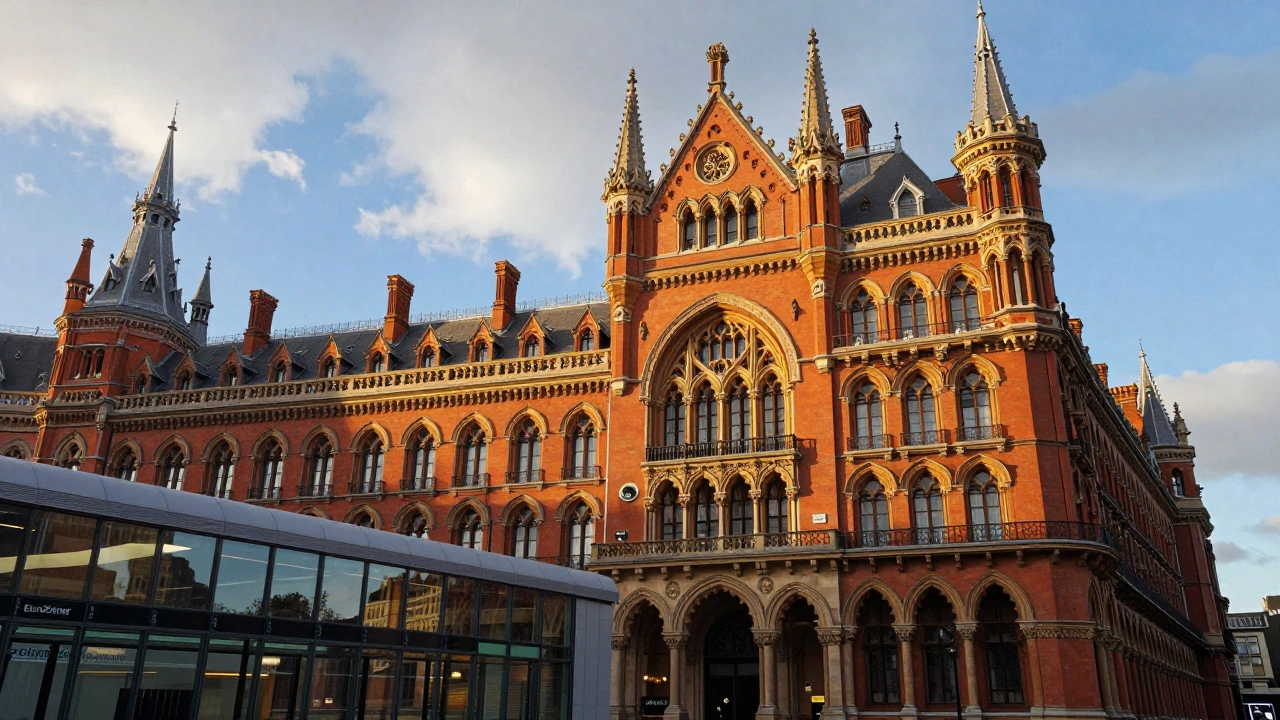
Across the Atlantic, London offers a different flavor of beauty. While King’s Cross is famous for fiction, St. Pancras International is a Victorian Gothic revival railway station in London, featuring the iconic Midland Grand Hotel and stained-glass roofs. This station is a masterclass in restoration. The original Midland Grand Hotel, designed by William Barlow, looks like something out of a fantasy novel. Its red brick facade, intricate stone carvings, and soaring arches scream Victorian ambition.
Inside, the contrast between the old and new is sharp but harmonious. The original hotel wing features high ceilings and ornate details that remind you of an era when train travel was a status symbol. Then there is the Eurostar terminal, a sleek, modern addition that handles high-speed trains to Paris and Brussels. Walking through St. Pancras feels like stepping through time. You can have coffee in a space that dates back to 1868, then board a train that travels at 186 mph. It is the perfect blend of heritage and modernity.
Futuristic Curves at Shanghai Hongqiao
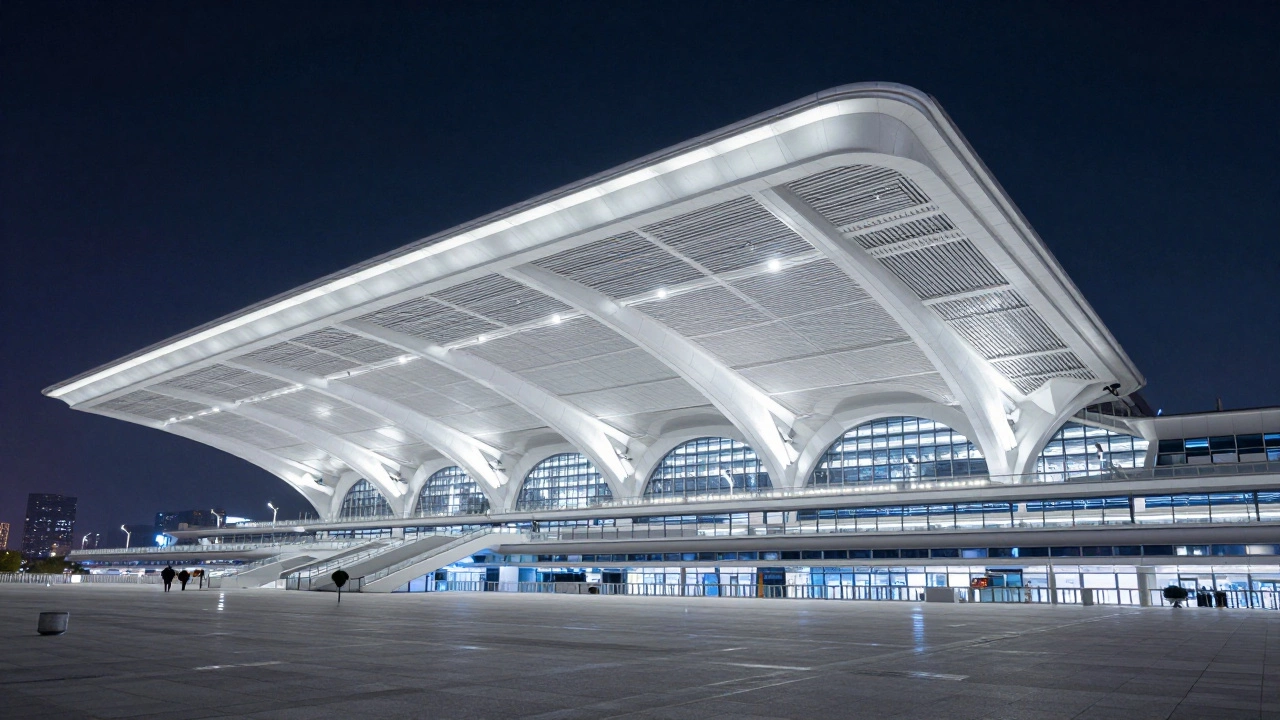
If history is not your thing, Shanghai might be your favorite stop. Shanghai Hongqiao Railway Station is a massive transportation hub in China, integrating high-speed rail, metro, and airport services under a sweeping roof structure. Completed in 2010, this station is a marvel of modern engineering. It doesn’t just look good; it functions as a seamless ecosystem. The roof spans over 400 meters without internal columns, creating a vast, open space that feels airy and light.
The design uses white steel and glass to create a sense of purity and speed. It connects directly to the airport, meaning you can fly into Shanghai and hop on a high-speed bullet train within minutes. The beauty here is functional. It is clean, efficient, and visually striking. The night view, with the station illuminated against the dark sky, looks like a spaceship landed in the city center. For those who appreciate the aesthetic of efficiency, this is the winner.
Historic Charm at Flinders Street Station
Australia has its own icon. Flinders Street Station is a historic railway terminus in Melbourne, Victoria, known for its yellow dome and Art Deco architecture. Sitting on the corner of Swanston Street and the Yarra River, this station is instantly recognizable. The bright yellow dome contrasts sharply with the grey stone facade. It has been a landmark since 1891, surviving wars, economic depressions, and urban development.
The interior is equally impressive. The main waiting room features high arched windows that let in natural light, casting long shadows across the tiled floors. There is a cozy, lived-in feel to Flinders Street. It is not trying to be a museum; it is a working part of the city. Locals meet under the clock, commuters rush past the newsagents, and tourists take photos of the iconic exterior. Its beauty lies in its authenticity. It feels like the heart of Melbourne.
Artistic Elegance at Antwerp-Centraal
In Belgium, Antwerp-Centraal is a Neo-Renaissance railway station often called the 'Train Cathedral' due to its ornate architecture and central location in Antwerp. This station lives up to its nickname. The central hall is dominated by a large stained-glass window that depicts the arrival of the Virgin Mary. The ironwork is delicate and intricate, resembling lace rather than industrial metal. The marble floors and gilded details add to the church-like atmosphere.
What makes Antwerp-Centraal special is its integration with the city. It sits right next to the Scheldt River, offering views of the water from the platforms. The station acts as a gateway to the city’s diamond district and museums. It is small compared to Grand Central or Shanghai, but every square inch is designed with care. If you prefer intimacy over scale, this is the most beautiful station for you.
Comparing the Giants
To help you decide which station deserves your visit, let’s break down the key attributes. Beauty is subjective, but these factors influence the experience.
| Station Name | Location | Architectural Style | Key Feature | Best For |
|---|---|---|---|---|
| Grand Central Terminal | New York, USA | Beaux-Arts | Celestial Ceiling | Awe & Scale |
| St. Pancras International | London, UK | Victorian Gothic | Midland Grand Hotel | History & Luxury |
| Shanghai Hongqiao | Shanghai, China | Modernist | Column-Free Roof | Efficiency & Future |
| Flinders Street Station | Melbourne, Australia | Art Deco | Yellow Dome | Urban Charm |
| Antwerp-Centraal | Antwerp, Belgium | Neo-Renaissance | Stained Glass Window | Artistic Detail |
Why Station Architecture Matters
You might wonder why we care about train stations. In an age of budget airlines and ride-sharing apps, trains seem old-fashioned. But the rise of luxury train journeys proves otherwise. People are willing to pay premium prices for experiences that connect them to the landscape and history. A beautiful station sets the tone for that experience.
When you enter a magnificent station, your expectations shift. You slow down. You notice the details. You anticipate the journey. This psychological shift is crucial for luxury travel. It transforms a commute into a ceremony. The architecture tells you that you are valued, that your time is important, and that the destination is worth the effort.
Moreover, these stations are often cultural hubs. They house cafes, shops, and art installations. They are places where people gather, not just pass through. Visiting them adds depth to your trip. You are not just seeing a city; you are experiencing its infrastructure and its history.
Planning Your Visit
If you want to see these stations, timing is everything. Each has its own rhythm. Grand Central is busiest during rush hours, but the early morning light on the concourse is magical. St. Pancras is lively in the evening when the hotel restaurants fill up. Shanghai Hongqiao is best viewed at night when the lights reflect off the glass. Flinders Street is charming in the afternoon when the sun hits the yellow dome. Antwerp-Centraal is serene in the late morning.
Consider booking a tour that includes these landmarks. Many cities offer walking tours that start at the main station. Alternatively, plan a day trip specifically to explore the station and its surroundings. Bring a camera. These spaces are photogenic beyond belief. And don’t forget to look up. Most of the beauty is overhead.
Which train station is considered the most beautiful in Europe?
While beauty is subjective, St. Pancras International in London and Antwerp-Centraal in Belgium are frequently cited as the most beautiful in Europe. St. Pancras offers Victorian grandeur, while Antwerp provides Neo-Renaissance elegance. Both are architectural masterpieces that attract tourists specifically for their design.
Can I stay overnight at any of these train stations?
Some stations have hotels attached or nearby. St. Pancras International houses the Royal Standard Hotel, allowing guests to stay within the station complex. Grand Central Terminal does not have a hotel inside, but several luxury hotels are located in the surrounding area. Always check local regulations regarding sleeping in public spaces if you plan to wait out the night.
Are these stations accessible for travelers with disabilities?
Most major stations have undergone significant renovations to improve accessibility. St. Pancras, Shanghai Hongqiao, and Flinders Street all have elevators, ramps, and dedicated assistance services. However, older sections of historic stations like Grand Central may have limited access. It is advisable to contact the station ahead of time to arrange specific assistance needs.
How do I get tickets for luxury train journeys departing from these stations?
Luxury train journeys often require advance booking through specialized operators. For example, the Venice Simplon-Orient-Express departs from St. Pancras. You can book directly through the operator’s website or via a luxury travel agent. Standard high-speed trains, like the Eurostar from St. Pancras or TGV from Antwerp, can be booked online through national rail websites.
Is it free to enter these train stations?
Yes, all the stations mentioned are public transport hubs and are free to enter. However, some areas, such as the observation decks or specific historical exhibits within the stations, may require a fee or a guided tour. Generally, you can walk around the main concourses and admire the architecture without paying anything.