Amtrak vs. Car Travel Time Estimator
Trip Details
Enter your trip details to see if the train or car is faster and more economical.
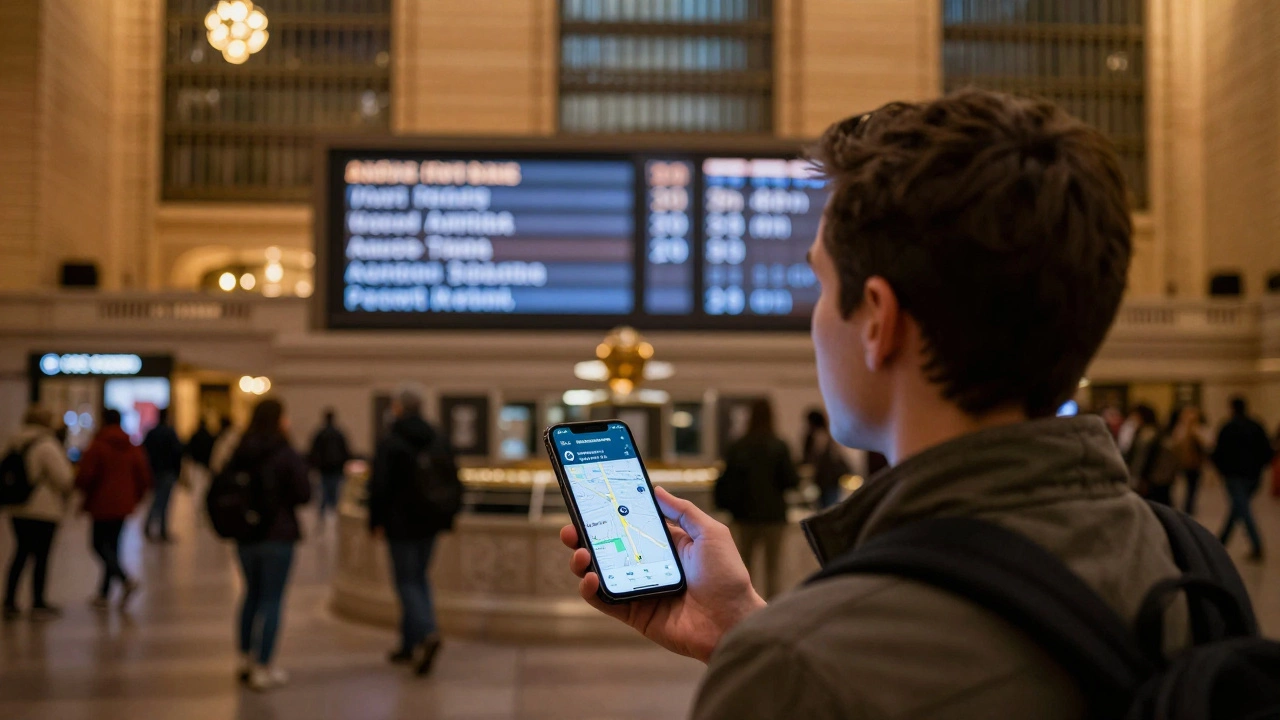
Picture this: you are standing at the gate of Grand Central Terminal in New York. Your phone buzzes with a notification from your GPS app. It says your drive to Washington, D.C., will take exactly four hours and twelve minutes. You look up at the departure board. The next Amtrak national passenger railroad service in the United States train leaves in twenty minutes. The scheduled arrival is three hours and forty-five minutes away. Do you grab your keys and hit the highway, or do you buy that ticket?
The question "Is Amtrak faster than a car?" doesn't have a simple yes or no answer. It depends entirely on where you are going, what kind of train you are riding, and how much you value your sanity behind the wheel. For most travelers, the short answer is: sometimes, yes. But mostly, it’s about more than just clock time.
The Northeast Corridor: Where Trains Actually Win
If you are traveling between Boston, New York City, Philadelphia, Baltimore, and Washington, D.C., Amtrak is almost always the faster option. This region, known as the Northeast Corridor a major railway line connecting major cities in the northeastern United States, has dedicated rail rights-of-way. This means trains don’t have to stop for traffic lights, merge into heavy highway congestion, or deal with accidents blocking I-95.
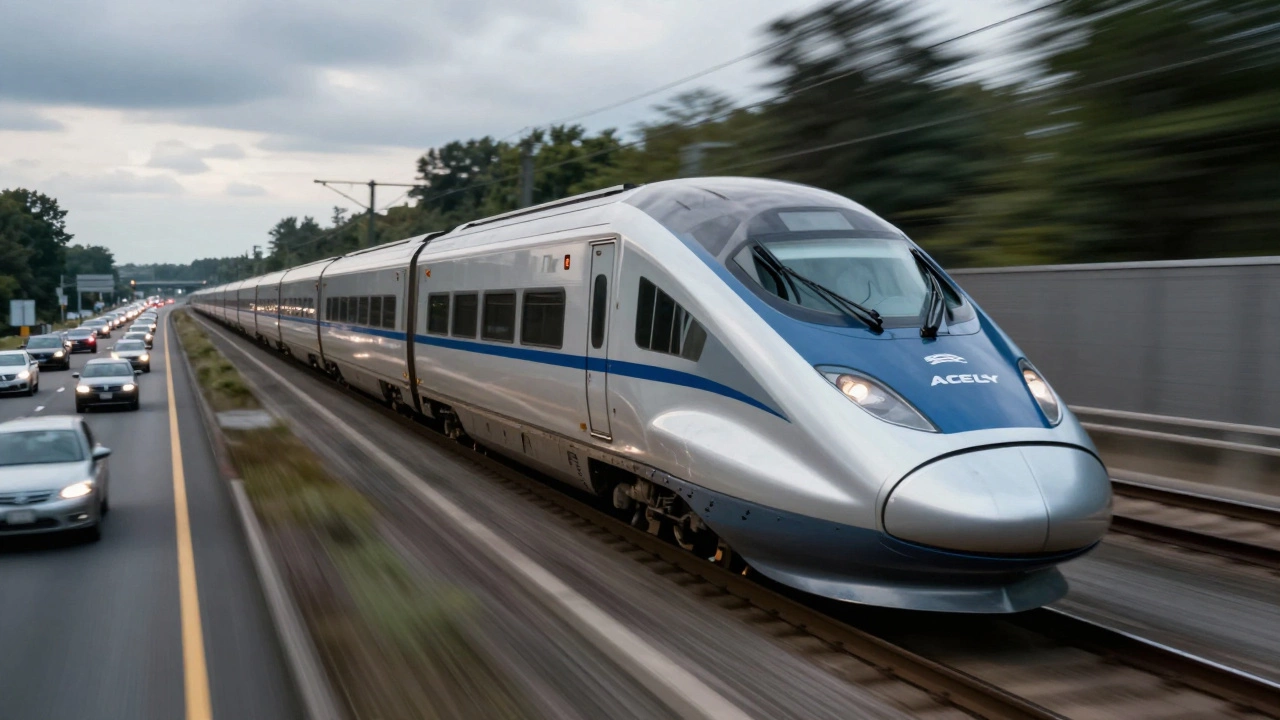
On this route, you can catch the Acela Express Amtrak's high-speed intercity passenger train service. While it doesn't reach the blistering speeds of European maglevs, it hits top speeds of 150 mph (240 km/h) in certain sections. The average speed from New York to Washington is around 78 mph. Compare that to driving. Even if you could maintain the speed limit without stopping, traffic in these cities is brutal. Parking alone can add an hour to your trip. When you factor in gas, tolls, and the stress of navigating Manhattan streets, the train isn't just faster; it’s a completely different experience.
For shorter hops, like Newark to Trenton, a car might technically be quicker if there is zero traffic. But once you cross the threshold of about two hours of driving time, the train usually takes the lead. Why? Because while you are sitting in gridlock on the George Washington Bridge, the Acela is cruising through tunnels at 100 mph.
The Midwest and Beyond: Cars Take the Lead
Step outside the Northeast, and the dynamic changes drastically. In the Midwest, South, and West Coast, Amtrak routes often share tracks with freight trains. This is a crucial detail. Freight trains carry heavy cargo and have priority on the rails. If a freight train is ahead, your passenger train has to wait. Sometimes for hours.
Consider a trip from Chicago to St. Louis. The Lincoln Service an Amtrak train route running between Chicago and St. Louis covers roughly 300 miles. The schedule says it takes about five hours. That sounds competitive against a four-hour drive, right? Not really. The average speed of the Lincoln Service is only about 60 mph. On the highway, even with some stops, you can often beat that time. More importantly, the train makes multiple stops in smaller towns along the way. Each stop adds dwell time-doors opening, passengers boarding, doors closing.
In states like Texas or California, the distances are vast. Driving from Los Angeles to San Francisco takes about six hours on I-5. There is no direct high-speed rail connection yet. The current Amtrak route involves a transfer or a very slow scenic journey that takes over ten hours. Here, the car is undeniably faster. In fact, for many long-distance routes in the US, flying is the only real competitor to driving for speed, though airports add their own layer of time consumption.
Hidden Time Costs: What the Clock Doesn't Show
When we compare speeds, we usually look at point-to-point travel time. But true travel time includes everything else. Let’s break down the hidden costs of both modes.
- Parking: In major cities like NYC, Chicago, or SF, finding parking can take 30 to 60 minutes. Plus, you pay for it. Train stations are usually in the city center. You step off the platform and you are already downtown.
- Traffic Delays: Accidents, construction, and rush hour are unpredictable. A planned 4-hour drive can easily become 6 hours. Trains run on fixed schedules and are immune to road traffic.
- Security and Check-in: Unlike airplanes, you don't need to arrive early for Amtrak. You can walk up to the gate 10 minutes before departure. This saves significant time compared to air travel, but cars still win on flexibility here-you leave when you want.
- Fueling and Rest Stops: Driving requires breaks. Every two hours, you should pull over. Gas stations, bathroom breaks, and snack runs add up. On a train, you can walk to the dining car or lounge car without leaving your seat.
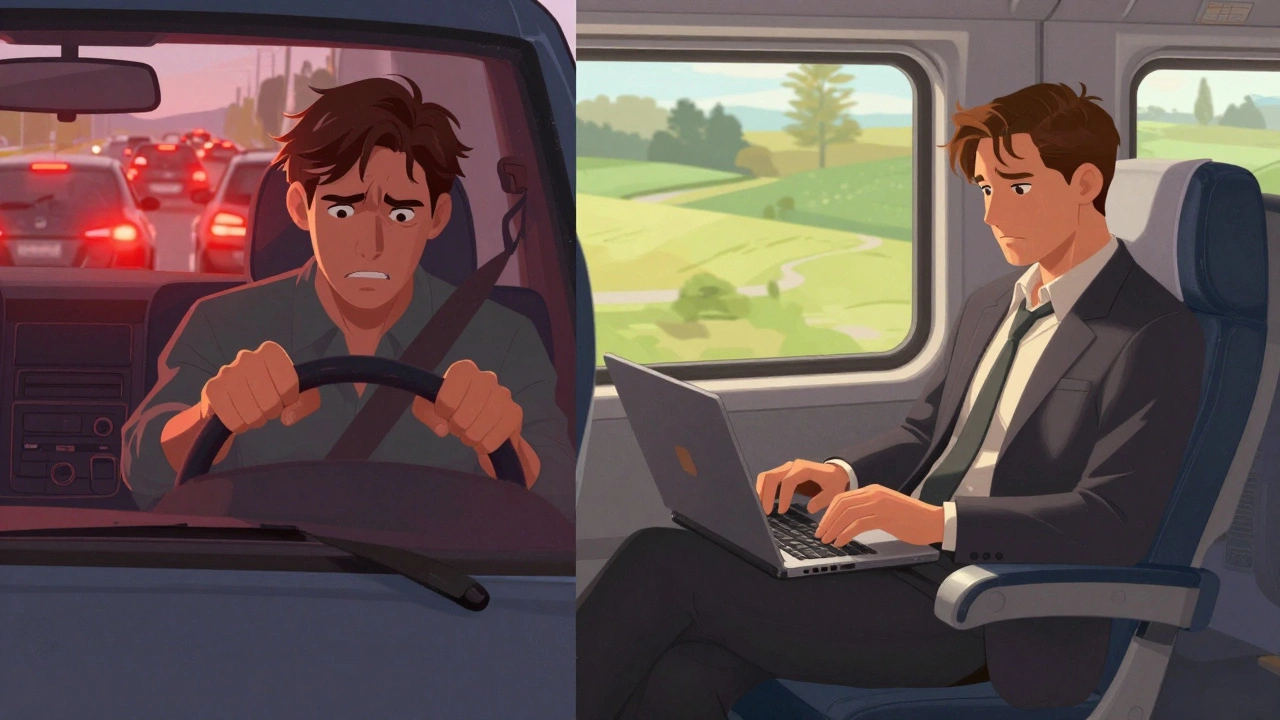
If you are working during the trip, the train becomes a mobile office. You can answer emails, read reports, or join Zoom calls. In a car, you are legally required to focus on the road. So, while the car might get you there 30 minutes faster on a rural route, did you actually save time if you couldn't work during that period?
Speed by Route: A Practical Comparison
To give you a clearer picture, let’s look at specific popular routes. These estimates assume standard conditions: moderate traffic for cars and on-time performance for trains.
| Route | Amtrak Time | Car Time (Door-to-Door) | Winner |
|---|---|---|---|
| New York to Washington, D.C. | 3h 15m - 3h 45m | 4h 30m - 6h 00m | Amtrak |
| Boston to New York | 3h 30m - 4h 00m | 4h 00m - 5h 30m | Amtrak (tie in light traffic) |
| Chicago to Milwaukee | 2h 30m | 1h 45m - 2h 30m | Car (usually) |
| Los Angeles to San Diego | 2h 45m - 3h 15m | 2h 00m - 3h 00m | Car (flexibility) |
| Seattle to Portland | 3h 30m - 4h 00m | 3h 00m - 4h 00m | Tie |
| Chicago to Minneapolis | 10h 00m - 12h 00m | 9h 00m - 10h 00m | Car |
Notice the pattern? Shorter distances in dense urban corridors favor trains. Longer distances in spread-out areas favor cars. The "Door-to-Door" metric for cars includes time spent driving to the station (if you live far out) or finding parking (if you arrive in the city). For trains, it includes getting to the station. Since most Amtrak stations are centrally located, this advantage is significant.
Reliability and Comfort: The Intangible Factors
Speed is one thing, but reliability is another. Amtrak’s on-time performance varies wildly by region. In the Northeast, it’s generally good, though weather can cause delays. In the Midwest and West, delays are more common due to freight interference. If your train is delayed by two hours, was it faster than the car? Probably not.
However, consider comfort. Sitting in a car for four hours causes physical strain. Back pain, leg stiffness, and mental fatigue are real issues. On a train, you have space to stretch, walk around, and sleep. For many people, arriving refreshed is worth a slight loss in speed. If you have a meeting immediately after arriving, being able to shower or change in a hotel near the station (rather than dealing with a rental car return) can save valuable time.
Also, think about productivity. As mentioned earlier, the train allows you to work. If you earn $50 an hour, and you spend 4 hours driving instead of working, that’s a $200 opportunity cost. The train fare might be $100. Mathematically, the train is cheaper and faster in terms of economic output.
When Should You Choose the Car?
Despite the benefits of rail, cars still dominate American travel for good reasons. You should choose a car if:
- You are traveling with lots of luggage: Ski equipment, golf clubs, or moving boxes are easier to load into a trunk than onto a train.
- Your destination is not near a station: If you are visiting a rural town or a suburb without public transit, the last-mile problem makes trains inconvenient.
- You need flexibility: Plans changed? With a car, you can turn around or detour. With a train, you are locked into a schedule.
- You are traveling with young children or pets: Managing kids or dogs on a train can be stressful. A car offers a controlled environment.
In these scenarios, the convenience of the car outweighs the potential speed advantages of the train. The "speed" of a trip isn't just about velocity; it's about ease of execution.
The Future of Rail Speed in America
It’s worth noting that the landscape is changing. The California High-Speed Rail a proposed high-speed railway project in California aims to connect San Francisco and Los Angeles in under three hours. Once completed, this will make the car obsolete for that corridor. Similarly, plans for improved rail in the Southeast and Midwest are in various stages of development.
Until then, the current reality is a patchwork. Some routes are fast and efficient; others are slow and unreliable. As a traveler, you need to check the specific route. Don't assume Amtrak is slower everywhere. And don't assume it's faster everywhere either. Use tools like Google Maps or Amtrak’s website to compare real-time estimates.
In summary, is Amtrak faster than a car? In the Northeast, yes. Everywhere else, it’s a toss-up, often leaning toward the car for pure speed but losing out on total travel experience. The best choice depends on your priorities: raw speed, comfort, productivity, or flexibility.
Is Amtrak faster than driving from New York to Washington DC?
Yes, Amtrak is significantly faster. The Acela Express takes about 3 hours and 15 minutes, while driving typically takes 4.5 to 6 hours depending on traffic. The train avoids highway congestion and parking hassles in both cities.
Why is Amtrak so slow in the Midwest?
In the Midwest, Amtrak shares tracks with freight trains. Freight companies have priority on the rails, meaning passenger trains must wait for freight trains to pass. This causes frequent delays and lower average speeds compared to dedicated high-speed lines.
Can I bring my car on Amtrak?
No, Amtrak does not allow personal vehicles on its trains. You must park your car at the station or use other transportation methods. This is different from ferries or some international rail services that offer auto-rail options.
Is it cheaper to drive or take Amtrak?
It depends on the number of passengers and the route. For solo travelers, driving is often cheaper if you split fuel costs. However, when you factor in tolls, parking, wear and tear, and the value of your time, Amtrak can be more cost-effective, especially for business travelers who can work during the ride.
How early should I arrive at the Amtrak station?
You should arrive at least 15-20 minutes before departure. There is no security screening like at airports, so you can walk straight to the platform. Arriving too early isn't necessary unless you want to relax in the station cafe.