North vs. South India: Travel Preference Quiz
Your Result
Based on your answers, here is where you fit best:
There is a common debate among travelers about whether Southern India is better than Northern India for tourists seeking culture, climate, and cuisine. The truth is that neither region is objectively "better." They are entirely different experiences. If you prefer tropical beaches, ancient Dravidian temples, and spicy vegetarian food, the south wins. If you want snow-capped mountains, Mughal architecture, and rich meat curries, the north takes the lead. Choosing between them depends on what kind of trip you want to take.
The Climate Divide: Monsoon vs. Seasons
The first thing you notice when traveling in India is the weather, and it changes drastically as you cross the Vindhya Range. Northern India has four distinct seasons: summer, monsoon, autumn, and winter. Places like Delhi, Agra, and Jaipur can get extremely hot in May and June, with temperatures often exceeding 40°C (104°F). However, from November to February, the weather is crisp and cool, making it perfect for sightseeing. You might even see snow if you visit Leh-Ladakh or Manali.
In contrast, Southern India is largely tropical. States like Kerala, Tamil Nadu, and Karnataka stay warm year-round. Winters are mild, rarely dropping below 20°C (68°F), which is great if you hate the cold. Summers are humid and hot. The monsoon season brings heavy rain, but unlike the north, where rains can disrupt travel, the greenery in the south during the monsoon is breathtaking. If you dislike extreme heat or biting cold, the south offers a more consistent, moderate temperature, though the humidity can be challenging for some visitors.
Cultural Heritage: Mughal Grandeur vs. Dravidian Roots
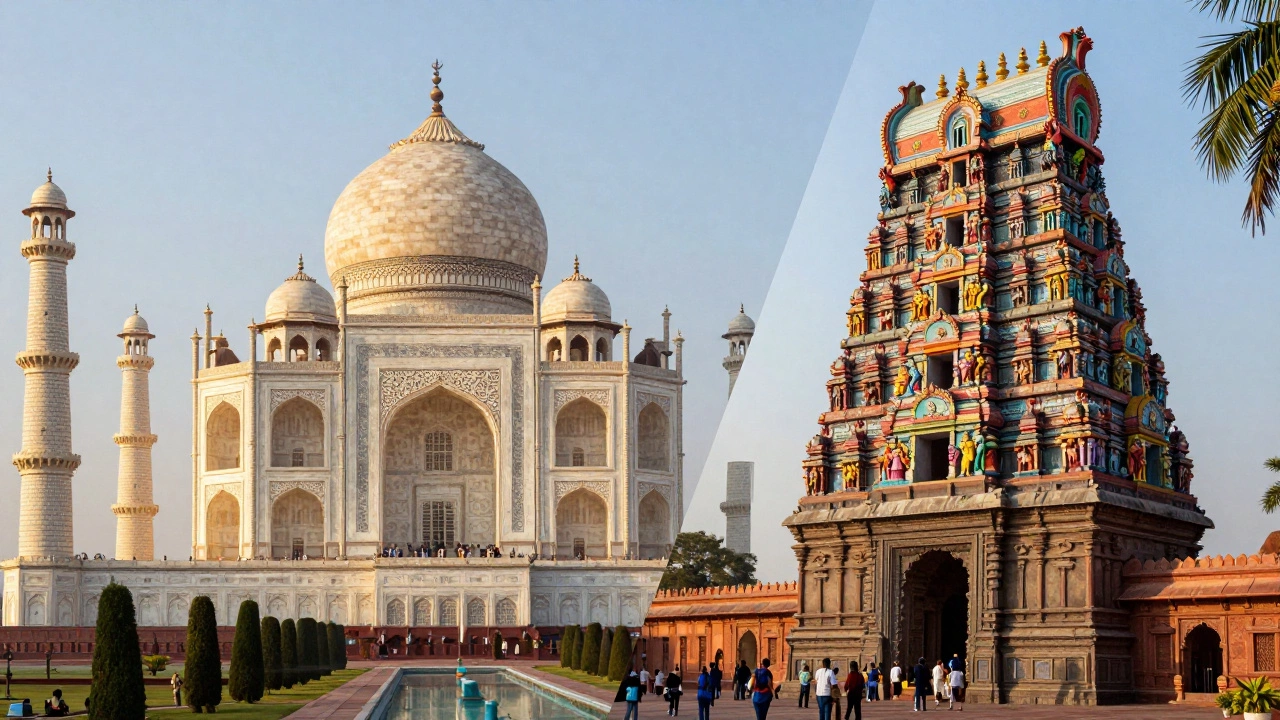
India’s history is deep, but the architectural styles tell two different stories. In the north, you encounter the legacy of the Mughal Empire. The Taj Mahal in Agra is the crown jewel of this era, symbolizing love through white marble and intricate calligraphy. Cities like Delhi and Jaipur showcase forts, palaces, and bazaars that reflect royal power and Persian influence. The vibe here is grand, historic, and often crowded with tourists.
Southern India, on the other hand, preserves the ancient Dravidian culture. Here, the focus is on temple architecture. The Brihadeeswarar Temple in Thanjavur and the Meenakshi Amman Temple in Madurai feature towering gopurams (gateways) covered in colorful sculptures. These temples are not just ruins; they are living centers of worship and community life. The art forms here, such as Kathakali dance in Kerala and Bharatanatyam in Tamil Nadu, are deeply spiritual and visually stunning. If you prefer active, vibrant religious festivals over static historical monuments, the south offers a more immersive cultural experience.
Cuisine: Spices, Vegetables, and Rice
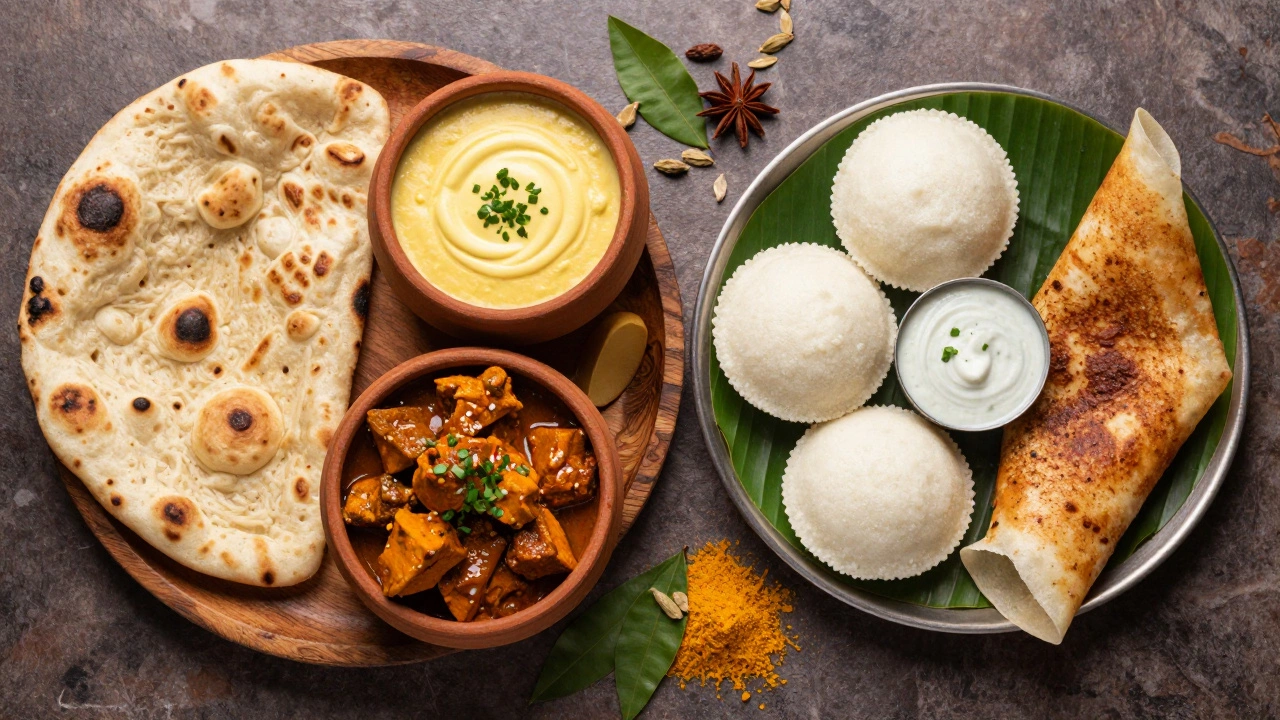
Food is a major reason people choose one region over the other. North Indian cuisine is known for its use of wheat-based breads like naan, roti, and paratha. Dishes are often rich, creamy, and buttery, such as butter chicken and palak paneer. Meat dishes are prominent, especially lamb and goat. The flavors are robust but generally less spicy than in the south.
South Indian cuisine revolves around rice, lentils, and coconut. It is famous for its vegetarian offerings. Dosa, idli, and vada are staple breakfast items that are healthy and delicious. Curries use tamarind, curry leaves, and mustard seeds, creating a tangy and aromatic profile. Seafood is fresh and abundant in coastal areas like Goa and Kerala. For vegetarians and health-conscious travelers, the south is often considered superior due to the variety of plant-based meals and the emphasis on fresh spices.
Natural Beauty: Mountains vs. Backwaters
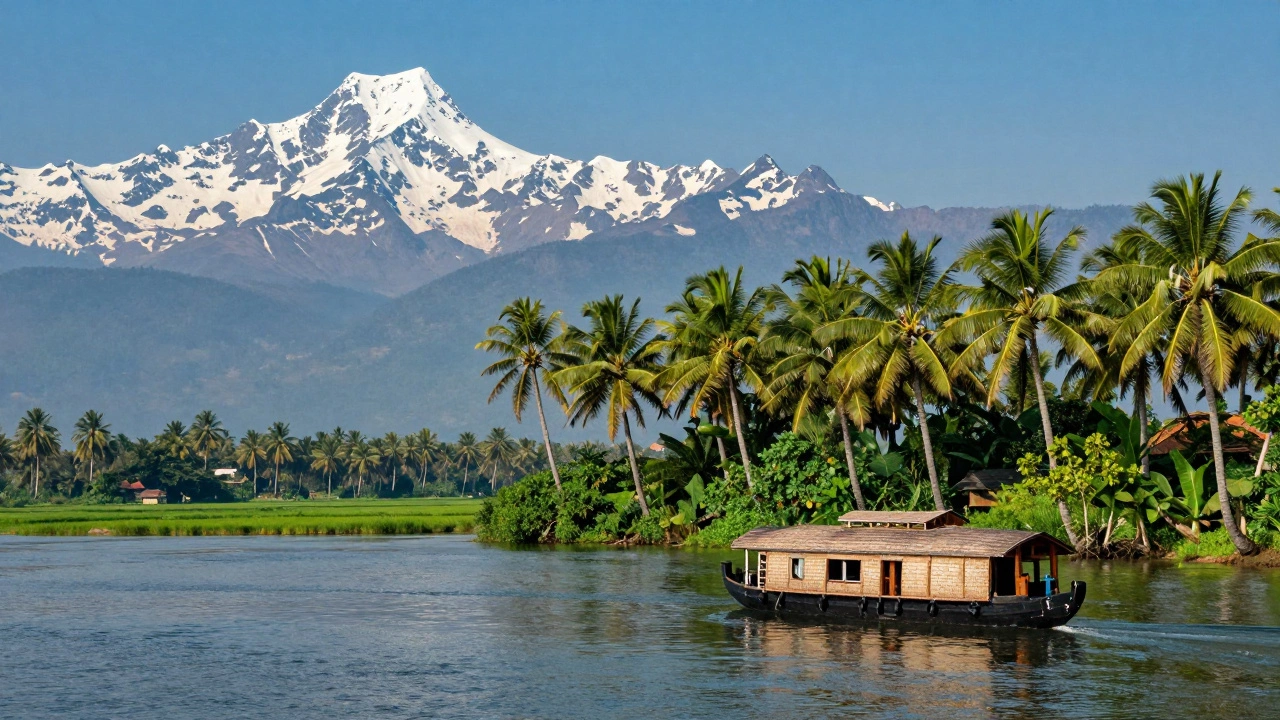
If nature is your priority, both regions excel but in different ways. The north boasts the Himalayas, offering trekking, skiing, and dramatic mountain vistas. Destinations like Rishikesh for yoga and adventure sports, or Dal Lake in Srinagar for shikara rides, provide serene escapes. The landscape is rugged and majestic.
Southern India offers lush greenery, backwaters, and wildlife sanctuaries. Kerala’s backwaters allow you to glide through canal networks on houseboats, surrounded by palm trees and paddy fields. The Western Ghats, a UNESCO World Heritage site, are home to biodiversity hotspots like Munnar and Wayanad. If you prefer relaxing in green landscapes or enjoying beach holidays, the south provides a more tranquil natural environment compared to the adventurous north.
Hospitality and Ease of Travel
Travelers often comment on the warmth of local people. Both regions are hospitable, but the style differs. In the north, hospitality can feel more formal and respectful, especially in rural areas. In the south, particularly in Kerala and Karnataka, English is widely spoken, making communication easier for international tourists. The infrastructure in cities like Bangalore and Chennai is modern and efficient, with better road conditions and public transport options compared to many northern cities outside Delhi.
| Feature | North India | South India |
|---|---|---|
| Climate | Extreme seasons (hot summers, cold winters) | Tropical (warm year-round, humid) |
| Architecture | Mughal forts, marble monuments | Dravidian temples, gopurams |
| Cuisine | Bread-based, meat-heavy, creamy | Rice-based, vegetarian-friendly, spicy |
| Nature | Mountains, deserts, lakes | Backwaters, hills, beaches |
| Language Barrier | Hindi dominant, English limited in villages | Local languages, high English proficiency in cities |
Which One Should You Choose?
Your choice depends on your travel goals. If you are a first-time visitor wanting iconic landmarks like the Taj Mahal and experiencing royal history, start with North India. If you seek relaxation, healthy food, and natural beauty without extreme weather, South India is likely the better fit. Many seasoned travelers recommend doing both in one trip to appreciate the full diversity of India. Start in Delhi, move south to Rajasthan, then fly to Bangalore or Chennai to explore the southern states. This way, you get the best of both worlds.
Is South India safer for solo female travelers than North India?
Both regions have safe and unsafe areas. Generally, South India is perceived as more relaxed and less conservative regarding social interactions, which can make solo female travelers feel more comfortable. Cities like Kerala and Karnataka are known for their progressive attitudes. However, standard precautions apply everywhere in India: dress modestly, avoid isolated areas at night, and use reputable transport services.
What is the best time to visit South India?
The best time to visit most of South India is from October to March when the weather is cool and dry. Kerala and Tamil Nadu are pleasant during these months. Avoid the peak summer months of April and May due to high heat and humidity. The monsoon season (June to September) is beautiful for nature lovers but can disrupt outdoor activities.
Can I find vegetarian food easily in North India?
Yes, vegetarian food is widely available in North India, especially in cities like Delhi and Jaipur. However, the cuisine tends to be richer and heavier with dairy products. If you prefer lighter, rice-based vegetarian meals, South India offers a wider variety of options that are naturally healthier and less oily.
Is it difficult to travel between North and South India?
Traveling between the two regions is easy due to well-connected flights and trains. A flight from Delhi to Bangalore or Chennai takes about three hours. Train journeys can take 24-48 hours depending on the route, so flying is recommended for efficiency. Domestic airlines offer competitive prices, making it feasible to visit both regions in one trip.
Which region is better for luxury travel?
Both regions offer exceptional luxury experiences. North India has heritage palaces converted into hotels in Rajasthan and luxury safaris in Ranthambore. South India offers luxury houseboats in Kerala backwaters and high-end resorts in hill stations like Ooty and Munnar. For a unique blend of culture and comfort, Rajasthan is often preferred for luxury, while Kerala is chosen for wellness and relaxation.