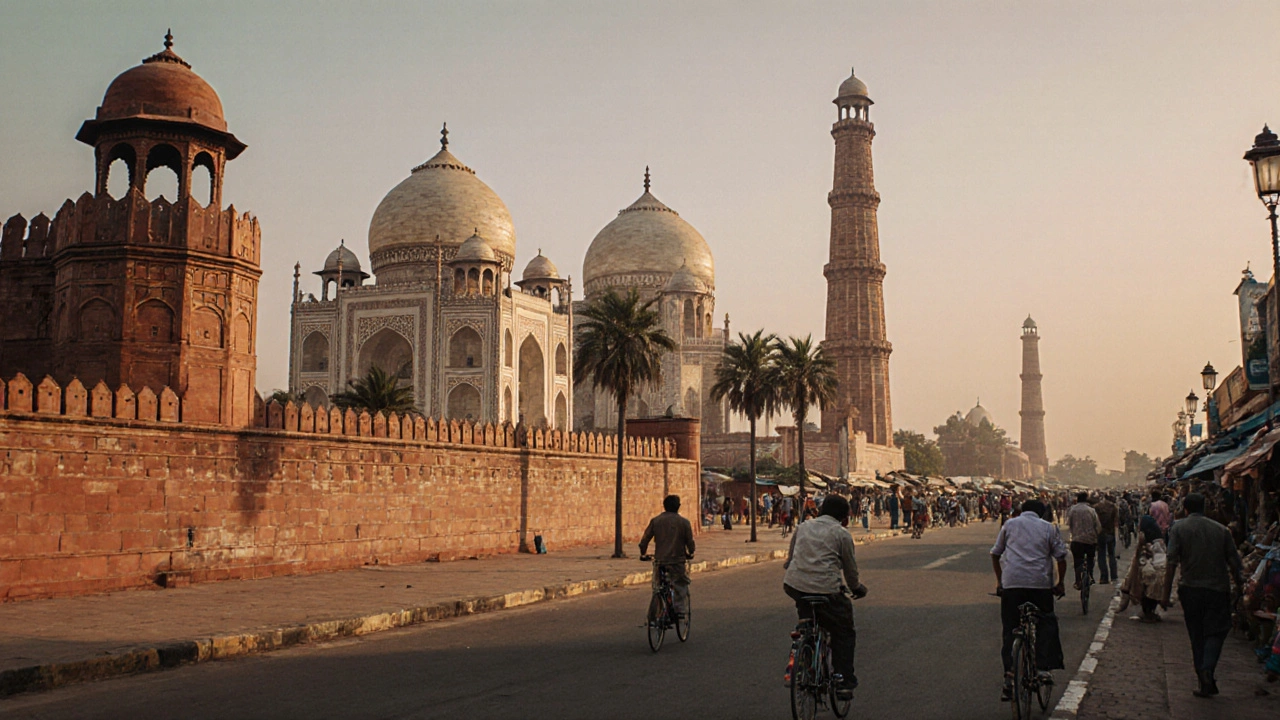
Delhi Heritage: Explore Ancient Forts, Mughal Palaces, and Living Traditions
When you think of Delhi heritage, the layered history of India’s capital, from ancient Indraprastha to the Mughal Empire and British rule. Also known as Old Delhi’s cultural core, it’s not just a collection of ruins—it’s a living rhythm of daily life, rituals, and architecture that still breathes. This isn’t a museum piece. It’s the call to prayer echoing from Jama Masjid at sunset, the scent of spiced chai drifting from a 200-year-old kiosk near Chandni Chowk, and the silent grandeur of the Red Fort, where emperors once ruled and now tourists walk the same stones.
Delhi heritage includes Red Fort, the 17th-century Mughal palace-fortress that was the seat of power for emperors like Shah Jahan, where the walls still hold the echoes of royal ceremonies and the 1947 independence speech. It includes Qutub Minar, a 73-meter-tall stone tower built in the 12th century, one of the earliest examples of Indo-Islamic architecture in India, rising from a field of broken pillars and ancient inscriptions. And it includes Humayun’s Tomb, the garden tomb that inspired the Taj Mahal, with its perfect symmetry and Persian-inspired design. These aren’t just landmarks—they’re the bones of a city that never stopped evolving.
What makes Delhi heritage different from other historical sites is how deeply it’s woven into everyday life. You don’t just visit it—you taste it in the kebabs at Karim’s, hear it in the qawwali music at Nizamuddin Dargah, and feel it in the cool stone of a centuries-old stepwell hidden behind a spice shop. This isn’t curated for tourists. It’s lived in. Families still gather in the courtyards of havelis that once housed nobles. Artisans repair brass lamps the same way their grandfathers did. And every year, during Eid or Diwali, the same alleys light up with the same colors, the same songs, the same devotion.
Some say Delhi’s heritage is fading under concrete and traffic. But if you look closer, you’ll see it’s adapting. A restored haveli now holds a boutique café. A 400-year-old stepwell is being cleaned and reopened for visitors. The same hands that once carved marble for the Taj now teach children how to make miniature replicas in Old Delhi’s tiny workshops. This heritage isn’t dead. It’s stubborn. It’s quiet. And it’s still here.
Below, you’ll find real stories from people who’ve walked these streets, seen these monuments at dawn, and learned why Delhi’s past isn’t locked behind gates—it’s in the rhythm of its people. Whether you’re planning a weekend trip or just curious about what makes this city different, what’s here isn’t just history. It’s a living pulse you can still feel.