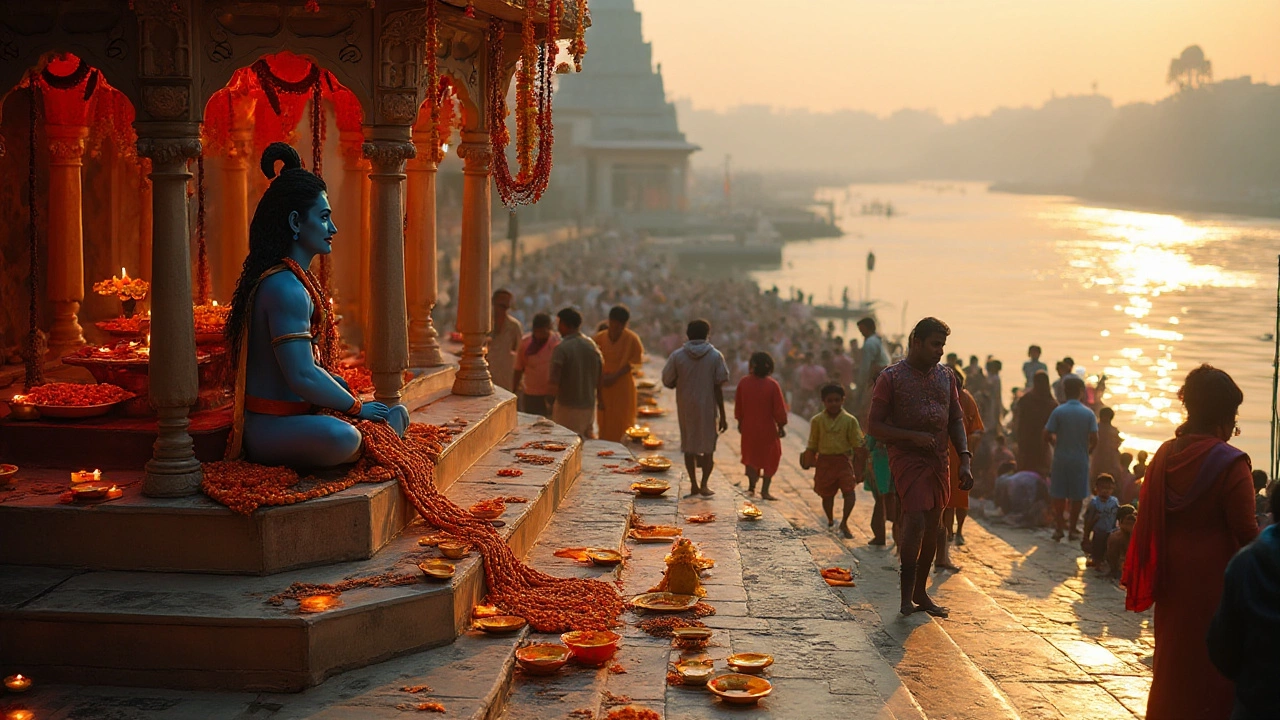
Indian deities: Gods, goddesses, and the spiritual heart of India
When you hear the word Indian deities, the divine figures worshipped across India’s diverse religious traditions, especially in Hinduism. Also known as Hindu gods and goddesses, they aren’t just figures in ancient texts—they’re present in the morning aarti at a village temple, the song sung during a wedding, and the colorful idols carried through city streets during festivals. These aren’t distant symbols. They’re family. Devotees don’t just pray to them—they talk to them, cry to them, celebrate with them. A mother might whisper to Ganesha before her child’s exam. A farmer might leave an offering to Indra for rain. A bride might wear red because she’s honoring Parvati’s strength.
Indian deities aren’t a single list. They’re a living ecosystem. Hindu gods, male divine figures like Vishnu, Shiva, and Krishna, each representing different cosmic forces balance out Hindu goddesses, powerful female forms like Durga, Lakshmi, and Saraswati, who embody protection, wealth, and wisdom. You won’t find one without the other. Shiva destroys to renew, but Parvati brings him back to life through love. Vishnu preserves the universe, but Lakshmi ensures there’s something worth preserving. These aren’t abstract ideas—they’re relationships, mirrored in how families live, argue, and heal together.
And it’s not just about temples. You’ll find traces of these deities everywhere—in the way street vendors bless their carts with a dot of vermilion, in the songs children hum on school buses, in the quiet moment before a meal when someone touches their forehead. Even if you don’t believe, you can’t ignore them. They’re woven into the rhythm of daily life. That’s why you’ll see people crying in temples—not because they’re sad, but because they feel seen. It’s not magic. It’s connection.
Some of the posts here explore how these deities show up in unexpected places: why people cry during temple visits, how luxury trains like the Palace on Wheels include stops at sacred sites, and why Indian culture stands out because its traditions aren’t just preserved—they’re lived. You’ll also find stories about heritage homes where family shrines still glow with oil lamps, and how even the most modern Indians carry a small idol in their pocket.
There’s no single way to understand Indian deities. You don’t need to study scriptures to feel their presence. You just need to be open to the noise of a temple bell, the smell of incense in a crowded market, or the quiet smile of an old woman offering flowers to a roadside statue. These aren’t relics. They’re alive. And what you’ll find in the posts below isn’t just information—it’s a window into the soul of a country where the divine isn’t separate from the everyday. It’s the reason people wake up, work, and keep going.