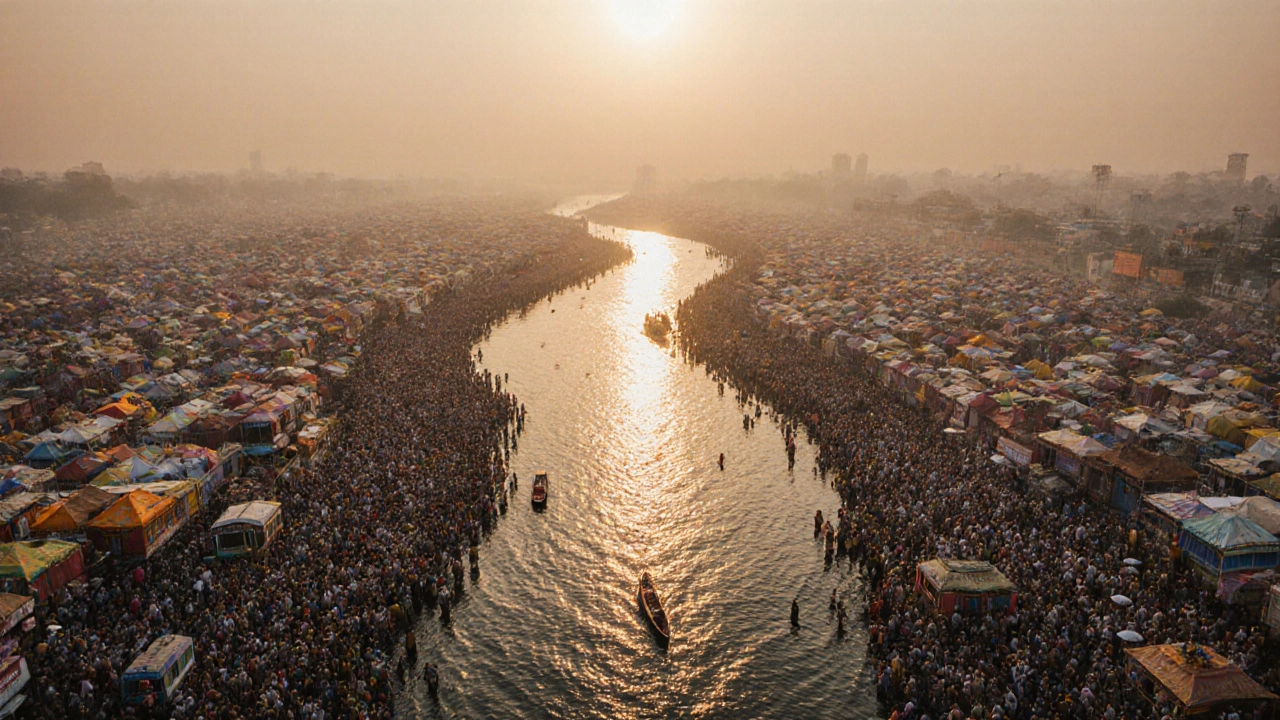
Indian pilgrimage festivals: Sacred journeys, vibrant rituals, and spiritual traditions
When you think of Indian pilgrimage festivals, large-scale religious gatherings rooted in centuries-old traditions, often tied to specific deities, rivers, or sacred mountains. Also known as tirtha yatra, these events aren’t just about prayer—they’re living expressions of faith that move entire communities. Millions walk barefoot for days, bathe in icy rivers, and sleep under the stars, not because they have to, but because they believe it changes them.
These festivals are deeply tied to places like Varanasi, where the Ganges flows through ancient ghats and devotees come to wash away sins. They’re also found in the Himalayas, where Kailash Mansarovar draws pilgrims from across Asia, and in the deserts of Rajasthan, where the Pushkar Camel Fair turns a quiet town into a sea of tents and chants. Each event has its own rhythm—some last days, others stretch for weeks—but they all share the same heartbeat: devotion made visible.
You’ll find Hindu pilgrimage sites, sacred locations tied to myths, gods, and cosmic energy, often centered around rivers, mountains, or temples at the core of these gatherings. The Kumbh Mela, the world’s largest religious gathering, moves between four cities every three years, drawing over 100 million people in a single season. Then there’s the Amarnath Yatra, where pilgrims trek through snow to see an ice Shiva Lingam form naturally inside a cave. These aren’t tourist attractions—they’re acts of surrender.
And it’s not just about Hinduism. Sikh pilgrims walk to the Golden Temple in Amritsar, often barefoot, carrying offerings. Christians in Goa celebrate the Feast of St. Francis Xavier with processions older than the United States. Even in remote villages, local deities are honored with dances, drumming, and food offerings that have been passed down for generations. These are the festivals that don’t make global headlines—but they shape the soul of India.
What makes these events so powerful isn’t the crowds, the music, or even the rituals themselves. It’s the quiet moments—the old woman whispering prayers as she dips her fingers in the Ganges, the teenager carrying his father’s ashes to the river, the family sharing a single roti under a temple porch. These are the moments that stay with you long after you’ve left.
In the posts below, you’ll find real stories from people who’ve walked these paths—what they saw, how they felt, and the unexpected lessons they brought home. Whether you’re planning a trip or just curious about the heart of India’s spiritual life, these stories cut through the noise and show you what really happens when faith meets the road.