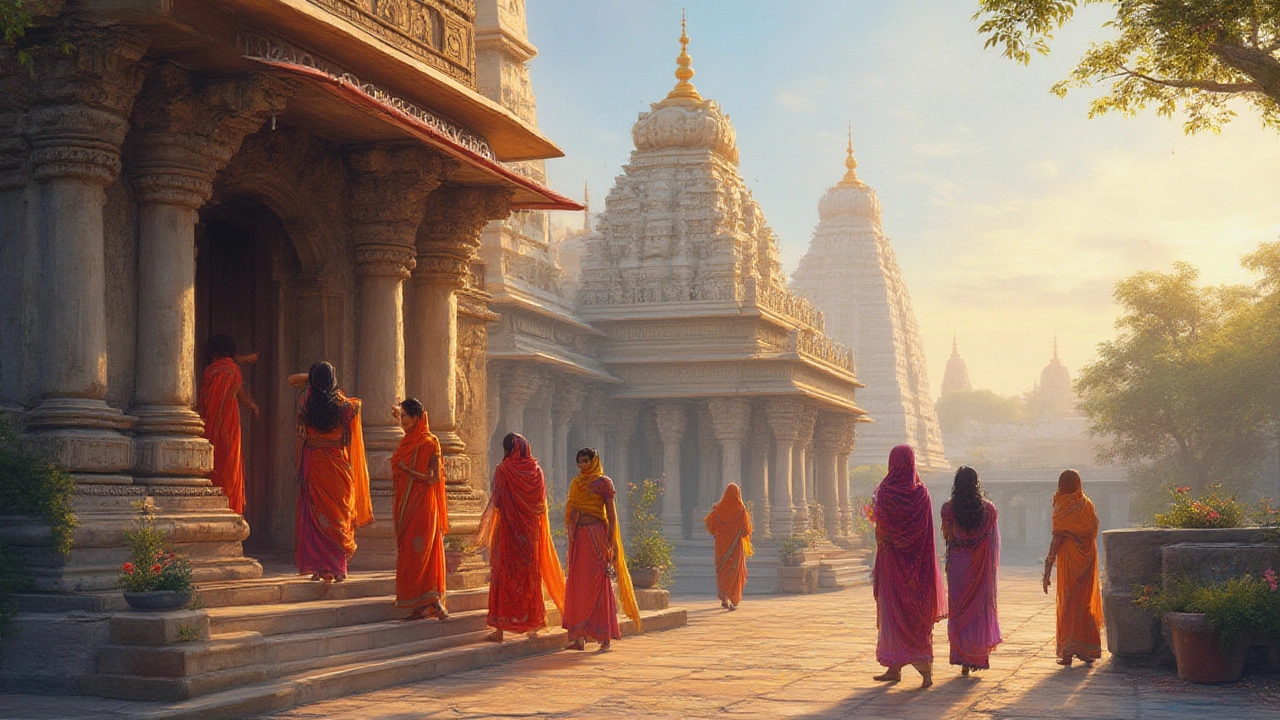
Indian Temple Clothing: What to Wear and Why It Matters
When you step into an Indian temple clothing, the traditional attire worn by visitors to Hindu, Jain, and Buddhist temples across India to show respect and maintain sacred space. Also known as temple dress code, it’s not about fashion—it’s about honoring centuries-old traditions that still shape daily life in every corner of the country. This isn’t just a suggestion. In places like Varanasi, Tirupati, or Madurai, you’ll be turned away if you’re wearing shorts, sleeveless tops, or tight jeans. Locals don’t see it as restrictive—they see it as part of the ritual, like removing your shoes before entering a home.
What you wear connects you to something bigger than yourself. In South India, women often wear silk sarees or long skirts with blouses, while men wear dhotis or kurta-pajamas. In North India, you’ll see more salwar kameez or long tunics paired with loose pants. The key? Cover your shoulders, knees, and ankles. Some temples, like the one in Sabarimala, even require men to wear only black or saffron cloth. It’s not about being poor or traditional—it’s about showing you understand the space you’re entering. Even foreign tourists who wear modest clothing often say they feel a deeper connection, not because of the fabric, but because they’re not standing out as outsiders.
It’s not just about the clothes themselves, but what they represent. A woman in a simple cotton saree isn’t just dressed for comfort—she’s participating in a practice passed down through generations. A man in a dhoti isn’t being old-fashioned—he’s following a code that says, ‘I’m here to worship, not to perform.’ This is why you won’t see yoga pants or flip-flops in most temple courtyards. Even if the temple doesn’t have guards checking your outfit, locals will notice. And in a culture where respect is shown through small, quiet actions, this matters.
Some temples provide shawls or sarongs at the entrance for visitors who show up unprepared. Others have small shops nearby selling affordable cotton dupattas or lungis. But don’t rely on that. If you’re heading to a major temple like Somnath or Jagannath Puri, plan ahead. Pack a long skirt, a loose top with sleeves, and a scarf. It’s easier than explaining why you didn’t know.
And yes, this applies to men too. Too many travelers think modesty is only for women. It’s not. Bare chests, tank tops, or shorts will get you blocked at the gate. In many temples, even showing your legs is considered disrespectful. You don’t need to buy traditional clothes—just wear something that covers you properly. A pair of long cotton pants and a t-shirt is fine. A hoodie works if it’s not too flashy. The goal isn’t to look like a local—it’s to not look like you’re ignoring the rules.
Why does this still matter in 2025? Because Indian temples aren’t museums. They’re living places of worship, where prayers are whispered, bells are rung, and offerings are made every single day. People come here to cry, to pray, to find peace. When you dress respectfully, you’re not just following a rule—you’re saying, ‘I see this is sacred to someone.’ And that small act changes how you experience the place. You don’t just walk through—you feel it.
Below, you’ll find real stories from travelers who learned the hard way, tips from locals on what to pack, and what to avoid when visiting temples across India. Whether you’re going to a quiet village shrine or a massive temple complex, these posts will help you show up ready—not just with a camera, but with the right mindset and the right clothes.