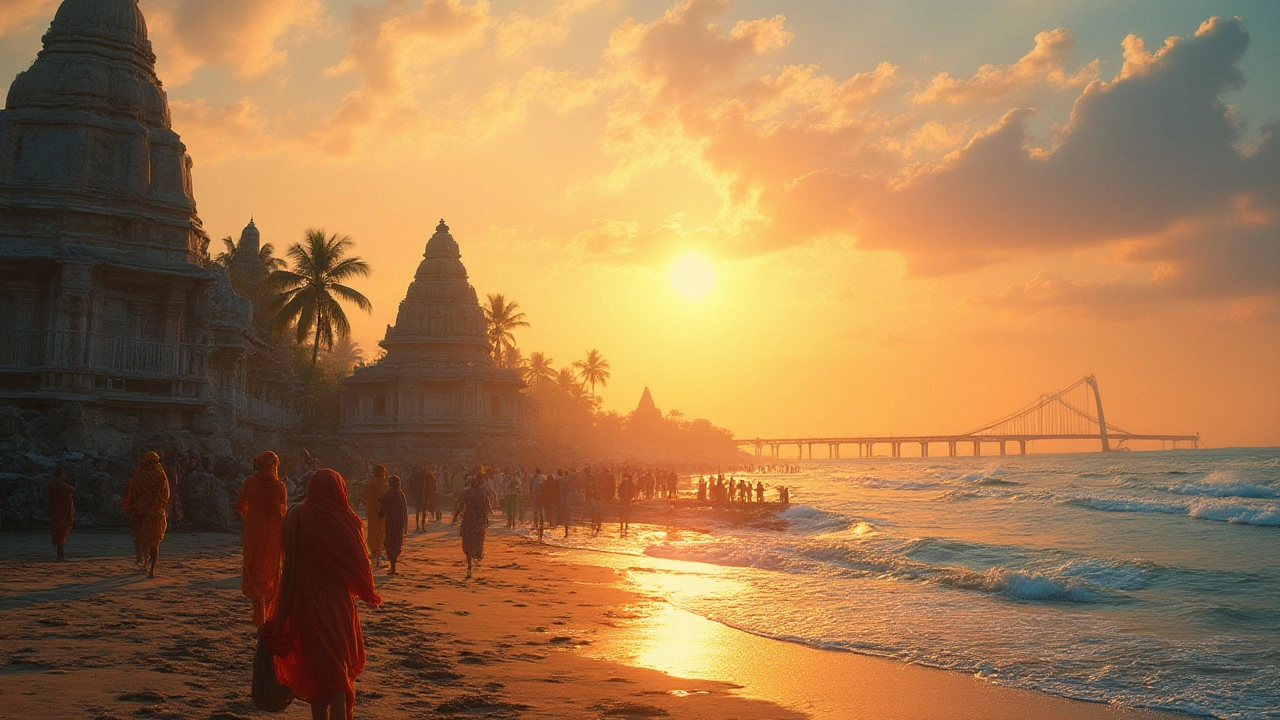
Rameshwaram Itinerary: Best Things to Do and How to Plan Your Trip
When you think of Rameshwaram, a sacred island town in Tamil Nadu, India, known for its ancient temples and spiritual significance as one of the Char Dham pilgrimage sites. It's not just another temple town—it’s where, according to Hindu tradition, Lord Rama built a bridge to Lanka and worshipped Shiva to atone for his sins. This makes Rameshwaram one of the most important pilgrimage centers in India, drawing millions every year. But even if you’re not here for faith, the quiet beaches, simple local life, and stunning architecture make it worth the trip.
Ramanathaswamy Temple, the heart of Rameshwaram and one of the twelve Jyotirlingas, with its long corridors and 22 holy wells. Also known as Rameshwaram Temple, it’s the reason most people come here. The temple’s corridors are the longest in India, stretching over 1,200 meters, lined with carved pillars and quiet spots where pilgrims sit in prayer. You’ll need to walk through them barefoot, as required, and drink water from one of the 22 wells—each said to have a different healing power. Don’t rush. This isn’t a photo stop. It’s a slow, spiritual walk. Nearby, Dhanushkodi, the ghost town at the island’s tip, where a 1964 cyclone wiped out everything. Also known as Dhanushkodi Beach, it’s hauntingly beautiful. The ruins of churches, trains, and homes sit half-buried in sand, with the Bay of Bengal on one side and the Indian Ocean on the other. Locals say the silence here is so deep, you can hear your own thoughts. Many visitors combine both in one day—morning at the temple, afternoon at Dhanushkodi.
For a real break, head to Pamban Bridge, the iconic sea bridge connecting Rameshwaram to mainland India, famous for its opening section that lets ships pass. Also known as Annai Indira Gandhi Road Bridge, it’s an engineering marvel from the 1910s. Ride the train across it at sunset. The view of the water, the sky, and the lights coming on along the coast is unforgettable. Skip the car ride—the train is cheaper, slower, and way more memorable. And if you’ve got time, try the local food: simple rice with fish curry, coconut chutney, and that sweet, sticky jaggery dessert they serve warm. No fancy restaurants here. Just honest, home-style meals.
Most people plan Rameshwaram as a one- or two-day trip. One day is enough if you’re focused on the temple and Dhanushkodi. Two days lets you relax, take a boat ride to Kothandaramaswamy Temple on the nearby island, or just sit on the beach and watch the fishermen mend their nets. There’s no rush. No crowds like in Varanasi or Tirupati. Just peace, history, and the sound of the sea.
Below, you’ll find real trip reports, budget tips, and local insights from people who’ve walked these corridors, slept in guesthouses near the temple, and watched the sunrise over Dhanushkodi. Whether you’re here for devotion, history, or just quiet, there’s something here for you.