Temple Dress Code in India: What to Wear and Why It Matters
When you visit a temple dress code, the unwritten rules for clothing at religious sites in India that respect faith, tradition, and community norms. Also known as temple etiquette, it isn’t about restriction—it’s about showing up with awareness. This isn’t just about covering up. It’s about recognizing that in many Indian temples, the space isn’t just a building—it’s a living part of daily spiritual life. People come here to pray, to grieve, to celebrate, and to connect with something deeper. What you wear sends a message before you even step inside.
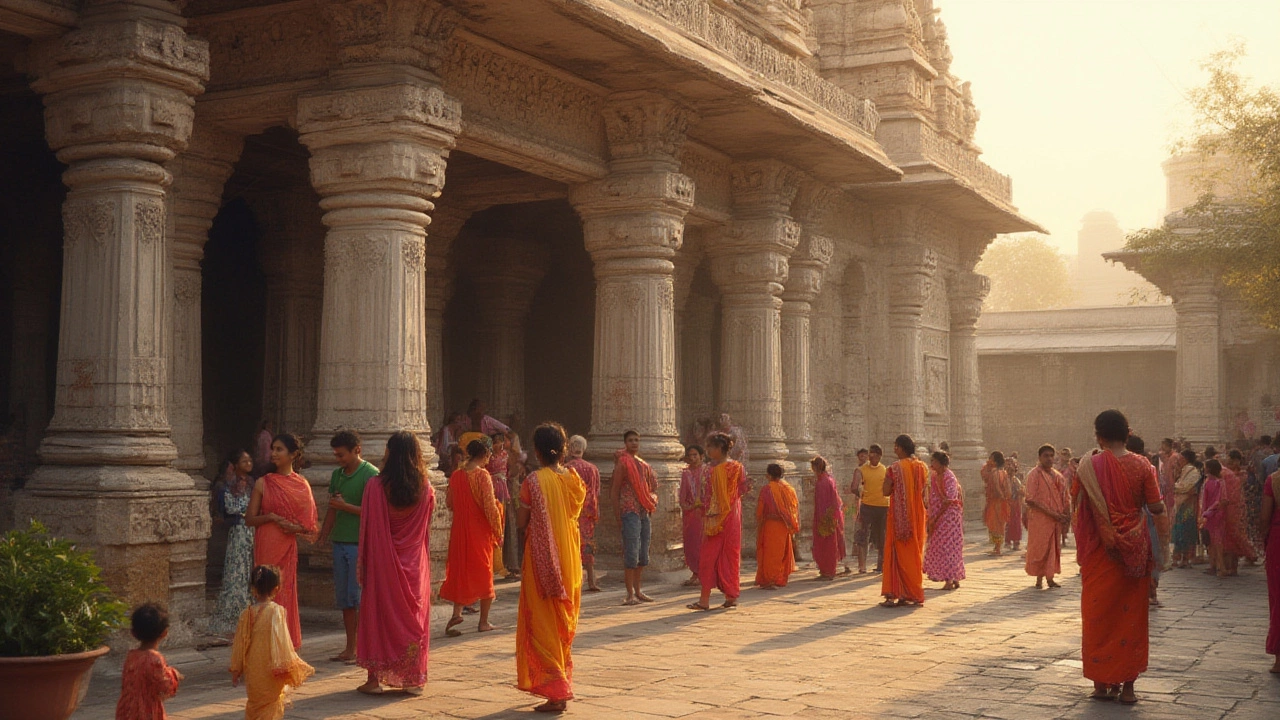
Most temples in India, especially in North and South India, expect visitors to dress modestly. That means no shorts, no tank tops, no revealing dresses, and no bare shoulders. For women, a long skirt or salwar kameez works best. For men, long pants and a shirt with sleeves are the standard. In some places like Varanasi or Tirupati, you’ll even be asked to remove your shoes before entering. In Kerala’s temples, women are often required to wear a traditional sari or mundu. These aren’t random rules—they’re tied to centuries of practice. In Hinduism, the body is seen as a vessel, and covering it respectfully is part of maintaining purity in sacred space. It’s not about shame—it’s about reverence.
You’ll also notice that modest clothing India, a cultural expectation for respectful attire in religious and conservative settings across the country isn’t just about temples. It shows up in rural villages, during festivals like Diwali or Holi, and even in some heritage hotels that host temple ceremonies. The same logic applies: if you’re entering a space where people kneel, chant, and offer prayers, dressing like you’re heading to a beach party doesn’t fit. It’s not about policing you—it’s about helping you be part of the moment, not an outsider disrupting it.
And yes, there are exceptions. Some modern temples in big cities like Bangalore or Delhi are more relaxed, especially if they’re built for tourism. But if you’re visiting a temple that’s been standing for 500 years, assume the old rules still apply. When in doubt, look around. If everyone’s covering their legs and shoulders, do the same. You don’t need to buy a sari—just wear what you have that’s loose, covered, and respectful. Many temples even offer free shawls or loaned saris at the entrance if you’re unprepared. It’s not a test. It’s a gesture.
What you wear also connects to how you’re treated. Locals notice when visitors make an effort. A simple change in clothing can mean the difference between being ignored and being offered a prayer offering, a blessing, or even a warm cup of chai after your visit. This isn’t about performing for others—it’s about stepping into a space that’s sacred to millions and honoring that. It’s the same reason you wouldn’t wear flip-flops to a funeral or a suit to a muddy hiking trail. Context matters.
And if you’re wondering why this even exists in 2025—it’s because these rules aren’t about control. They’re about continuity. They’re how traditions survive, not because they’re enforced by law, but because people choose to honor them. When you follow the temple visiting tips, practical advice for respectful and smooth temple visits in India, including clothing, behavior, and cultural norms, you’re not just avoiding trouble—you’re becoming part of the story. You’re not just a tourist. You’re a guest.
Below, you’ll find real stories and practical guides from travelers who’ve been there—what worked, what didn’t, and how to avoid the awkward moments that come from not knowing the rules. Whether you’re heading to a Himalayan shrine or a temple in Tamil Nadu, these posts will help you show up ready—not just with a camera, but with respect.