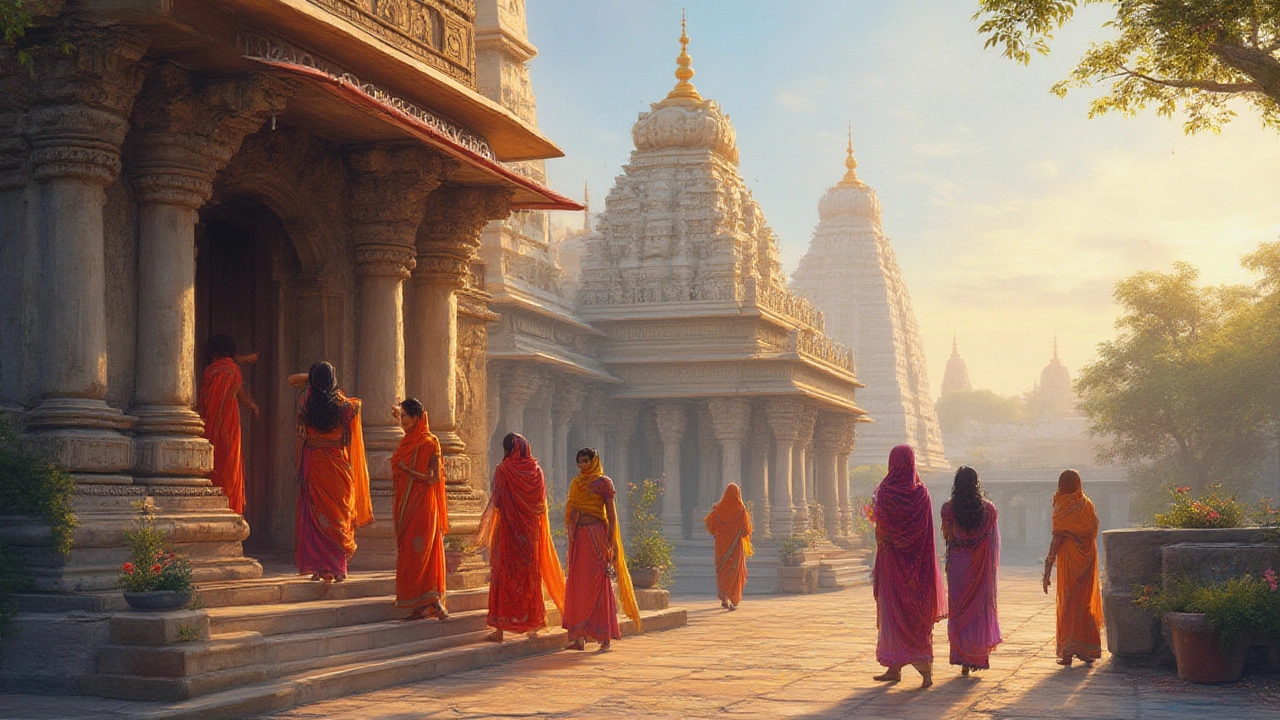
Temple Visit Tips India: What You Need to Know Before You Go
When you step into an Indian temple, a sacred space where devotion, tradition, and daily life blend seamlessly. Also known as mandir, it’s not just a building—it’s a living part of India’s soul. Whether you’re in Varanasi, Tirupati, or a quiet village shrine, temples here work differently than churches or mosques elsewhere. You won’t find pews or sermons. Instead, you’ll see incense curling into the air, bells ringing, and people circling the main idol in a quiet rhythm. Knowing how to move through this space isn’t just polite—it changes how you feel when you leave.
One of the biggest surprises for first-time visitors? Temple etiquette, the unspoken rules that guide behavior inside sacred spaces. You’ll often be asked to remove your shoes before entering. That’s not about cleanliness—it’s about leaving the outside world behind. In many temples, especially in South India, you can’t bring leather items inside. Women are sometimes asked to cover their heads. These aren’t random rules. They’re centuries-old signals of respect. And if you’re unsure? Watch what others do. Locals won’t scold you for mistakes, but they’ll notice if you try.
Cultural travel India, the practice of visiting religious sites with awareness, curiosity, and humility means more than snapping photos. It means understanding that the priest chanting isn’t performing for tourists—he’s serving a community. The flower offerings? They’re prayers. The prasad you’re given? It’s a blessing, not a snack. Don’t touch idols. Don’t point your feet at them. Don’t take selfies in front of the main shrine unless you’re sure it’s allowed. Some temples, like the one in Sabarimala, have strict dress codes. Others, like the Golden Temple in Amritsar, feed thousands daily and ask you to sit on the floor to eat. These aren’t tests—they’re invitations to step into something bigger than yourself.
You’ll also find that India religious sites, hundreds of thousands of sacred places spread across cities, mountains, and rivers vary wildly. A temple in Kerala might be cool, dark, and filled with the smell of coconut oil. One in Rajasthan might be bright, open-air, and buzzing with music. Some require a guide. Others you can wander through alone. Many don’t have signs in English. That’s okay. The real guide is your awareness. Look at the colors, the sounds, the way people bow. You don’t need to understand every ritual to feel its weight.
And yes, people cry here. Not because they’re sad. Because the air feels different. The noise fades. The scent of sandalwood and marigolds wraps around you. You’re not just visiting a building—you’re standing where millions have prayed, begged, given thanks, and found peace. That’s powerful. It doesn’t matter if you’re Hindu, atheist, or just passing through. If you show up with an open heart, you’ll leave with something you didn’t expect.
Below, you’ll find real stories and tips from travelers who’ve been there—the ones who forgot their shoes, got confused by offerings, or cried without knowing why. They didn’t come to convert. They came to understand. And they left with more than photos. They left with respect.