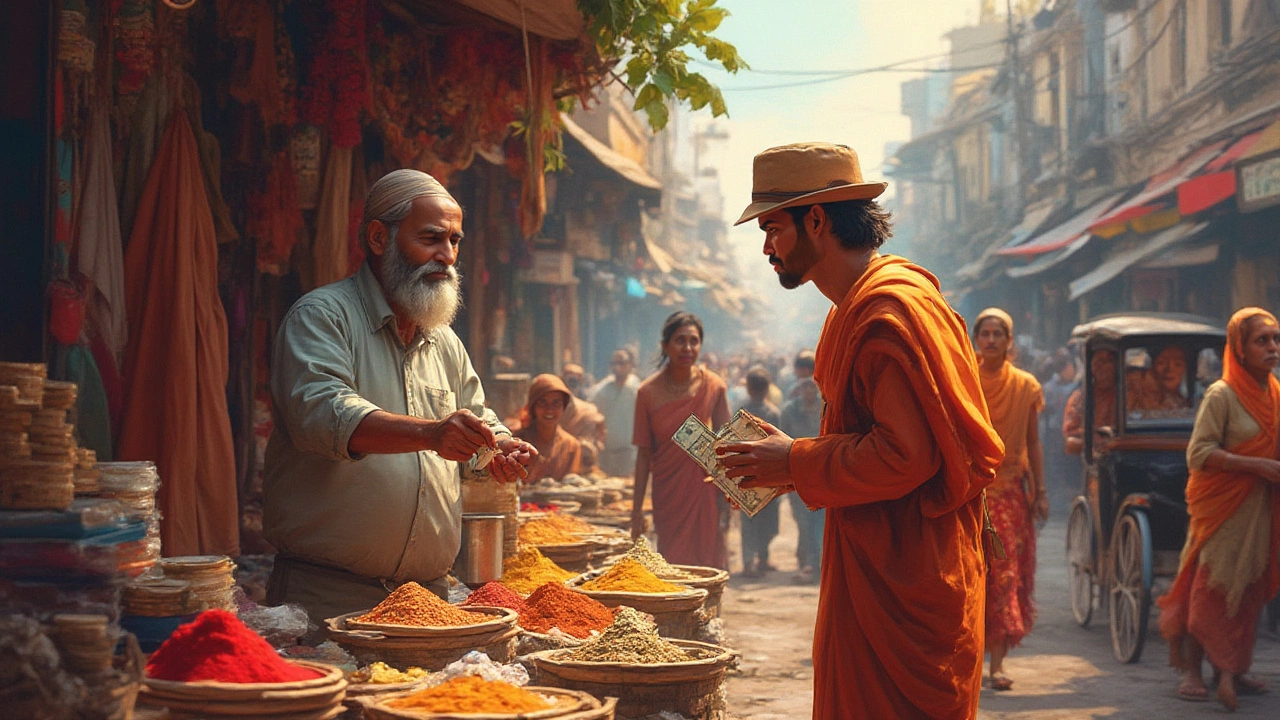
US Dollars in India: What You Need to Know Before You Travel
When you bring US dollars, the official currency of the United States commonly used by international travelers. Also known as USD, it's one of the most accepted foreign currencies in India, especially at airports, hotels, and tourist spots. But here’s the truth: you won’t be spending dollars at a street food stall in Varanasi or haggling over saris in Jaipur. India uses the Indian rupee, the national currency, symbolized by ₹, and divided into 100 paise—and that’s what you need to carry for daily spending. The key isn’t having dollars—it’s knowing how and where to turn them into rupees without getting ripped off.
Most travelers exchange dollars at airports, but the rates there are usually worse than what you’ll find in the city. Better options? Authorized money changers in malls, banks like HDFC or ICICI, or even ATMs that accept international cards. ATMs are reliable and give you the real market rate, minus a small fee. Avoid exchanging cash on the street—no matter how friendly the offer sounds. Also, make sure your dollars are crisp, clean, and from 2006 or later. Banks and exchange counters often refuse old, wrinkled, or torn bills. You’ll also want to keep some small denominations—$20s and $50s work best. Large $100 bills can be hard to break in smaller towns.
While credit cards work in big cities and upscale hotels, cash still rules everywhere else. A backpacker might need just 1,500 rupees a day for food, transport, and a basic guesthouse. That’s less than $20, depending on the exchange rate. But if you’re staying in a luxury hotel in Goa or riding the Palace on Wheels, you’ll need more—and yes, they might accept dollars, but you’ll pay extra for the convenience. The real savings come from using rupees. Even if you’re paying in dollars, the final cost is converted at a rate that favors the business, not you.
Don’t forget to check the current exchange rate before you go. It changes daily. Right now, $1 is roughly ₹83, but it can swing. Keep an eye on it. Apps like XE or Google Finance give you live updates. And if you’re planning a long trip, consider loading a multi-currency travel card. They lock in rates and let you withdraw rupees without carrying cash. It’s safer, cheaper, and way less stressful.
What you’ll find below are real stories and practical tips from travelers who’ve been there. From how much cash to carry on a weekend in Agra, to why carrying too many dollars can backfire, to the one place in Delhi where you’ll get the best exchange rate—these posts cut through the noise. You won’t find fluff here. Just what works, what doesn’t, and what no one tells you until you’re standing in a foreign currency line with no rupees in your pocket.