US Sleeper Train Route Finder
Discover which US cities are connected by overnight sleeper trains and choose the right accommodation for your journey.
Why so few?
Most tracks are owned by freight companies, causing delays. The vast distances make flying faster for many, reducing demand for frequent night services.
Value Add
Sleeper fares typically include meals (Breakfast, Lunch, Dinner) in the Dining Car. This often offsets the cost compared to flight + hotel + food.
Preparation
Book early! Wi-Fi is spotty. Bring earplugs. Pack soft-sided bags for easy storage in tight spaces.
You might think that if you want to sleep on a train in the United States, you have two options: book an expensive private charter or give up and fly. That is not entirely true, but it is closer to the truth than most people expect. Unlike Europe, where night trains connect major capitals with regularity, or India, where sleeper coaches are the backbone of long-distance transport, Amtrak is the sole national passenger railroad service operating intercity trains across the United States. It does offer sleeper cars, but they are limited to specific long-distance routes, primarily in the West and Midwest.
If you are dreaming of waking up to the Rockies rolling past your window while sipping coffee in a private berth, you can do it. But you need to know exactly which routes run at night, what the cabins actually look like, and why the rest of the country relies on buses and planes instead. This guide breaks down the reality of sleeper trains in the USA, separating the romantic ideal from the logistical facts.
The Reality Check: Where Night Trains Actually Exist
Let’s clear up the biggest misconception first. There is no extensive network of overnight sleeper trains crisscrossing the entire nation. The Interstate Highway System and the dominance of commercial aviation killed off most American night trains by the 1970s. Today, only a handful of Amtrak routes operate overnight services with sleeping accommodations.
These routes are mostly concentrated west of the Mississippi River. Why? Because the distances between major cities there are vast enough to make a train ride viable, yet short enough that you don’t need three days to get there. If you are looking for a sleeper train from New York to Los Angeles, you will find one, but it takes nearly three days. If you want to go from Chicago to Seattle, you have a better option.
Here are the primary routes where you can actually book a bed:
- The California Zephyr: Runs from Chicago to San Francisco (via Emeryville). This is arguably the most scenic route in North America, crossing the Sierra Nevada mountains. You can sleep through parts of Nebraska, Colorado, Utah, and Nevada.
- The Empire Builder: Connects Chicago to Seattle or Portland. It offers spectacular views of Glacier National Park and the Rocky Mountains.
- The Southwest Chief: Travels from Chicago to Los Angeles. It passes through the high desert of Arizona and New Mexico.
- The Sunset Limited: Runs from New Orleans to Los Angeles. Note that this route has been suspended intermittently due to track issues, so always check current status.
- The Cardinal: A shorter overnight segment exists between Cincinnati and Chicago, though it is often combined with other services.
Notice a pattern? Most start or end in Chicago. This is because Chicago remains the central hub of the American rail network. If you live on the East Coast, you likely won’t find a direct sleeper train to another major city without changing trains or taking a very long journey.
Inside the Cabins: What You Are Paying For
When people hear "sleeper car," they often imagine cramped bunks or noisy open-plan compartments. In the US, Amtrak’s sleeper experience is surprisingly comfortable, especially if you upgrade from the standard coach seating. However, it is not identical to the luxury suites found on European Orient Express-style trains.
There are generally two types of accommodation available on these long-distance routes: Roomettes and Bedrooms.
| Feature | Roomette | Bedroom |
|---|---|---|
| Size | Small, approx. 35 sq ft | Larger, approx. 60 sq ft |
| Beds | Two fold-down seats that convert into upper and lower berths | Sofa converts to a bed; second seat folds away |
| Privacy | Sliding door; shared corridor access | Full privacy; includes private toilet and shower |
| Best For | Solo travelers or couples who don't mind tight quarters | Couples wanting space, families, or those needing accessibility |
| Cost Factor | Moderate premium over coach | High premium; often comparable to flight + hotel |
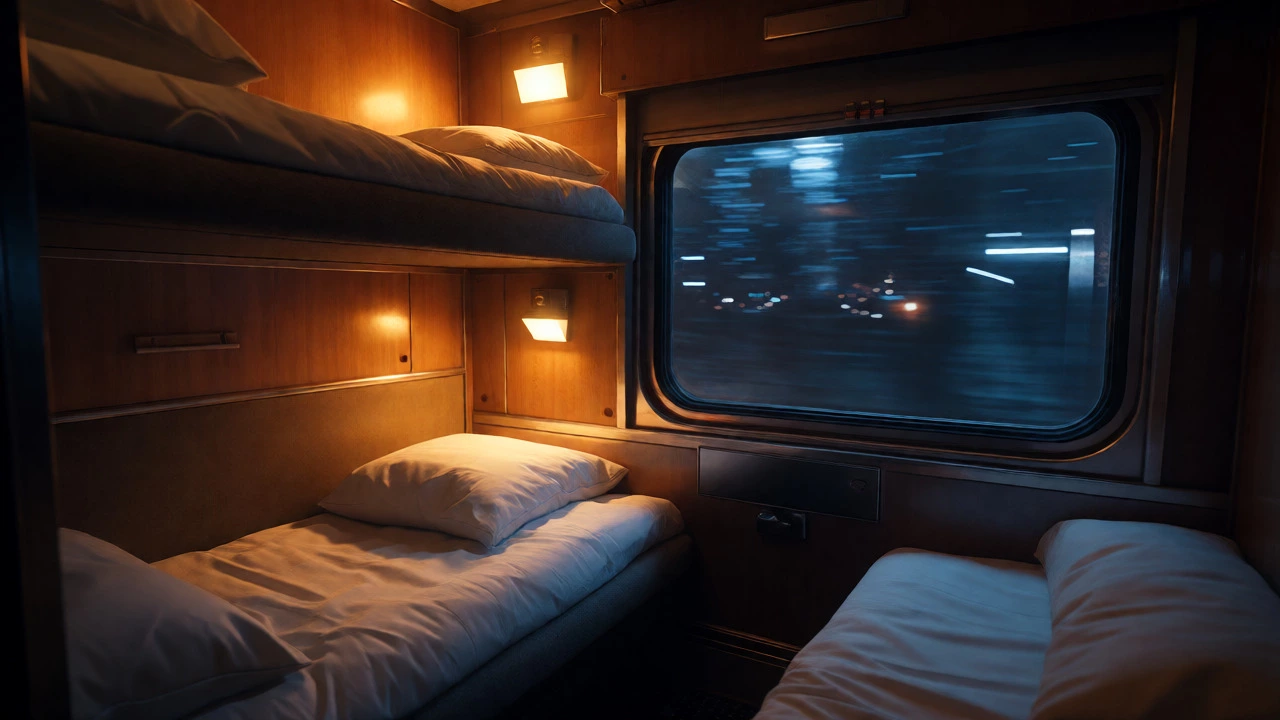
The Roomette is essentially a small booth. During the day, it looks like a train seat. At night, the attendant helps you pull out the upper bunk and lower the seat into a bed. It is cozy. Very cozy. If you are tall, you might feel confined. But the key benefit is that you are off the main aisle noise and have a door that closes.
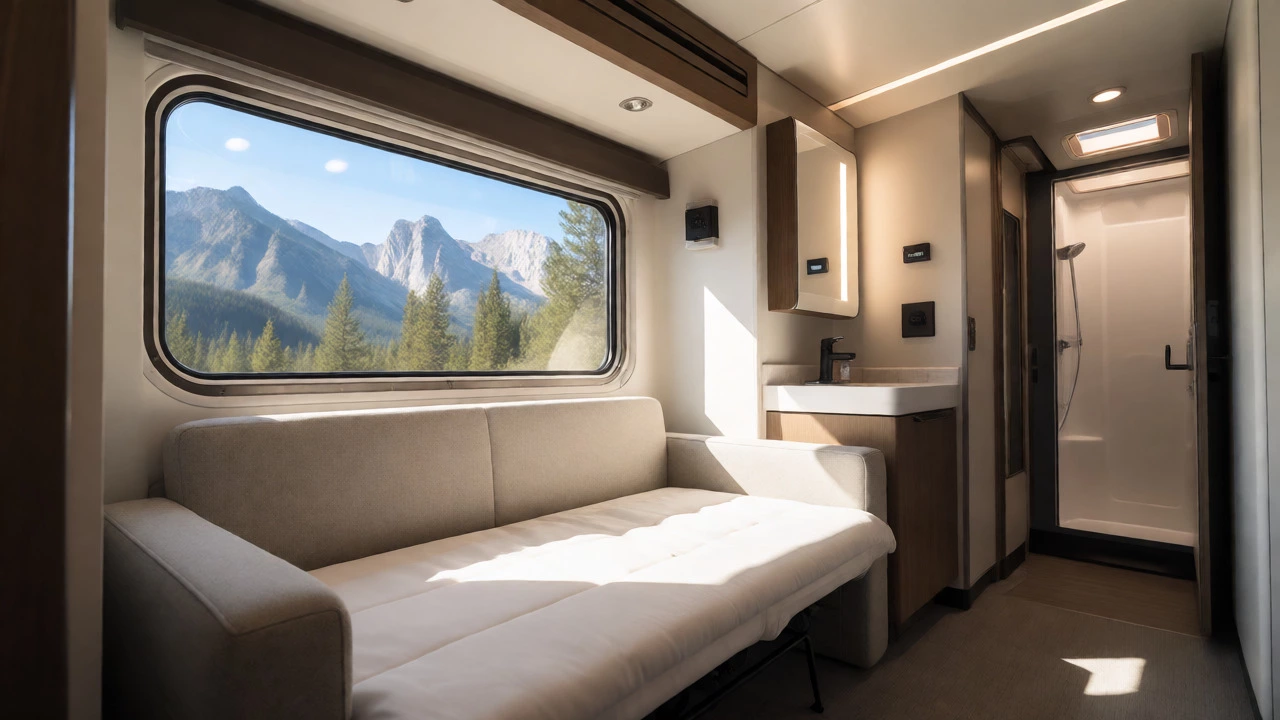
The Bedroom is where the real comfort lies. These rooms feature a sofa that converts into a double bed, a sink, and-crucially-a private toilet and shower. You also get priority boarding and access to exclusive lounge areas at major stations. If you are traveling with a partner, the Bedroom is worth the extra cost just for the ability to use the bathroom without walking down the corridor in your pajamas.
What about meals? On most long-distance Amtrak routes, meals are included in the price of a sleeper ticket. This is a massive value add. You eat in the Dining Car, which serves hot meals prepared on board. It is not gourmet five-star dining, but it is decent, freshly cooked food served on china plates. Breakfast, lunch, and dinner are covered. This simplifies budgeting significantly compared to flying, where you pay for everything separately.
Why Aren’t There More Sleeper Trains?
This is the question every European visitor asks when they land in JFK and try to take a train to Boston. The answer involves geography, economics, and politics.
First, distance. In Europe, London to Paris is a few hours. In the US, New York to Chicago is 18+ hours by train. To make that viable as a sleeper service, you need a critical mass of passengers willing to spend a night on the train rather than flying. Demand has historically been too low to justify frequent nightly departures on many eastern routes.
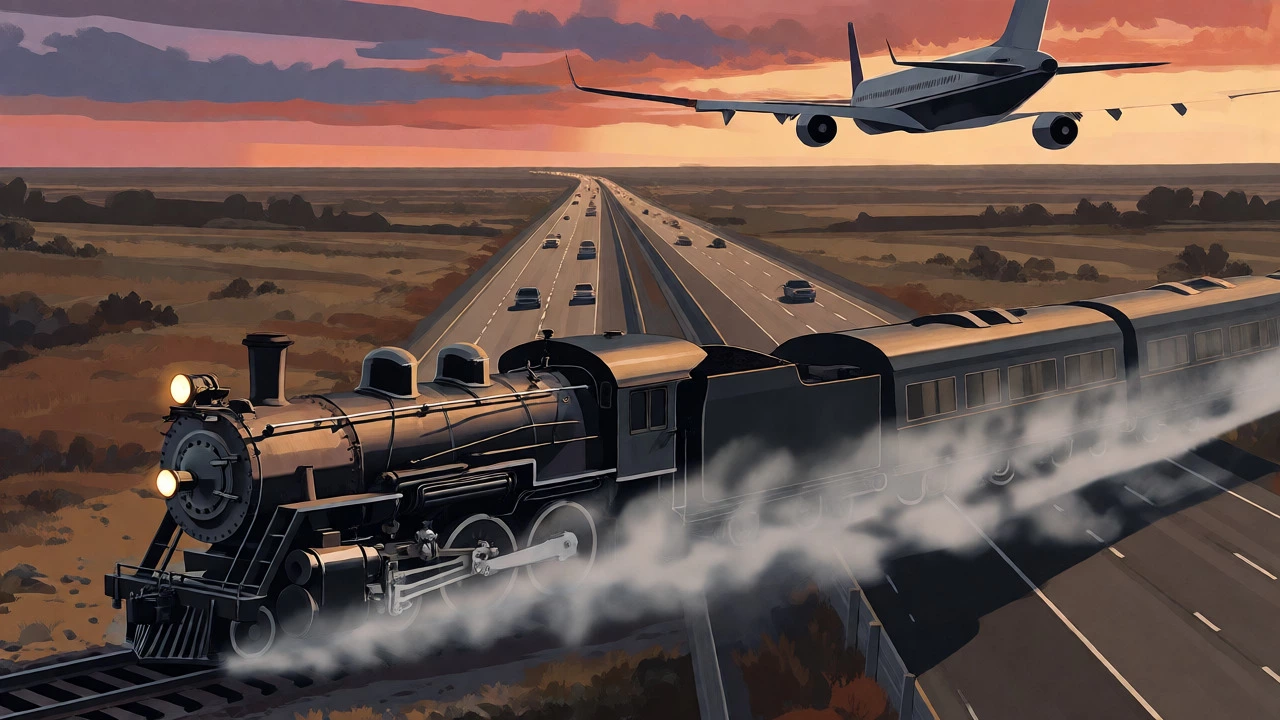
Second, infrastructure. Much of the rail track in the US is owned by freight companies like BNSF or Union Pacific. Passenger trains often have to wait for freight trains to pass, causing delays. Freight operators prioritize their cargo, and passenger schedules suffer. This unreliability makes business travelers hesitant to choose the train, creating a cycle where low ridership leads to fewer services.
Third, the rise of the interstate highway system in the mid-20th century made driving accessible to millions. Suddenly, you could drive from city to city in a day or two. Then came cheap air travel in the 1980s. Airlines undercut trains on time and eventually on price. The result was the near-collapse of the passenger rail industry until Amtrak was formed in 1971 to salvage what remained.
Today, efforts are underway to improve rail speeds, particularly in the Northeast Corridor (Boston-New York-Washington DC), but these are daytime services. High-speed rail projects in California and Texas aim to change the landscape, but they are years, sometimes decades, away from completion. For now, the sleeper train remains a niche product for leisure travelers, not a commuter necessity.
Luxury Private Rail: The Alternative Experience
If Amtrak feels too utilitarian, or if you want a true luxury experience akin to the Venice Simplon-Orient-Express, you should look at private operators. These are not public transit; they are curated vacations on wheels.
Rocky Mountaineer is a premium tourist rail operator offering scenic daytime journeys in Canada and the US. While technically not a "sleeper" train in the traditional sense (they don’t run overnight on tracks due to safety regulations regarding freight lines), they offer multi-day packages where you stay in hotels at night and ride in luxury glass-domed cars during the day. It solves the discomfort of sleeping on a moving train while providing the same scenery.
Other notable mentions include:
- American Orient Express: Offers themed luxury journeys, such as the Grand Canyon Railway or the Napa Valley Wine Train, though these are often shorter excursions.
- Polar Express: Seasonal holiday experiences, popular with families.
- Private Charters: Wealthy individuals or groups can charter historic railcars. This is extremely expensive, often costing tens of thousands of dollars per trip, but offers total customization.
For most travelers, however, Amtrak remains the only realistic way to sleep on a train in the US. The private luxury options are either daytime-focused or prohibitively expensive for a simple point-to-point transfer.
How to Book and Prepare for Your Trip
Booking a sleeper train in the US requires some planning. Prices fluctuate based on demand, similar to airlines, but they don’t spike as aggressively last minute. Here is how to navigate the process.
Use the official Amtrak website or app. Look for routes marked with a moon icon, indicating overnight service. When selecting seats, choose "Sleeper Class." You will see options for Roomettes and Bedrooms. Compare the prices against the cost of a flight plus a night in a hotel at your destination. Often, the sleeper fare is competitive when you factor in the free meals and the lack of airport security hassles.
Pro tips for a smoother ride:
- Book early: Sleeper cars sell out faster than coach seats, especially on scenic routes like the California Zephyr during summer months.
- Bring earplugs: Even in a bedroom, you will hear the clack of the rails and the occasional announcement. The train never truly goes silent.
- Pack light: Space is limited. Use soft-sided bags that can be stowed under the seat or in the overhead rack. Hard-shell suitcases are difficult to manage in narrow corridors.
- Check connectivity: Wi-Fi on Amtrak is spotty at best. Assume you will be offline for large stretches, especially in mountainous regions. Download movies or books beforehand.
- Visit the Observation Car: All long-distance trains have a lounge or observation car with large windows. This is the best place to sit during the day, meet other travelers, and enjoy the view without being trapped in your cabin.
One final consideration: reliability. Trains can be delayed. Unlike flights, which cancel frequently in bad weather, trains usually keep moving unless there is a severe incident. Delays of 1-3 hours are common. Build buffer time into your plans upon arrival.
Is It Worth It?
So, should you take a sleeper train in the USA? If you are rushing to a meeting, no. If you are trying to save money on a cross-country move, maybe not.
But if you want to disconnect, watch the landscape shift from cornfields to red rocks to pine forests, and enjoy a meal without leaving your table, then yes. It is a unique slice of Americana that survives against all odds. It is slower, more deliberate, and oddly peaceful. In a world obsessed with speed, spending 40 hours on a train is a radical act of slowing down.
Do I need to reserve a sleeper car in advance?
Yes, absolutely. Sleeper accommodations are limited in number on each train. Coach seats are abundant, but Roomettes and Bedrooms sell out weeks or even months in advance, particularly for popular routes like the California Zephyr and Empire Builder during peak travel seasons (summer and holidays).
Are meals really included in the sleeper fare?
Yes, for most long-distance Amtrak routes, meals are included in the price of a sleeper ticket. This typically covers breakfast, lunch, and dinner served in the Dining Car. Beverages may incur additional charges depending on the location and type of drink. Snacks and drinks are also available for purchase in the Café Car.
Can I shower in my room on an Amtrak sleeper train?
It depends on the cabin type. Bedrooms come with a private toilet and shower. Roomettes do not have en-suite facilities; passengers in Roomettes must use the shared toilets and showers located at the ends of the car. These shared facilities are cleaned regularly but are smaller and less private than those in a Bedroom.
Why are there no sleeper trains between New York and Florida?
The Silver Meteor and Silver Star serve this corridor, but they are primarily daytime/evening services that arrive in the morning or evening, rather than dedicated overnight sleeper routes with full sleeping arrangements for the entire journey. The distance is significant, but the demand profile and operational costs have historically favored different scheduling patterns compared to western routes. Additionally, the frequency of flights between NY and FL is extremely high, reducing the market share for rail.
Is Wi-Fi reliable on Amtrak sleeper trains?
No, Wi-Fi is generally unreliable and slow. Coverage is patchy, especially in rural areas, tunnels, and mountainous regions. Many sections of the route have no signal at all. It is best used for basic messaging or checking email, but do not rely on it for streaming video or large downloads. Plan for digital downtime.